
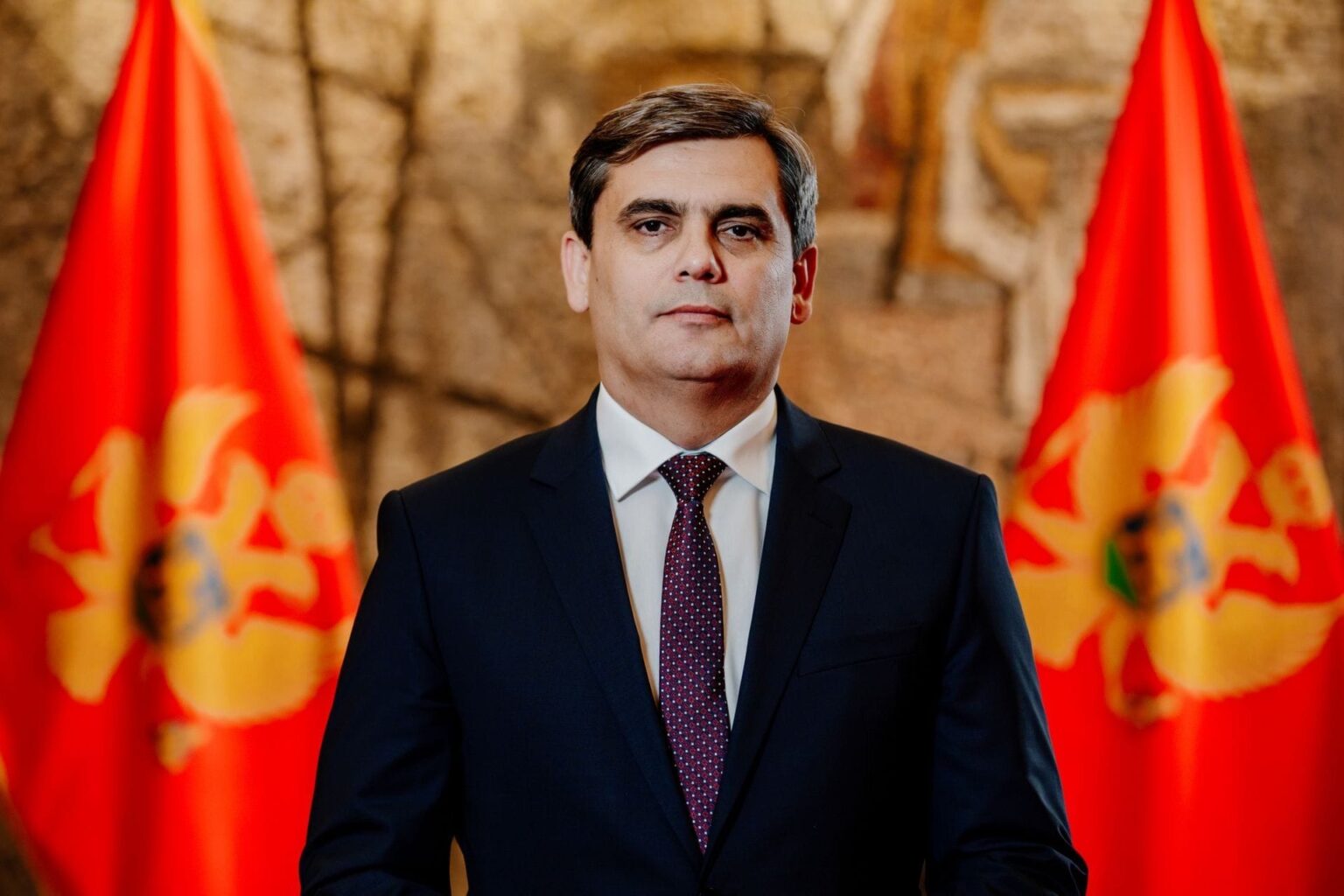
BAKU, Azerbaijan, January 5. Montenegro is
ready to intensify cooperation with Azerbaijan in gas sphere, as
well as green energy sector, Deputy Prime Minister and Minister of
Foreign Affairs of Montenegro Ervin Ibrahimović said in an
exclusive interview with Trend, as he recently visited Baku.
“Montenegro and Azerbaijan traditionally maintain friendly and
partnership-based relations, and my visit to Baku aimed to further
contribute to their enhancement, the strengthening of interstate
ties, and the continuation of a continuous, open, and constructive
political dialogue. During substantive talks with the Minister of
Foreign Affairs of the Republic of Azerbaijan, Jeyhun Bayramov,
Speaker of the Milli Majlis Sahiba Gafarova, Prime Minister Ali
Asadov, and Minister of Finance Sahil Babayev, we jointly noted
that relations between our two countries are at a high level,
characterized by positive dynamics and cooperation in numerous
areas of mutual interest,” he said.
Ibrahimović pointed out that the meetings in Baku provided a
valuable opportunity to consider concrete modalities for their
further deepening.
“Special attention was devoted to the economy, with a focus on
tourism, investments, and energy, while we also discussed
modalities of cooperation in the field of foreign affairs. We also
exchanged views on current global processes and expressed support
for the signing of the Joint Declaration between Azerbaijan and
Armenia in Washington on 8 August 2025, as an important step
towards achieving lasting peace, regional stability, and
prosperity.
During my stay in Baku, I had the opportunity to familiarize my
Azerbaijani counterparts with Montenegro’s foreign policy
priorities, particularly our strong commitment to European
integration. I presented Montenegro’s ambition to complete EU
accession negotiations by the end of 2026 and be ready for
membership by 2028, as well as recent tangible results, including
the closure of five negotiation chapters at the Intergovernmental
Conference in Brussels in December,” said the deputy PM.
He believes that the official visit to Azerbaijan was highly
successful, substantive, and productive, and that it further
strengthened the foundations for the continued development of
cooperation between Montenegro and Azerbaijan, to the mutual
benefit of the citizens of both countries.
Montenegro’s interest in importing Azerbaijani
gas
“Montenegro has a clear interest in importing Azerbaijani
natural gas, which we view as part of a broader strategy to
strengthen energy security and diversify supply sources. We see
energy as one of the key development potentials and are ready to
intensify cooperation and the exchange of knowledge and experience,
particularly in the fields of gas and renewable energy sources,”
said Ibrahimović.
He recalled that during the visit to Baku, discussions were held
on next steps in energy cooperation, including the possibility of
organizing an intersectoral meeting to consider various modalities
of cooperation, as well as potential opportunities related to the
distribution of Azerbaijani gas to Montenegro.
“These issues will also be further discussed within the
framework of the upcoming session of the Joint Commission for
Economic Cooperation. In this context, it is particularly important
to emphasize the significance of the Ionian-Adriatic Pipeline
(IAP), which Montenegro’s Energy Development Strategy until 2030
identifies as the most realistic option for the gasification of the
country at this stage.
The IAP is envisioned as the final segment of the Southern Gas
Corridor, through which gas from the Shah Deniz field in
Azerbaijan, via the Trans Adriatic Pipeline, could be delivered to
countries in the region, including Montenegro. The project enjoys
strong support from the European Union and Euro-Atlantic partners,
is recognized as a Project of Common Interest, and is included in
the EU’s Single List of Infrastructure Projects, making it a
political and strategic priority. Given that Montenegro currently
lacks gas infrastructure, the potential implementation of this
project would open space for significant foreign investments and
enable stable natural gas supply, while simultaneously reducing
pollution and strengthening regional connectivity,” said the deputy
PM.
Partnership in green energy and sustainable
development
“I see cooperation between Montenegro and Azerbaijan in the
field of green energy and sustainable development as highly
promising and complementary, particularly in view of our
commitments under the Paris Agreement and Montenegro’s status as a
candidate country for EU membership. Our strategic orientation is
to base the development of the energy sector on the principles of
decarbonization, green energy transition, and increased use of
renewable energy sources, in line with the European Green Deal,”
said Ibrahimović.
The deputy PM pointed out that Montenegro plans to invest
intensively in renewable energy sources, improve energy efficiency,
and build infrastructure to connect with regional and European
energy systems.
“In this process, Azerbaijan’s experience, expertise, and
references—both in conventional energy and in the increasingly
strong development of green energy solutions—represent significant
cooperation potential.
We consider cooperation in the field of gas as a transitional
energy source particularly important, as well as cooperation in the
development of renewable energy and sustainable energy projects
that contribute to emissions reduction and long-term energy
stability. I am convinced that through intensified political
dialogue, exchange of expertise, and the conclusion of concrete
agreements, Montenegro and Azerbaijan can further deepen their
partnership and jointly contribute to sustainable development and
energy security, both bilaterally and regionally,” he
explained.
Further strengthening diplomatic relations, upcoming
joint events
Ibrahimović noted that since the establishment of diplomatic
relations, Montenegro and Azerbaijan have continuously worked on
their development and on identifying new modalities of cooperation,
in line with recognized common interests and based on the
principles of openness and friendship.
“Political dialogue at all levels is conducted at a satisfactory
pace, and numerous areas of cooperation are grounded in a stable
contractual and institutional framework, encompassing a series of
bilateral agreements and memoranda. In this context, the recent
visit to Azerbaijan was an opportunity to review existing forms of
cooperation and identify areas with additional potential for
enhancement. A particularly significant step forward was the
signing of the Memorandum of Cooperation in the field of consular
affairs between the Ministries of Foreign Affairs of the two
countries, which further improves institutional cooperation and the
quality of services provided to citizens,” said the deputy PM.
He went on to add that an important segment of cooperation is
also realized at the multilateral level, particularly within the
United Nations, through coordination and mutual support of
candidacies within international organizations and forums.
“I see additional potential for strengthening diplomatic
relations through the intensification of parliamentary cooperation,
via activities of interparliamentary friendship groups and
exchanges of high-level visits, as well as through further
development of cooperation in areas of mutual interest. Regular
bilateral political consultations between the Ministries of Foreign
Affairs, as well as consular consultations, also make an important
contribution to strengthening diplomatic relations, enabling
continuous exchange of views, enhanced institutional cooperation,
and more efficient resolution of issues of importance to the
citizens of both countries. These mechanisms confirm our shared
commitment to open communication and the deepening of mutual trust.
Through such a comprehensive approach, Montenegro and Azerbaijan
can further strengthen political, institutional, and overall
bilateral relations, to the mutual benefit of our states and
citizens,” he added.
Ibrahimović pointed out that over the past year, the two
countries have created the conditions for organizing concrete
activities that will contribute to the further development of the
interstate friendship.
“Therefore, we look forward with optimism to the coming year, in
which Montenegro will mark the 20th anniversary of the restoration
of its independence—an opportunity to implement a number of
concrete activities and initiatives that will further enhance
cooperation between Montenegro and Azerbaijan. In this regard, we
welcome announcements of continued political dialogue and
high-level visits, which will provide opportunities for signing
cooperation agreements currently in procedure, such as those in the
fields of agriculture, energy, and avoidance of double taxation,”
said the deputy PM.
He particularly emphasized the importance of holding the 4th
session of the Joint Commission for Economic Cooperation, planned
for the first half of March 2026.
“This session will provide an important opportunity for a
comprehensive analysis of existing cooperation and for the
concretization of future activities in areas such as energy,
tourism, and investments, as well as education, science, innovation
and technology, public administration, and digitalization,” said
Ibrahimović.
Furthermore, he sees scope for further development of
cooperation in the field of culture, as well as for strengthening
ties between universities and academic institutions of the two
countries.
“In this context, I would like to highlight the already signed
Cooperation Agreement between the Diplomatic Academy of the
Ministry of Foreign Affairs of Montenegro and ADA University of
Azerbaijan, which includes the exchange of young diplomats,
organization of joint conferences, and exchange of lecturers.
I also believe that improving direct air connectivity is of
particular importance for the overall relations between our
countries. Establishing regular year-round flights, in cooperation
between Montenegrin and Azerbaijani air carriers, would provide a
strong impetus for the development of tourism, business contacts,
and overall people-to-people cooperation. The implementation of
these activities and initiatives will further strengthen our
bilateral relations and open new opportunities for long-term and
substantive cooperation between Montenegro and Azerbaijan,” the
deputy PM added.
Mutual investment opportunities
Ibrahimović noted that Montenegro is aware of and welcomes the
growing importance of Azerbaijan as a strategic hub in the regional
and global economy.
“Montenegro’s participation in the First International
Investment Forum in Baku demonstrates Azerbaijan’s efforts to
diversify its economy, as well as our readiness to recognize
investment opportunities across numerous sectors. We believe that
stability, peace, and sustainable development in the region,
including the reconstruction and development of the Karabakh area,
create a favorable environment for investment. We expect the
Azerbaijani market to attract the attention of Montenegrin
investors, particularly those who, by strengthening their
capacities and through regional cooperation, seek to become
credible participants in a demanding investment market,” he
said.
The deputy PM believes that particularly promising areas for
investment include energy, infrastructure, innovation, green
energy, real estate, urban development, and projects based on the
principles of sustainable development.
He went on to add that additional promotion of Azerbaijan’s
investment opportunities in Montenegro could significantly
contribute to better informing the business community and
encouraging concrete investments that would enhance economic ties
between our countries.
“In this context, the role of economic diplomacy is particularly
important in connecting institutions, business communities, and
investors of the two countries, with these aspects of cooperation
to be further discussed within the framework of the upcoming
session of the Joint Commission for Economic Cooperation,” said
Ibrahimović.
He noted that in addition to deepening cooperation in the energy
sector, Montenegro recognizes significant opportunities for
Azerbaijani investments in tourism, which represents one of the key
sectors of the country’s economic development.
“The existing Agreement on Cooperation in Tourism between the
Governments of Montenegro and Azerbaijan from 2011 provides a legal
framework for further investments and strengthening mutual ties. A
significant number of Azerbaijani tourists visit Montenegro, with a
continuous increase in arrivals and overnight stays, confirming
Montenegro’s growing recognition as a tourist destination. Direct
flights between Baku and Podgorica or Tivat further facilitate
access and strengthen tourism and economic connectivity.
When speaking about the quality of investments in Montenegro, I
always highlight with satisfaction the investment in the luxury
complex Portonovi, one of the most significant and recognizable
Azerbaijani investments in Montenegro, which has become a symbol of
successful cooperation between our countries. This investment has
significantly contributed to the development of tourism, enhanced
Montenegro’s international visibility, and strengthened its
positioning as a prestigious tourist destination. We see such
examples as a model we wish to further encourage through future
projects and new partnerships with Azerbaijani investors,” said the
deputy PM.
He pointed out that in addition to tourism and energy,
Montenegro would like to see investments from Azerbaijan in
infrastructure projects, health and congress tourism, as well as
sustainable development projects in national parks and northern
Montenegro.
“The construction of key infrastructure projects, such as the
Bar–Boljare highway, opens additional investment opportunities and
increases the accessibility of less developed regions.”
Ibrahimović noted that Montenegro’s NATO membership and its
expected accession to the European Union further strengthen
investor confidence, confirming that Montenegro is a stable, safe,
and predictable environment for investment.
“The Government of Montenegro principledly supports all serious
and responsible investments, and experience with existing
Azerbaijani investments shows that joint projects can significantly
contribute to overall economic cooperation between our
countries.”
Montenegro’s role in strengthening Azerbaijan-NATO
relations
Ibrahimović pointed out that Azerbaijan is an important NATO
partner, and the Alliance has maintained a stable and long-standing
relationship through political dialogue, security sector reform,
and efforts to strengthen interoperability.
“This partnership has been further reinforced by the Individual
Partnership Action Plan (IPAP), which outlines cooperation
priorities in the fields of defence, security reforms, and
anti-corruption. We were pleased that in November 2025, a
delegation of NATO permanent representatives, including Montenegro,
visited Azerbaijan for the first time. This visit provided an
excellent opportunity to deepen political dialogue and reaffirm
NATO’s commitment to its partnership with Baku, recognizing its
role as a key factor of stability in the Caucasus region,” said the
deputy PM.
He noted that Montenegro also welcomes Azerbaijan’s cooperation
with NATO in establishing an Anti-Terrorism Training Centre, as
well as its participation in NATO programs for civil preparedness
and emergency management through the Euro-Atlantic Disaster
Response Coordination Centre (EADRCC).
“I believe that Montenegro can actively collaborate with
Azerbaijan in strengthening defence and civil capacities in these
areas, both within the NATO framework and through bilateral
initiatives,” Ibrahimović concluded.