
 Malta Police Force
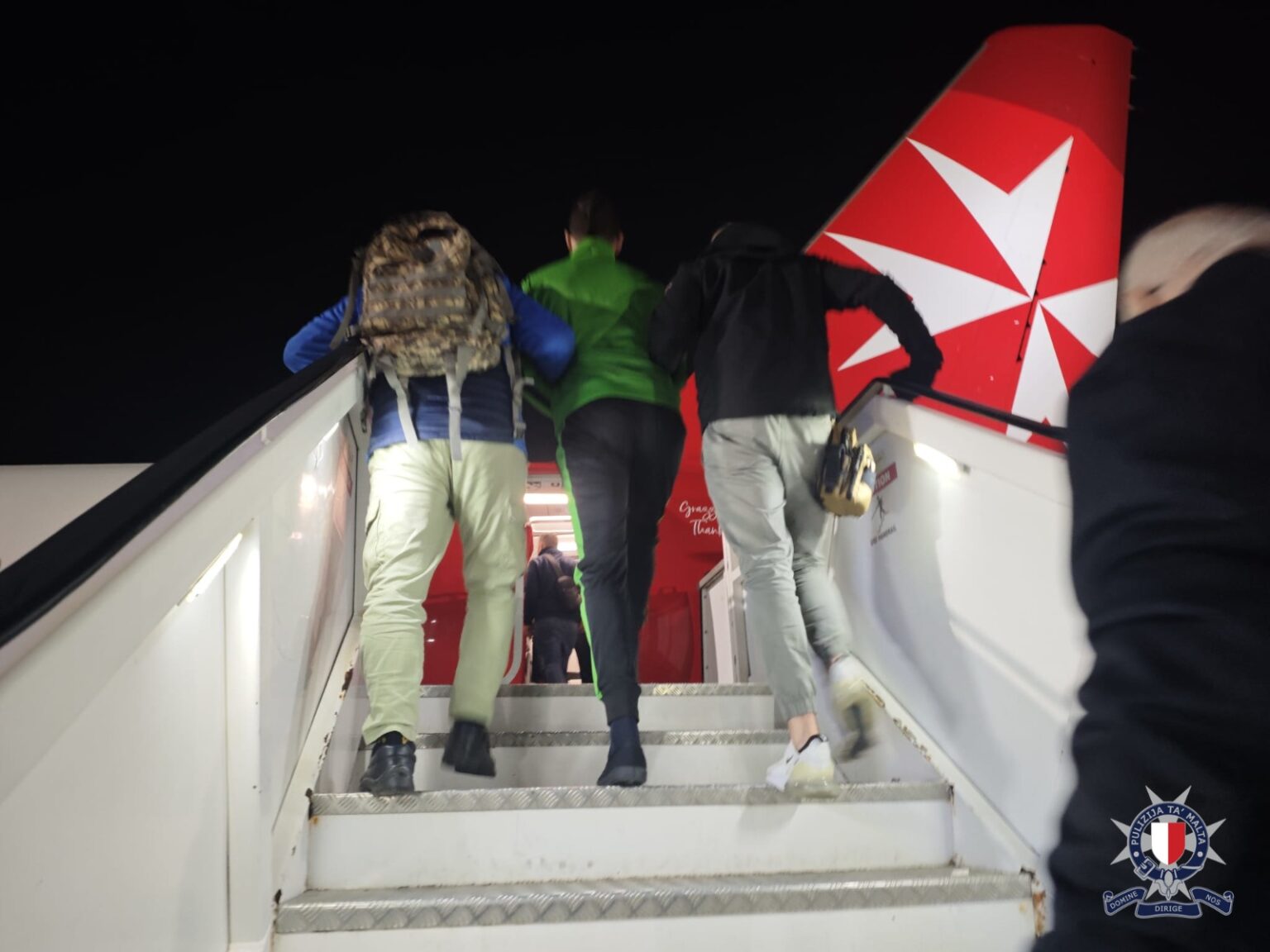
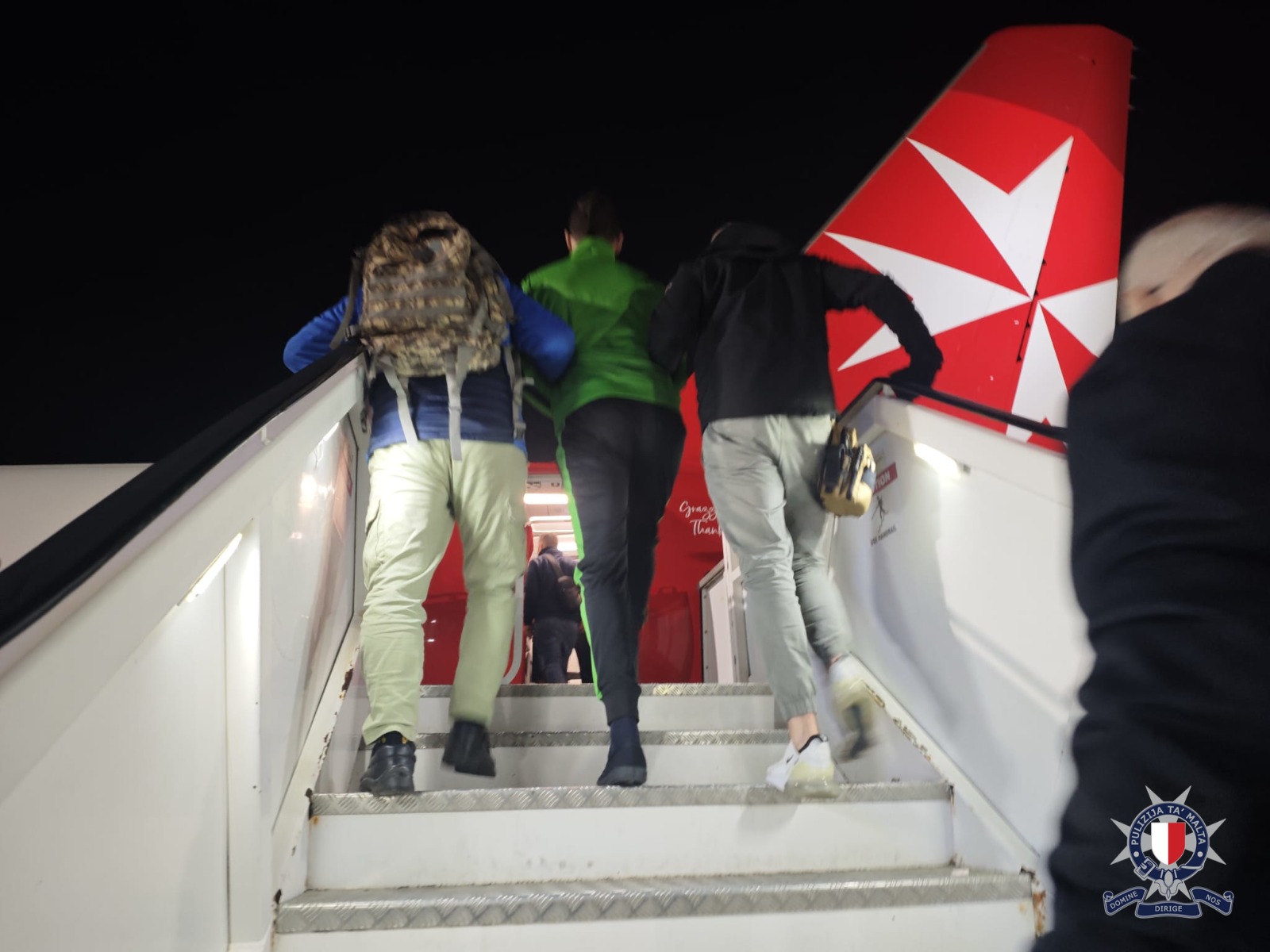
Malta’s Immigration Police conducted a forced return operation in the early days of the new year, deporting a North African man following criminal convictions, while broader questions persist about the country’s compliance with international human rights law in migration cases.
According to a police statement, the individual had been charged in 2025 with theft and drug possession offences in St Julian’s and was found guilty, receiving a two-year suspended sentence.
Following his conviction, he was issued a Return Decision and Removal Order and remained in detention until arrangements were completed for his return to his country of origin.
This individual deportation follows a larger operation that concluded last week, when Malta forcibly returned 48 migrants just 17 days after their sea rescue on 12 December. Home affairs minister Byron Camilleri announced on social media that the swift turnaround demonstrated Malta’s commitment to “disrupting the human smugglers’ business model,” adding that the operation followed EU Standard Operating Procedures.
EU Commissioner for Migration Magnus Brunner lauded Malta’s actions as a “strong message” to migrant smugglers, stating on X that the upcoming Return Regulation would make such operations “more efficient.” He welcomed Malta’s use of “the EU instrument for readmission cooperation” to return people “who arrived irregularly.”
However, the celebration of efficiency stands in stark contrast to recent European Court of Human Rights rulings that have repeatedly condemned Malta’s treatment of asylum seekers. In J.B. and Others v. Malta, handed down just days ago in January 2024, the court found that Malta operates a “legal vacuum” where migrants are held in de facto detention without proper legal basis or effective access to justice.
Significantly, the ECHR explicitly assessed Malta’s Immigration Appeals Board, the body meant to protect migrants’ rights, and found it lacks “judicial character,” independence and impartiality.
The court had ruled that six asylum seekers, including minors, were unlawfully detained without documents or explanation of their rights in a language they could understand.
The 17-day timeframe between rescue and deportation raises serious questions about procedural fairness. Malta’s own accelerated asylum procedures averaged 71 days in 2024, yet these 48 individuals were assessed, processed and deported in less than three weeks, a period critics argue makes meaningful legal representation and effective appeals virtually impossible.
Legal aid systems, whilst technically available, face documented failures. The ECHR noted in Feilazoo v. Malta (2021) that state-appointed lawyers have effectively hindered applicants’ rights to petition courts. NGOs report that legal aid for appeals is often only assigned after negative decisions, making the 17-day window insufficient for preparing adequate defence.
A coalition of 25 organisations, including Aditus and Jesuit Refugee Service, previously condemned Malta’s approach as “shameful,” warning it seeks to “restrict the fundamental human rights of migrants” and could result in deportations leading to torture or family separation.
The situation extends beyond detention and deportation. The UN Human Rights Committee issued an emergency decision in March 2025 ordering Malta to coordinate rescue operations for 32 people in distress, noting a “systematic pattern” where Maltese authorities allegedly ignore distress calls.
Recent investigative reports suggest Malta’s 93% drop in arrivals over five years, celebrated by government, may partly result from non-assistance at sea. Armed Forces of Malta rescues dropped 90% between 2020 and 2024, while Libyan Coast Guard interceptions increased 230%, often coordinated by Malta, returning people to a country facing documented human rights abuses.
Malta also faces criticism for deporting long-term residents. Three Ethiopian men who lived, worked and paid taxes in Malta for 18 years were recently deported, with opposition MPs describing them as “scapegoats” used to “appease public concerns about overpopulation.”
The EU boasts values of human dignity, equality, the rule of law, and human rights, claiming they are “indivisible” and “universal.”
However, instances like Malta’s 17-day “swift” returns, applauded by the EU Commissioner, prove this is often a facade. Critics and the ECHR argue that “Fortress Europe” priorities create a “legal vacuum” where rights like individual assessment and effective appeal are sacrificed for deterrence and fundamental rights are treated as conditional privileges of status rather than inherent human dignity.

