
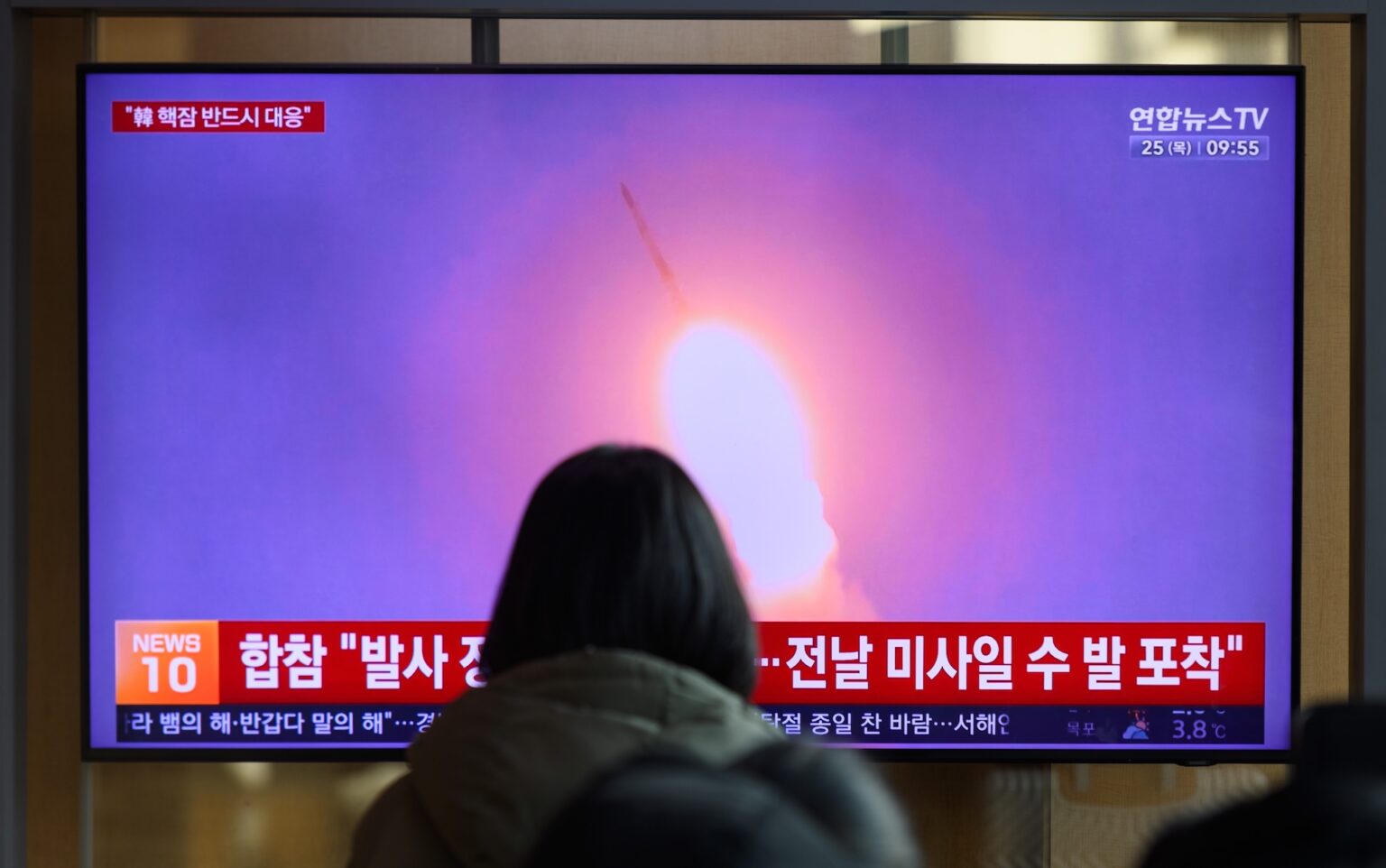
Fifteen years after then-President Barack Obama’s speech in Prague that laid out a vision for a world free of nuclear weapons, global nuclear security dynamics have only moved in the opposite direction. Only one arms control pact remains between the United States and Russia, New START, and it will expire in February. President Donald Trump has announced a return to U.S. nuclear testing “on an equal basis” with other countries. China has abandoned its doctrine of “minimum nuclear deterrence” and is projected to expand its arsenal from roughly 500 warheads today to 1,500 by 2035. North Korea has established itself as a nuclear-armed state, and South Korea’s hedging strategy leaves it only months away from a weapons capability if politically approved. And the demise of the 2015 Iran nuclear deal spurred Tehran to accelerate its production of enriched uranium.
At the same time, recent conflicts involving nuclear-armed states underscore the potential for dangerous escalation. These include the joint U.S.-Israeli strikes on Iran’s nuclear facilities over the summer of 2025; Russia’s war against Ukraine, where it has threatened to use nuclear weapons; and a brief armed conflict between India and Pakistan last May.
These trends raise doubts about the viability of the Non-Proliferation Treaty, or NPT, as the world’s primary multilateral tool to limit the spread of nuclear weapons. In an increasingly lawless global order governed by great power politics, it is imperative to look beyond the NPT and envision an alternative system of global nonproliferation.