
Image Source: Getty Images
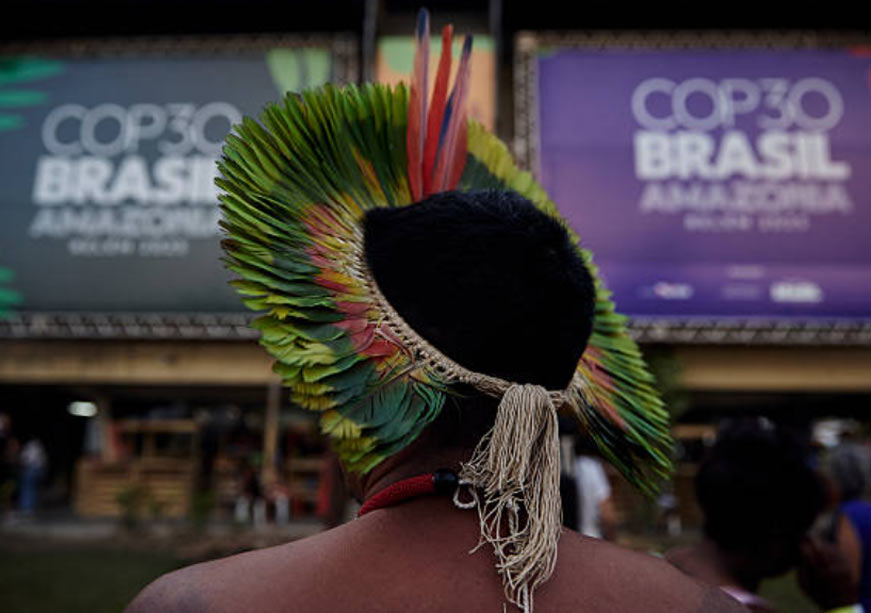
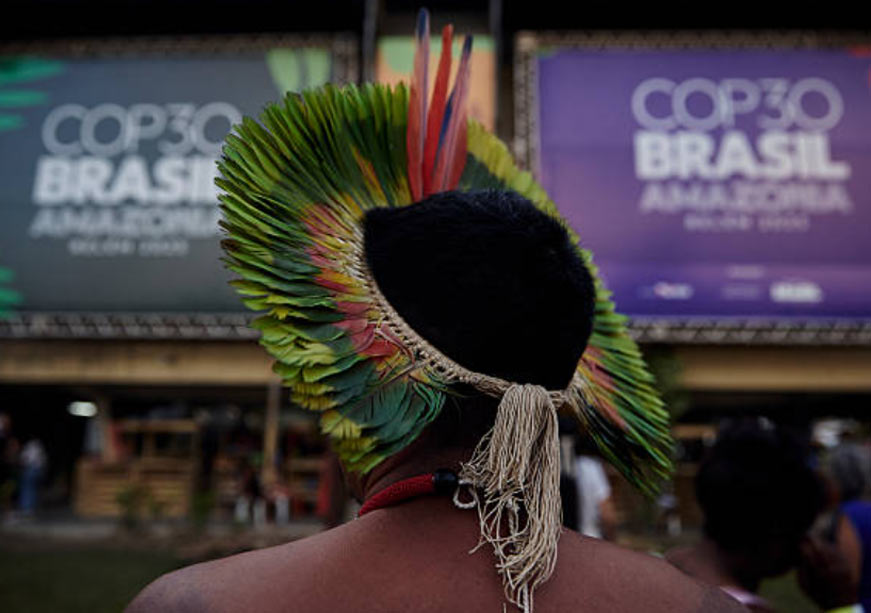
The 30th Conference of the Parties (COP30) in Belém unfolded amidst shifting geopolitical currents. With Western climate leadership fragmented, Europe recalibrating its ambitions, and the United States (US) absent from full participation, the centre of gravity in global climate negotiations is shifting toward emerging economies. COP30 reflected this transition: the summit delivered modest gains on adaptation and social equity, fell short on mitigation, and highlighted deeper structural changes required in institutions shaping climate governance. The most notable trend was the assertiveness with which BRICS and broader Global South coalitions influenced the agenda, narrative, and expectations of the negotiations.
COP30’s Uneven Gains and Continuing Gaps
The outcomes of COP30 reflected both political momentum and persistent constraints. Under the “Global Mutirão” agreement, developed countries committed to tripling adaptation finance by 2035, from US$40 billion to US$120 billion annually, as part of a broader goal to mobilise US$1.3 trillion a year for climate action. While substantial, the long timeline highlights continuing gaps in addressing urgent adaptation needs. The adoption of 59 indicators for the Global Goal on Adaptation (GGA), broadened the agenda to food and water security, infrastructure resilience and social protection, reaffirming adaptation as central to global ambition.
While adaptation funding saw progress, uncertainty persists over finance modalities, grants versus loans, delivery mechanisms and burdens on recipient countries.
The summit also strengthened the Just Transition Mechanism (JTM) by reinforcing human and labour rights, ensuring the inclusion of Indigenous peoples, women, youth and informal workers, and incorporating just transition principles into nationally determined contributions (NDCs) and national adaptation plans (NAPs). However, key operational details, funding, timelines and implementation modalities remain pending. Mitigation efforts continue to fall short, with current NDCs insufficient to meet the 1.5°C pathway. To bridge this gap, the Baku–Belém Political Package introduced the “Belém Mission to 1.5” and the Global Implementation Accelerator, designed to raise ambition and support countries in translating plans into action. Their impact, however, will depend on follow-through.
Nature and forests received renewed attention through the launch of the US$125 billion Tropical Forests Forever Facility (TFFF), a payment-for-performance mechanism prioritising Indigenous stewardship and supporting rainforest regions across Brazil, the Himalayas, East India and the Western Ghats. The absence of a binding deforestation roadmap, however, underscores continued reliance on national political will.
The summit’s significant shortcoming was its failure to secure a binding fossil-fuel phase-out. Despite support from more than 80 countries, resistance from major oil and gas producers led to the removal of explicit language from the final text, leaving Brazil to lead the development of a roadmap over the coming year. This omission misaligns COP30 with scientific timelines and highlights the limits of consensus diplomacy. Without robust mitigation, gains in adaptation and equity will remain insufficient.
Finally, climate finance debates revealed deep divides. While adaptation funding saw progress, uncertainty persists over finance modalities, grants versus loans, delivery mechanisms and burdens on recipient countries. Forest finance and nature-based solutions received new pledges, but a comprehensive deforestation framework was deferred. These unresolved issues highlight structural barriers and political fragmentation that continue to slow meaningful climate action.
The Rise of a Global South Climate Bloc
The more consequential development at COP30 was geopolitical. With traditional climate powers divided, BRICS and other Global South countries shaped the summit’s narrative with greater cohesion and confidence. Brazil grounded its presidency in equity, forest protection and climate justice, framing the Amazon as both a global climatic asset and a symbol of historic ecological inequity. India, speaking for Brazil, South Africa, India and China ( BASIC) and Like-Minded Developing Countries (LMDC) groups, reinforced the principle of Common but Differentiated Responsibilities and Respective Capabilities (CBDR-RC), pressed for predictable climate finance and challenged unilateral carbon-border measures that disadvantage developing economies.
China emphasised technology transfer, renewable-energy cooperation and South-South capacity building, while South Africa highlighted Africa’s adaptation needs and the importance of socially just transitions. Russia, despite its hydrocarbon dependence, backed Multilateral Development Bank (MDB) reforms to expand concessional finance for developing countries.
With traditional climate powers divided, BRICS and other Global South countries shaped the summit’s narrative with greater cohesion and confidence.
A key institutional shift was the strengthened coherence within BRICS. The bloc entered COP30 with its first joint climate-finance recommendation, calling for concessional flows, accessible financing and systemic MDB reform. The New Development Bank (NDB) reinforced this agenda through green bonds, blended finance and local-currency lending to reduce exposure to volatile Western capital markets.
Momentum also came from BRICS partner countries; Ethiopia advanced its Green Legacy Initiative ahead of COP32, Egypt moved towards its 42 percent renewable capacity target by 2030, and Iran and the UAE expanded mitigation and clean-technology programmes. Collectively, these efforts underscore a shift from reactive participation to proactive agenda-setting in climate governance.
India’s Strategic Role in the Emerging Climate Order
India’s participation at COP30 aligned with the summit’s focus on adaptation, just transitions, technology cooperation and climate finance reform, situating it within the broader South-led push for equity-oriented climate governance. Its BRICS-endorsed bid to host COP33 in 2028 builds on this positioning and reflects a development-focused climate vision centred on equity, strengthened adaptation finance and accessible technologies.
India presents a compelling case, representing 17 percent of the world’s population, yet responsible for under 4 percent of historical emissions while simultaneously pursuing rapid growth and a large-scale clean-energy transition. Initiatives such as the PM Surya Ghar Muft Bijli Yojana, large-scale solar expansion, and leadership in the International Solar Alliance and the Coalition for Disaster Resilient Infrastructure demonstrate the country’s integration of equity and innovation into climate action. Through its G20 presidency, India further reinforced its diplomatic standing by prioritising Global South concerns.
In this light, India’s COP33 bid is not an isolated national aspiration but reflects a broader shift in which BRICS and emerging economies are shaping a more inclusive, multipolar climate order grounded in equity, innovation, and shared responsibility.
Sandra Thachirickal Prathap is a Research Assistant with the Strategic Studies Programme at the Observer Research Foundation.
The views expressed above belong to the author(s). ORF research and analyses now available on Telegram! Click here to access our curated content — blogs, longforms and interviews.