
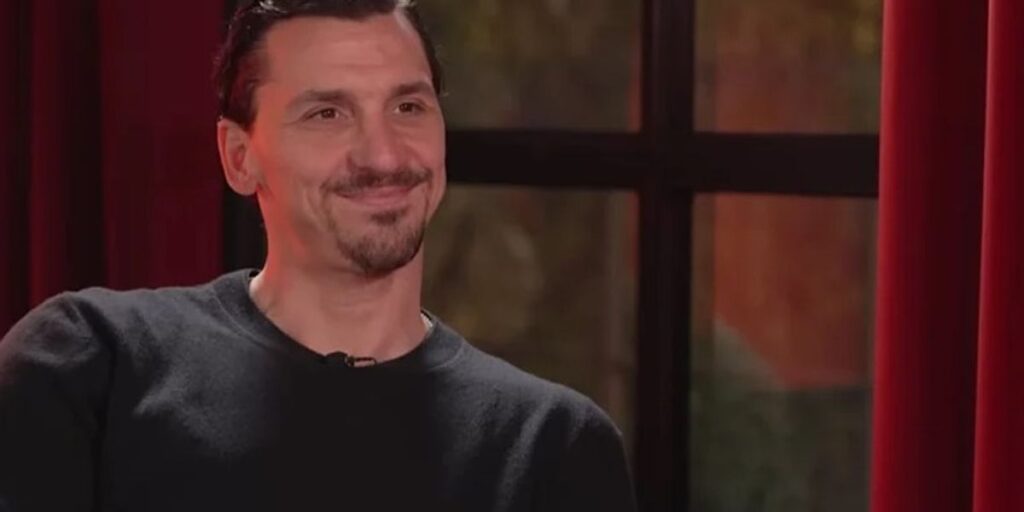
Zlatan Ibrahimovic has given his first major interview in the Bosnian language, on the show “(Ne)uspjeh prvaka” on “Arena Sport”, where in an open conversation with Slaven Bilic he touched on the topics of his childhood in Sweden and the impact of the war in Bosnia and Herzegovina.
Ibrahimovic grew up in Rosengard, Sweden, and, although his father and a large part of his family come from Bosnia, he emphasizes that he did not have much direct contact with the war and aggression that was happening there.
According to him, the war did not have a major impact on the way he grew up, but he still singles out two situations that remain in his memory from that period.
“In that Rosengard we were all together. For us we were all the same: Bosniaks, Croats, Serbs, Albanians… It didn’t matter where we came from, we had respect for each other. Then the war started. In those years we didn’t read newspapers, I didn’t even have a phone. I had a TV, but I didn’t watch the news.”
“All I felt was that my father was always on the phone. I realized he was talking to his family in Bosnia, to help them. I would go to my mother’s, I would usually go there to eat. They lived nearby, five minutes away, for the sake of the children. One day I went to my mother’s and they were all dressed in black.”
“I asked them why they were all wearing black and they told me to go outside, play football. They didn’t want to tell me. My grandmother had died in the war. They taught me to act like a little child, to enjoy life and play football. They didn’t want to tell me anything about it.”
Ibrahimovic reveals another moment when he felt that the war in our region had left its mark, this time through the change in mentality of refugees arriving in Sweden.
“My father made me play football. They would leave me outside so I wouldn’t feel what was happening. Then the refugees came to Sweden and they had a different mentality. I’m Bosnian, you’re Serb, that’s what they thought. When they came to that ghetto in Rosengard, the mentality was different.”
“In my head it was different, for me it was Yugoslavia. I had all my friends and we didn’t see who was who, but they were very different. We fought with them. They didn’t accept that everything was so mixed up. For me it was different.”Telegraph