
05
Jan 2026
Malta just pulled off one of its fastest migrant operations ever, sending 44 people back home in barely over two weeks.
The move has the government claiming victory in its fight against human smuggling, but questions remain about what happened to the rest of the group.
Fastest repatriation on record
According to Malta Independent, the group left Malta on the night of December 28, heading back to a country that officials declined to name publicly.
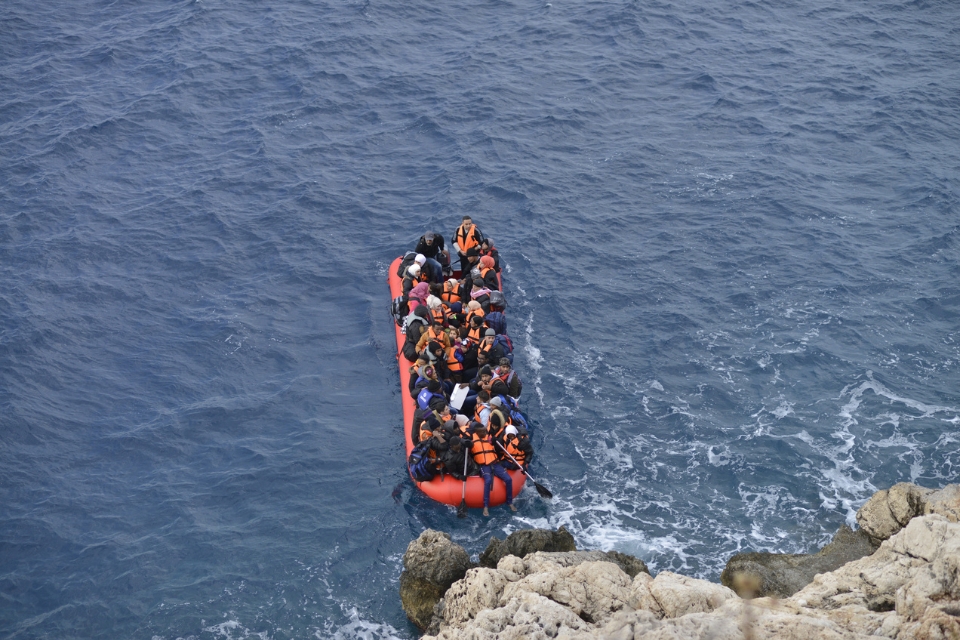
The migrants were part of a larger group of 61 people rescued by the Armed Forces of Malta on December 12 after their boat capsized in the Mediterranean. Within two-and-a-half weeks, nearly three-quarters of that group were on flights home.
This wasn’t a one-off operation. Four other migrants from the same rescue were returned in the days leading up to the larger group’s departure. That brings the total to 48 people repatriated within 17 days of landing in Malta.
The speed of these returns is unusual. Most repatriations take weeks or months to process, involving paperwork, identity verification, and negotiations with origin countries.
Malta’s government said that the quick turnaround was possible because of coordination between the police force, the Ministry for Home Affairs, Security and Employment, and the Ministry of Foreign Affairs and Tourism.
What the numbers show
The government said that with this latest operation, 81% of irregular migrants who arrived in Malta during 2025 have been returned to their countries of origin.
Arrivals have remained at some of the lowest levels, according to the government. Official figures show that irregular migrant arrivals to Malta fell by 93% over the past five years.
The government attributes this to what it describes as a “firm and fair policy” where deterrence and prevention are central.
Malta, one of the smallest countries in the European Union, has long struggled with its geographic position as a landing point for migrants crossing from North Africa. Its size and limited resources have made migration a politically sensitive issue for years.
The 61 migrants rescued on December 12 were brought to shore after their boat ran into trouble in Maltese waters. After being brought ashore, the migrants were taken to detention facilities where officials began processing their cases.
The government has not disclosed which country the 44 people were returned to.
(Image courtesy of tunaly via iStock)
Minister makes his case
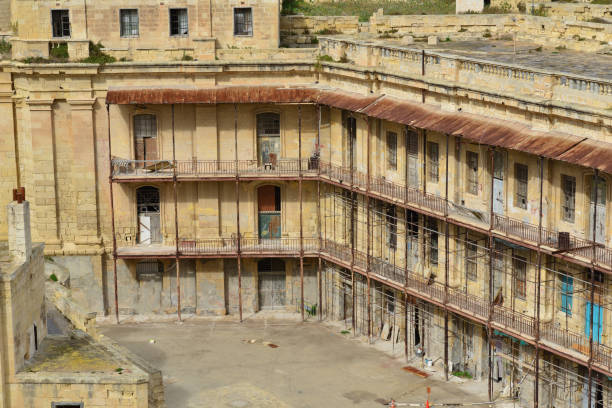
At the Ħal Safi Detention Centre during pre-flight preparations, Minister for Home Affairs, Security and Employment, Byron Camilleri thanked all the workers involved for their coordination.
According to the government statement, Camilleri noted that Malta is continuing to implement a policy of fair migration. The government said that this approach provides assistance to those deserving protection as refugees while returning those who abuse the system.
The minister said that the quick repatriation sends a strong message that the business model of human traffickers is being challenged. This shows that participation in this criminal model does not pay.
Camilleri added that this model risks lives at sea, and that attacking this model reduces the risk of lives being lost at sea.
Unanswered questions remain
The government’s announcement left several questions unanswered. Officials did not say what happened to the remaining 17 people from the original group of 61 rescued on December 12.
They also didn’t specify whether any of those individuals applied for asylum or are still being held in detention.
The country of origin for the returned migrants was not disclosed in any official statements. This kind of operational secrecy is common in repatriation cases, partly to avoid tipping off smuggling networks and partly due to diplomatic agreements with origin countries.
Malta has return agreements with several North African countries, though the specifics of these arrangements are often kept confidential. Previous repatriation operations have involved migrants from countries like Libya, Tunisia, and Egypt, though it’s unclear if this group came from any of those nations.
The government also didn’t detail the legal process that the 44 migrants went through before being returned.
Questions about whether they had legal representation, whether they were informed of their right to apply for asylum, and how their cases were assessed remain unanswered.
(Image courtesy of Paul-Briden via iStock)
New digital border systems coming
Malta’s handling of migration is about to change with new EU border systems rolling out this year and next.
The Entry/Exit System (EES), which began operations on October 12, is gradually being introduced at border crossing points across Europe. Malta is one of 30 European countries implementing the system.
The EES replaces passport stamps with digital records that track when non-EU nationals enter and leave. The system uses fingerprints and facial recognition to register travelers at borders.
Malta and other EU countries have until April 10, 2026, to fully implement the system at all their border crossing points.
Meanwhile, the European Travel Information and Authorization System (ETIAS) is set to launch in the last quarter of 2026. This system will require travelers from 59 visa-exempt countries to get pre-approval before entering Europe.
These systems give Malta and other EU countries more tools to manage who enters their borders. For Malta, dealing with irregular migration from North Africa, the digital systems could make it easier to identify and track people who arrive without authorization.
Speed and technology
The speed of this repatriation operation appears designed to demonstrate that Malta’s system is functioning as the government intends. The new EES and ETIAS systems will add another layer to border control.
Digital tracking makes it harder for people to disappear into irregular status after arriving. Pre-screening through ETIAS gives authorities a chance to flag potential security concerns before people even board planes or boats.
For the 44 migrants sent home on December 28, the digital systems weren’t yet fully in place. But future arrivals will face border control that combines physical patrols, detention facilities, rapid processing, and digital tracking.