
As governments around the world react to the US military operation in Venezuela, Slovakia has joined those warning that the episode underscores a growing erosion of international law and established global rules.
While international attention has focused on Washington’s use of force and the fate of Venezuela’s leadership, the events have also sparked a debate in Bratislava about what such actions mean for smaller states that depend on international norms rather than military power to safeguard their interests.
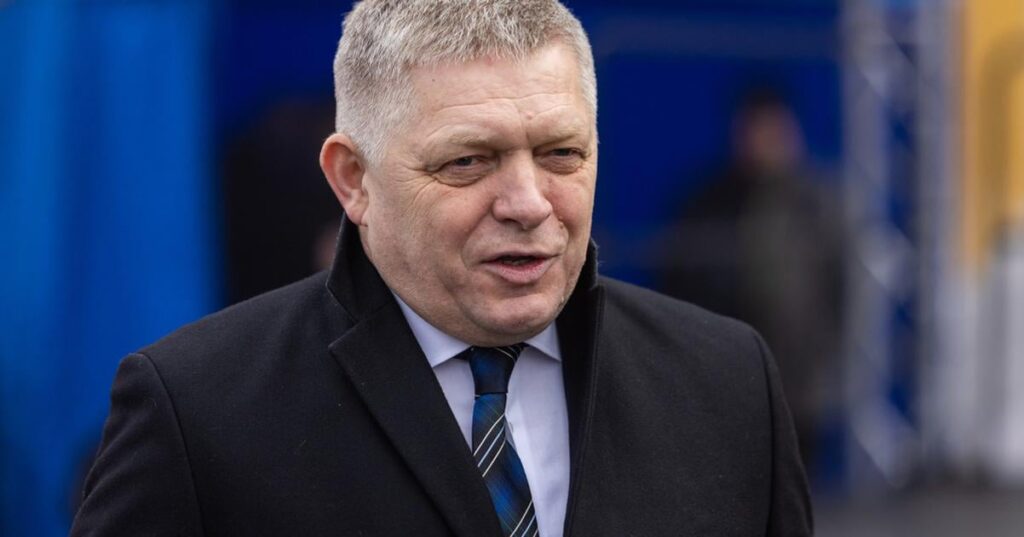
Prime Minister and Smer party leader Robert Fico said Slovakia, a central European country of 5.5 million people and a member of both the European Union and NATO, has little influence over global developments.
“We are a small country. We cannot change anything,” Fico said. “All we can do is watch in disbelief as American special forces kidnap the president of a sovereign Venezuela.”
At the same time, he praised US President Donald Trump for not attempting to justify the operation by invoking democracy or human rights, but instead speaking openly about gaining control over Venezuelan oil and allowing American companies into the country’s energy sector.
Fico recalled how the United States had misled the international community over the reasons for its invasion of Iraq in 2003, and how, during his earlier term as prime minister, he had decided to withdraw Slovak troops sent there by the government of Mikuláš Dzurinda.
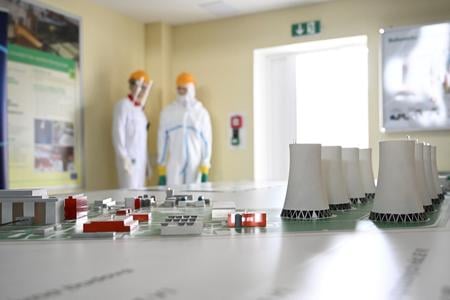
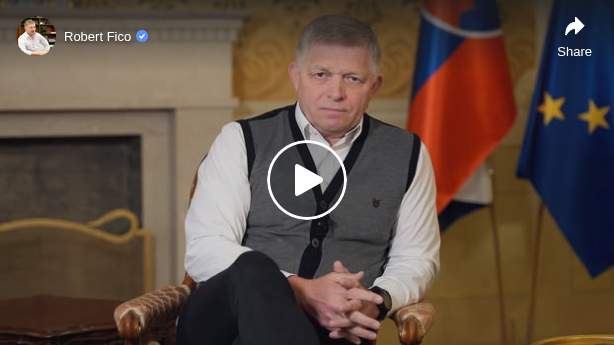
In a 13-minute video statement, Fico said he had been urged by several people in Slovakia to be cautious in criticising the US over Venezuela, although he did not name anyone. He acknowledged that Slovakia’s stance could complicate relations with Washington, particularly as the two countries are finalising a nuclear cooperation agreement linked to plans for a new reactor at the Jaslovské Bohunice power plant.
Nevertheless, he said remaining silent would contradict his government’s previous positions on international law, including its condemnation of Russia’s invasion of Ukraine.
While Fico formally recognises that Russia violated international law by invading Ukraine, he has repeatedly questioned EU sanctions on Moscow, maintained Slovakia’s reliance on Russian energy supplies, argued that Russia had limited alternatives, and opposed EU financial and military support for Kyiv.
Related article
Slovakia bets big on nuclear future amid soaring power demand
Read more
Criticism of the EU
The Venezuelan episode also prompted Fico to renew his long-standing criticism of the European Union. While Slovakia itself can do little beyond issuing “clear positions”, he said the EU — with a larger population than the US and significant economic power — was “incapable and hypocritical”.
A firmer EU stance, he argued, could have a strong deterrent effect. He repeated his long-standing call for the bloc to free itself from what he described as the “total influence” of the United States and to pursue an independent foreign policy.
Concerns about the weakening of global norms were echoed by Foreign Minister Juraj Blanár of Smer.
Any military action undertaken without authorisation from the UN Security Council further undermines the international system established after the Second World War, Blanár said — a system on which smaller countries such as Slovakia depend for stability and predictability.
“International law cannot be applied selectively according to political convenience,” the minister said.
Similar views were expressed within Slovakia’s governing coalition. President Peter Pellegrini and representatives of the Hlas party, a coalition partner of Fico’s Smer party, issued statements broadly aligning with the prime minister’s criticism of the US operation.
Not all coalition partners struck the same tone. The nationalist Slovak National Party (SNS) went further, calling on the government to demand the release of Venezuela’s President Nicolás Maduro and urging critics of US policy to apply to Washington the same measures imposed on Russia after its invasion of Ukraine.
Comparisons with Ukraine
Opposition parties offered more nuanced responses. Progressive Slovakia, the country’s strongest opposition force, said Venezuela’s president — whom it considers illegitimate — “would not be missed”, but stressed that even deeply controversial leaders must be dealt with within the framework of international law.
“This principle applies here as well — especially given how strongly we insist on it in response to Russia’s aggression against Ukraine,” the party said.
Reacting to those comments, SNS leader Andrej Danko accused the opposition of double standards. Referring to Progressive Slovakia leader Michal Šimečka, Danko asked whether the party would take the same position if Russia were to detain Ukrainian President Volodymyr Zelensky and his wife.
“If you believe Maduro’s removal is acceptable,” Danko said, “would you also have no problem if Russia were to take President Zelensky in the same way?”
Ukraine is a recognised democracy with an elected president, while Venezuela is widely regarded by Western governments as an authoritarian state following elections that international observers have judged neither free nor fair.
Other opposition figures also weighed in. Liberal and conservative parties criticised the governing coalition for what they described as an inconsistent approach to the US, while urging the EU to articulate a clearer and more unified response.
Progressive Slovakia also accused Fico of double standards, arguing that his criticism of Europe was not matched by concrete action.
“Prime Minister Fico likes to accuse Europe of hypocrisy,” the party said. “He claims the EU is unable to respond to what he calls Donald Trump’s illegal intervention in Venezuela and says it is too dependent on the United States. Now he has a unique opportunity to prove that he is different. Words are cheap.”
The party called on Fico to cancel his planned visit to the White House and to launch a new tender for the construction of a nuclear reactor unit at Jaslovské Bohunice.
Related article
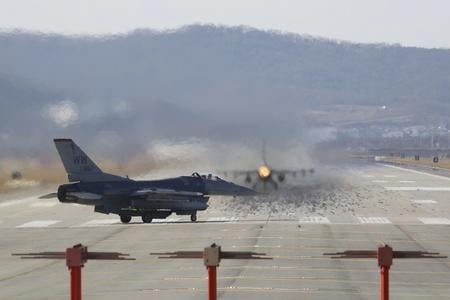
Government has approved the purchase of F-16 jets
Read more
Kaliňák downplays Greenland fears
Defence Minister Robert Kaliňák of Smer said after the attack on Venezuela that Slovakia still needed four additional F-16 fighter jets from the United States. He described the US action as bad news above all for Ukrainian President Zelensky, noting that Russia also justifies its aggression by appealing to its own strategic interests.
“It is also important to watch what message this sends to Taiwan,” Kaliňák added. He dismissed concerns that Venezuela could signal a potential US attack on Greenland, fears raised by the Danish government. In his view, the Trump administration’s goal is merely a stronger US military presence on the island.
“I do not think Greenland is a real risk,” Kaliňák said. “That would probably definitively rupture relations between the US and Europe.”
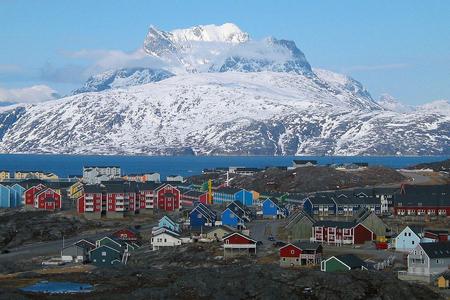
Trump’s interest in Greenland, an autonomous territory of Denmark, reflects its strategic importance in the Arctic, where melting ice is opening new shipping routes and access to resources, and where the US operates a key missile-warning and space-surveillance base. Washington also views the island as central to countering growing Russian and Chinese activity in the region.
Related article
“Can you imagine a war between NATO allies? Putin would laugh.”
Read more
For Slovakia, the debate goes well beyond Venezuela. The country neighbours Ukraine and lies on NATO’s eastern flank, in a region where Russia has repeatedly challenged the post-Cold War security order. References by major powers to spheres of influence resonate strongly in central Europe, where historical experience has left smaller states wary of a world shaped primarily by power rather than by rules.