
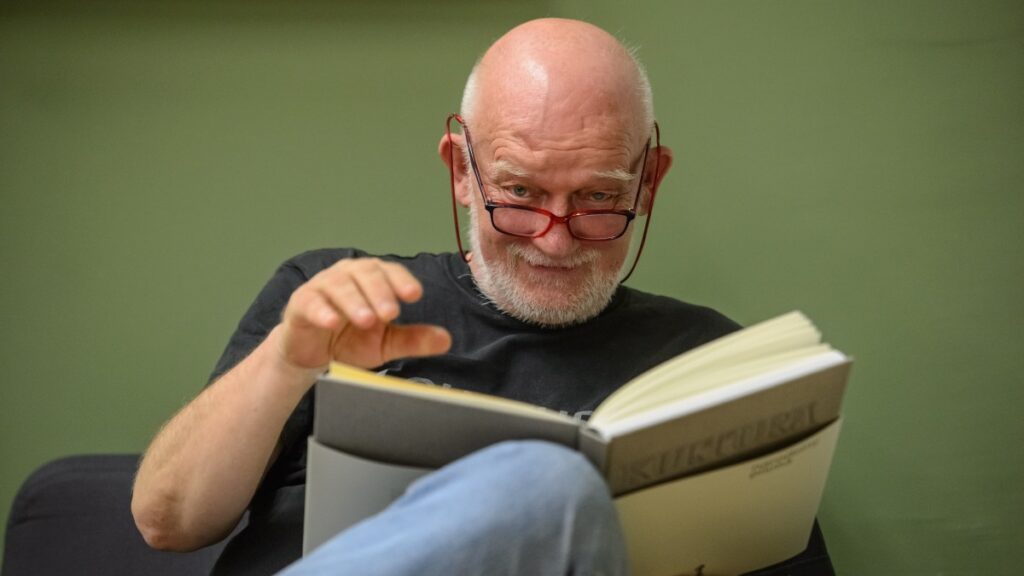
In communist-ruled Poland, the many censors employed by the Central Office for Control of the Press, Publications and Public Spectacles believed they could control everything that was published. They had not reckoned with the ingenuity, determination and courage of Miroslaw Chojecki.
The underground publishing operation he founded in the 1970s, Nowa, brought out tens of thousands of copies of books, newspapers and other publications that the communist regime wanted to suppress. It was crucial for the preservation of a sense of free Polish culture and the spread of independent organisations including the trade union group Solidarity, which would steadily undermine communist rule.
“Some writers get tired of publishing pulp,” Chojecki said drily of those who had tried to avoid censorship by writing according to the regime’s demands for sterile conformity. Publication by his operation became by contrast a badge of cultural honour. There were works by prominent Polish authors such as Czeslaw Milosz and also foreign writers including Günter Grass, Milan Kundera, George Orwell and Aleksandr Solzhenitsyn.
Chojecki described his main motivation as moral rather than political. He wanted to keep alive knowledge of Polish history including the long struggle for democracy. And he hoped to lessen the sense of dual lives Poles felt forced to lead, with one kind of truth for private use and another for work and public life.
What was perhaps most impressive about his operation was its resourcefulness. “There are scarcities and shortages of nearly everything that was needed [to publish],” he said, “except the wits and courage to make it survive.” The regime did its best to deny him the fundamentals of printing presses, paper and ink. But much was acquired on the black market or produced independently. “I went into the printing business because I am a chemist,” he joked. “We can’t get printing ink in this country. So I made it.”
The work was also carefully organised to make it as difficult as possible for the authorities to suppress it. Volunteer typists making copies of volumes were based across the country, and there was a sophisticated distribution network. Nowa became known as a “field press”, constantly changing its many small premises and distributed through mobile “shops” that only held a few copies each, so numerous police raids had little effect. “For several years,” he reported, “we’ve learnt how to throw the police off our tails.” Turning the tables on the secret police, his team kept a note of their persecutors’ car registration numbers so any approach could be tracked and evasive action taken.
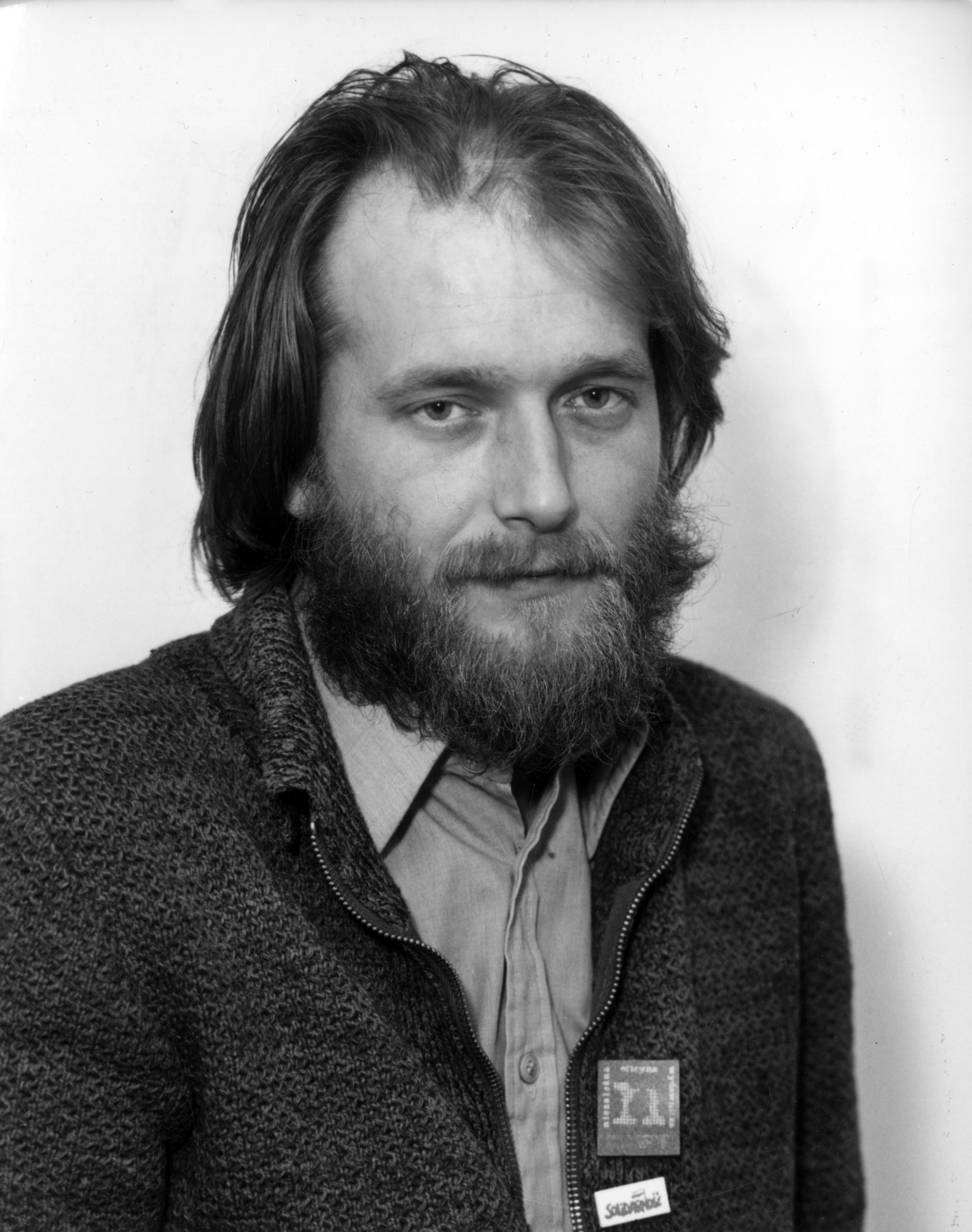
After his arrest in 1980, Chojecki went on hunger strike and denounced the regime’s “monopoly of thought”
AVALON/TOPFOTO
On one occasion Chojecki was offered a printing press for a suspiciously small sum and correctly assumed it was a police sting. But he still arranged to collect it on the steps of Warsaw’s cathedral, which he then entered. He left by a back door and stepped into a car. He was soon followed and stopped by the police. But they found no press to confiscate, as he had left that concealed in the cathedral, to be dismantled and carried off by his co-workers in inconspicuous shopping bags.
The more he persisted, however, the more the communist authorities were determined to stop him. In the 1970s his home was searched 80 times, and a bizarre list of his possessions was confiscated including the contents of his bins, jazz tapes, cans of meat and a jar of curry powder, which the police claimed contained radioactive isotopes. He was subject to constant intimidation, arrested with increasing frequency and charged among other things with illegally owning printing equipment and “vilifying the Polish Republic”.
In 1980 he was arrested and threatened with imprisonment, prompting domestic and international protests, given his growing reputation. He went on hunger strike and was force fed but used his trial to condemn the regime for pursuing a “monopoly of thought”. After strikes broke out at the Lenin shipyard in Gdansk led by Lech Walesa and the independent trade union Solidarity, Chojecki was arrested again for publishing a newsletter about the events. He was released when the government made an initial agreement with its opponents. And he was able to travel to the West, attending the award of the Nobel prize for literature to Czeslaw Milosz and visiting organisations including Index on Censorship, which had taken up his cause.
When martial law was imposed on Poland under General Jaruzelski in 1981, however, Chojecki was prominent on lists published of the new hardline regime’s prime enemies. He remained abroad, mainly in Paris, living there with his wife, Jolanta Kessler, a journalist and documentary maker whom he married in 1983. They had a daughter and five sons.
He continued to work tirelessly to raise funds to sustain independent publishing in Poland and import materials — including film and audio cassettes — clandestinely from the West, often with US and specifically CIA support. A recent book on the effort by Charlie English, The CIA Book Club, focused on Chojecki’s growing fame. He was dubbed Solidarity’s “minister for smuggling” and was seen by his friends, with his “mane of red-brown hair and penetrating blue-eyed gaze”, as like a Polish Christ, “only somehow bolder” — a man of practical action rather than rhetoric. The work masterminded by Chojecki contributed significantly to the movement that challenged ever more directly the communist monopoly of power in Poland until it began to collapse early in 1989.
Some of his boldness in confronting state power was inspired by the example of his mother, Maria, a teacher and part of a Polish resistance team that had assassinated a Nazi police chief in Warsaw in 1944. His father, Jerzy, had also been active in the wartime resistance. Miroslaw Jerzy Chojecki was born in the Polish capital in 1949 and while at school first came across forbidden literature smuggled in from the West. He trained as a chemist and nuclear physicist but was also a student activist and public supporter of those who challenged the regime, such as workers striking against high food prices in the mid-1970s. That cost him his job at the Polish Institute for Nuclear Research and before long he suffered his first imprisonment. It was while detained that he had the idea for the creation of an underground publication network.
After the end of communist rule in Poland, Chojecki returned to live there and was part of the group creating the country’s first commercial TV station. He was also active in the film industry. But his work in support of dissidents was not over, turning his attention to helping those opposing the dictatorial rule of Aleksandr Lukashenko in Poland’s neighbour, Belarus.
As Poland rushed towards a new commercialised, globalised and computerised world, the memory of communist-era censorship and the precious nature of independently produced printed materials swiftly faded. But those who had lived through those decades knew well how significant the work of Chojecki and his allies had been as they foxed the authorities with their mobile presses and secret networks.
“We should build a monument to books,” commented Adam Michnik, a prominent dissident. “A book is like a reservoir of freedom, like fresh air. They allowed us to survive and not go mad.” Miroslaw Chojecki had done much to ensure that free books and much else besides had sustained that survival.
Miroslaw Chojecki, independent publisher, was born on September 1, 1949. He died on October 10, 2025, aged 76