
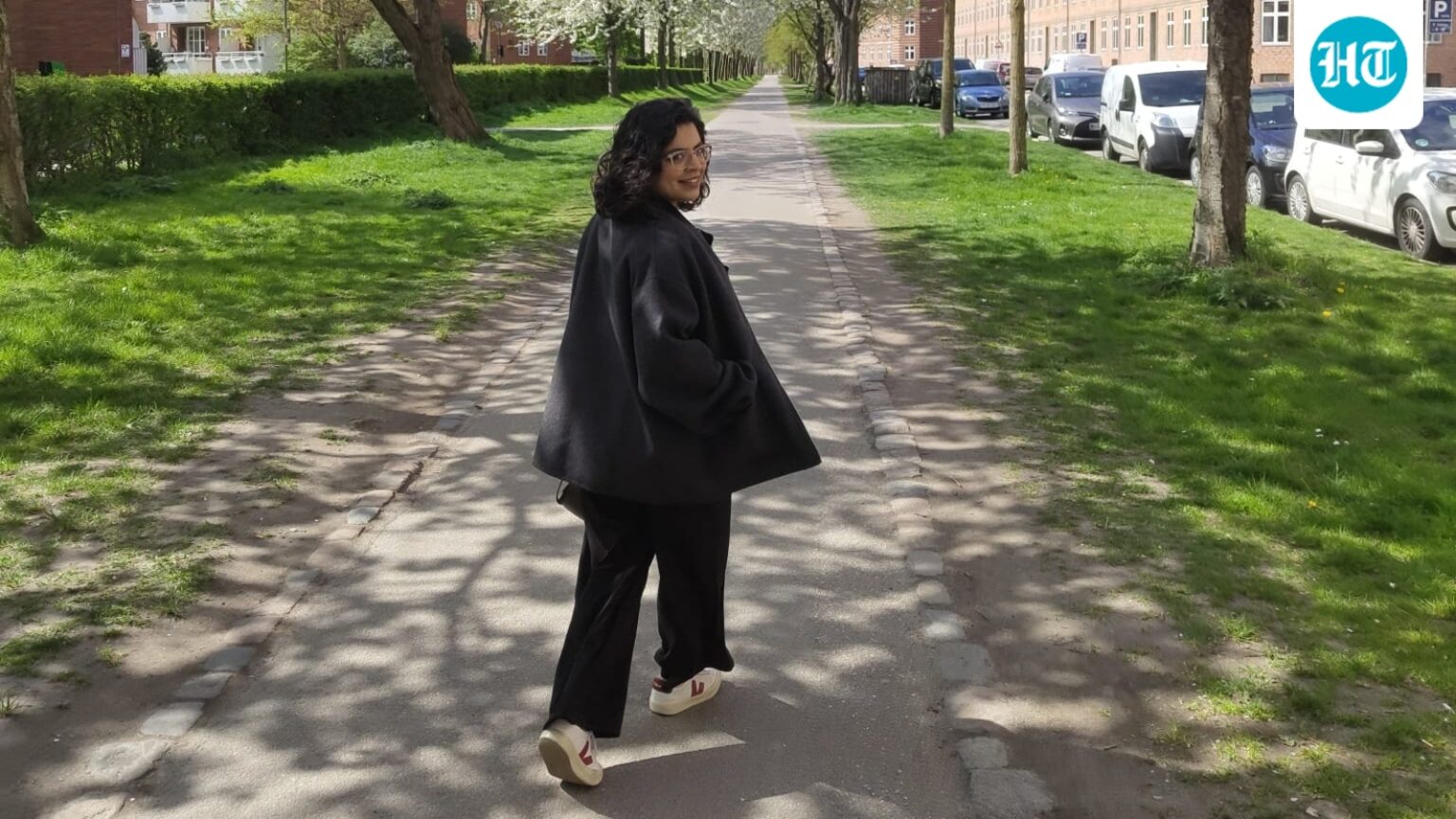
An Indian entrepreneur living in Denmark has opened up about the ins-and-outs of building a new life abroad, sharing insights on cultural adjustments and financial realities. Meghna left her high-flying career in Indian media to move to Denmark with her husband five years ago. Since then, she has worked at a Danish company, adjusted to major lifestyle changes, bought her own apartment in Denmark and even started her own business in the European country.
 Meghna is an Indian entrepreneur in Denmark, where she has opened her own consultancy firm.
Meghna spoke to HT.com about job-hunting, her entrepreneurial journey, the challenges of living away from home and more.
Early life and career in India
“I grew up in New Delhi. I did most of my schooling and undergrad in New Delhi, before moving to Chennai for my post graduation in journalism.
“I’ve spent most part of my communications career working with a news media group where I worked across television and digital editorial roles. From there, I pivoted to the startup ecosystem where I worked in branded content strategy as part of a media tech company,” said Meghna.
The move to Denmark
In 2021, Meghna’s husband got the opportunity to move to Denmark. “While the paperwork was being done, we did some quick research by speaking to a few of his colleagues on what is life like in Denmark, how expensive it is to stay, what’s the cost of living, and how difficult it is or easy it is to find a role for spouses.
“In that research, we learned that it’s really challenging for spouses to land roles in Denmark,” Meghna explained.
The couple decided that Meghna would initially stay back in India for a bit, continuing with her job. But then something unexpected happened.
“But just to try my luck out, I applied for a few jobs. Got a few rejections — but then I got a call for a role at a reputed Danish organisation. The interview went very well. I had a lot of fresh ideas, having worked in communications and marketing. Things moved quickly and I was offered the role,” Meghna revealed to HT.com.
Meghna decided to take up the job offer and move to Denmark with her husband, even though the role came with less seniority than her previous job in India.
“Although in seniority the role was many steps back but at least as a unit we would be in the same country, being double income. So, after a month of my husband moving to Denmark, I followed with my own visa and my own job,” she said.
No 10-minute deliveries in Denmark
Asked how the shift to Denmark has changed her day-to-day life, Meghna replied, “Full 180 degrees change. I am more independent, more mobile, more fit.”
She said that life in India offers comforts like quick-commerce and food delivery, which are missing in Denmark. But she does not view that as a drawback of life in the European country. (Also read: ‘Dependent on daily wages’: Why some delivery agents kept working despite nationwide strike)
“Labour is expensive because they are paid fairly, so getting a cleaner or food delivery costs more,” Meghna said.
“But you get used to the ways of life, carrying groceries, cycling 2 kms to collect or return your online order, cleaning your own home, maintaining your own garden. It’s not a setback or upgrade but a different way of life that feels normal,” she explained.
The pros and cons of life in Denmark
“The only setback I see is that when you arrive as a spouse, if your skills are not part of the skillset there is a high demand for, you will have to work hard and be patient to land something. Or you will have to create opportunities for yourself. This is especially true for those from the Global South, as they struggle more than others.
“But having said that, as a woman the biggest upgrade I have seen is the sense of safety and freedom. I can be truly myself without any judgement.
“I can and have taken the metro and walked home alone at 3am without feeling unsafe. The first year it was a strange feeling. Being from Delhi, my guard is always up. But now in my 5th year, I wouldn’t trade this safety for any other comforts or privileges,” said Meghna.
Starting her own business in Denmark
In 2023, Meghna was impacted by company-wide layoffs in Denmark. “That’s when I started to live the nightmare of how difficult it is to find a job in Denmark,” she told The International.
“I was volunteering, posting on LinkedIn, networking, customising my cover letter, and sending different CVs. Ultimately, I had to set up my own company to create employment for myself and pay my own bills,” she said.
She launched Pillion Expats the following year.
“I would love for Pillion Expats to be a true community space for spouses, where they could ask for any kind of support or resources or insights… We want to build a sponsorship + mentorship program and scale it. I hope to see more non-EU representation, more women like me, across forums, organisations, social initiatives, and in media,” she told HT.com.
Earnings in Denmark vs India
Meghna explained that even when they were in the top 1% income bracket in India, their money didn’t stretch as far as they expected. Despite earning a high salary, most of it went into rent, insurance, and investments, leaving little room for luxuries like owning a car, going on foreign holidays, or buying a house.
In practical terms, their purchasing power felt limited, and the comforts often associated with wealth were still out of reach.
By contrast, Denmark has given them the opportunity to buy their own apartment and travel more often — even though they are not anywhere near the country’s top income bracket.
Buying a flat in Denmark
“We were in the top 1% income bracket in India and yet our purchasing power did not feel enough. Going by the usual lens through which we measure success in India, we did not own a car, foreign holidays were not our thing, we didn’t own a house. Most of our income went into rent, insurances and investments for the future.
“Here in Denmark, the first year I earned an average pre-tax salary per month. With a double income, we were able to enjoy a comfortable life, travel a fair bit, and also save. Eventually, we saved enough to buy an apartment in the city.
“Even though we are nowhere near the top income bracket in Denmark, our purchasing power is better here. It’s funny how we can afford a car but now we don’t have the need for it – as we bike or take public transport everywhere. Priorities have changed,” said Meghna.
(Also read: ‘They are living life, we are surviving it’: Indian man voices frustration after visiting Paris, Zurich)