
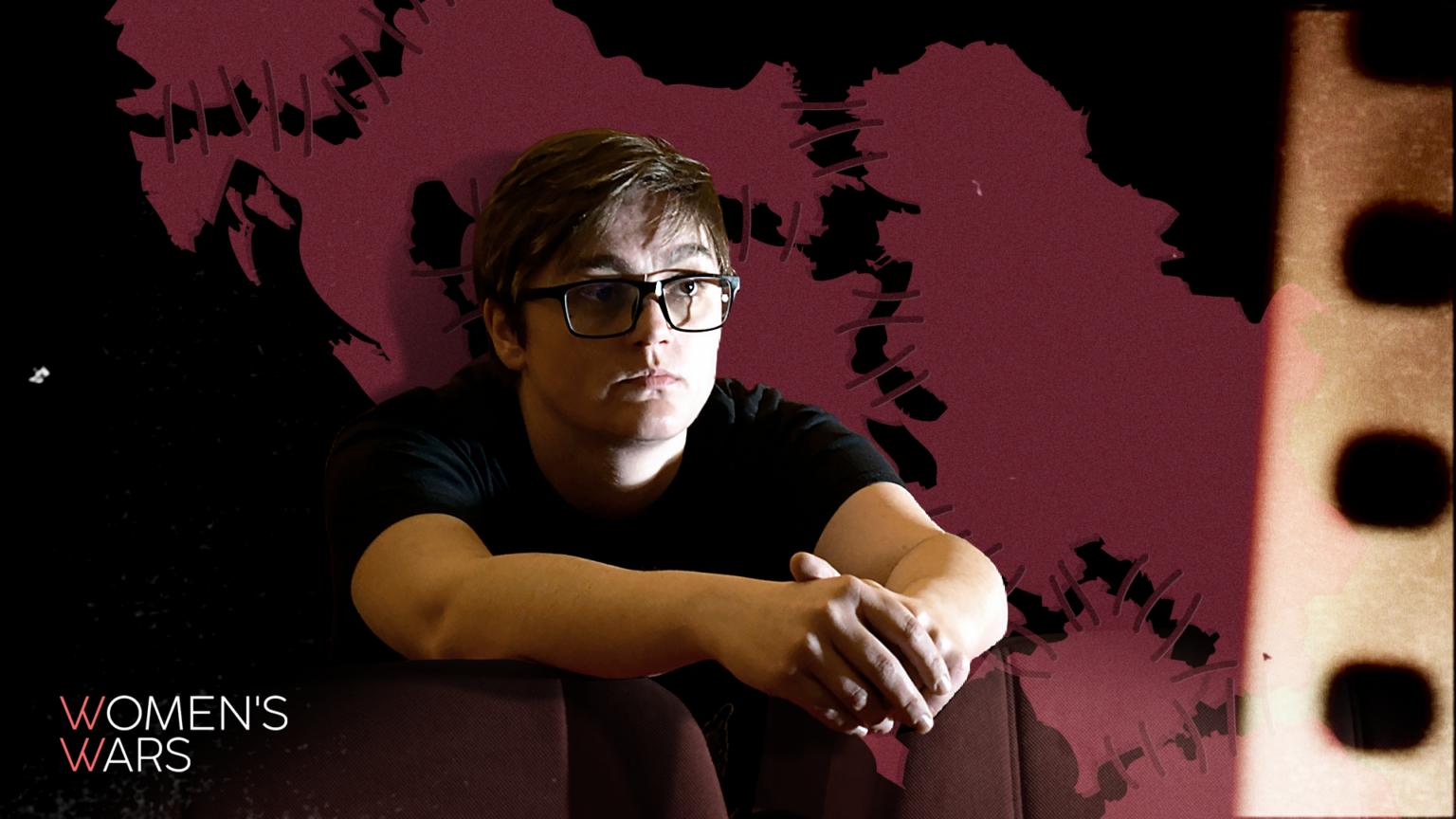
Children born out of wartime sexual violence suffer as a result various societal stigmas. Some people regard still them as the “children of enemies”. Others blame their mothers, even though they were victims.
A widely-held view in Bosnian society is that “the child is not guilty but [the mother] is – she was there, she did this”, Jusic says.
“It was maybe the hardest thing to take, to understand … because you [the child] know she is not guilty, but they are still trying to make her guilty even when you speak up and give the story and the reality – of how important she was … in my life, to survive in this kind of society,” she adds.
Understanding the societal obstacles was a long process for Jusic, she remembers. “But it’s not something that defines me strictly today because, together with my mother and stepfather, we got professional support, which helped us to create the life that we live today.”
While she is happy she decided to devote herself to the cause of war children, Jusic says that broaching the whole issue with her family was tough on her mental health. “My health is not something that I can just go into the shop and buy again. It’s something that I need to nurse and something that I need to keep,” she says.
“It took me a lot of time and courage at the end of the day – which is one of the biggest tasks of every child born out of war – to open this huge dialogue with my family.”
Seeking mental health support still carries a social stigma in Bosnia but Jusic says she managed to win the support of her mother and stepfather to do it. She says she now understands that her origin “is not something changeable but is something that I need to carry as a part of my life”.
Her own circumstances, she admits, were unusual in this regard. “I was born in the first safe house for survivors here in Bosnia, the safe house called Medica Zenica. In this kind of environment, where my mother spent some time, she had professional support that guided her through the process, which is really important. Later on, my mother was always open to include professional support in my life and in our family life,” she explains.
One lesson she has learned is that “trauma is like happiness – sometimes you feel it, sometimes you don’t feel it. You cannot just destroy it and say: ‘I will leave that trauma in this street, I will go to another street.’”
‘Human rights, not just ethnic rights’