
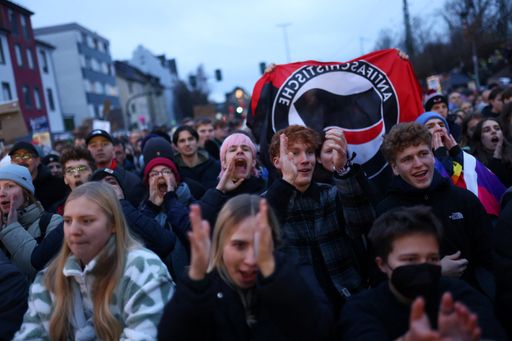
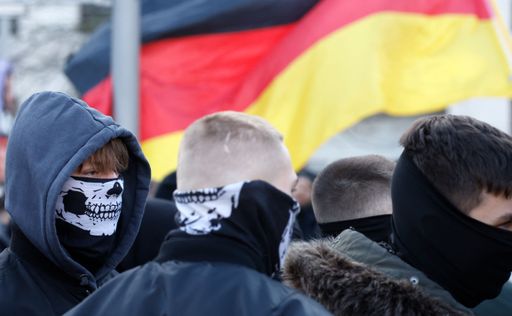
Far-right extremist ideas and structures are being felt more strongly than ever in daily life across Germany, an expert has warned.
Speaking to Anadolu, Romy Arnold, the project manager at MOBIT, a Thuringia-based organisation combating right-wing extremism, said that far-right ideologies and structures are becoming increasingly noticeable, particularly in structurally weak regions, and are expanding their influence among young people.
According to Arnold, dehumanising and neo-Nazi attitudes are now more openly visible on the streets, in parliament, and at the local level.
“We see that far-right patterns of thought are becoming more widespread,” she said.
Arnold noted that the rise in far-right attacks also confirms this broader picture. She added that the far-right Alternative for Germany (AfD) party’s growing vote share in every election is no longer limited to eastern Germany.
Pointing out that neo-Nazi parties continue to achieve high vote shares in local elections in some regions, Arnold said right-wing combat sports networks, youth groups, and loosely organised far-right networks are also on the rise.
“The far-right tries to infiltrate every space where people are present. This is particularly evident in structurally weak regions,” she said.
Arnold also addressed the causes of growing anger among young people, citing weak industrial structures, the withdrawal of the state from rural areas, problems within the education system, and the lack of sufficient recognition for the sacrifices demanded of young people during the COVID-19 pandemic as factors fueling this frustration.
Related
‘Democratic parties ignoring young people’
Arnold stressed that the far-right exploits this anger “very strongly and very effectively,” while also offering its own sense of identity. She criticised mainstream politics.