
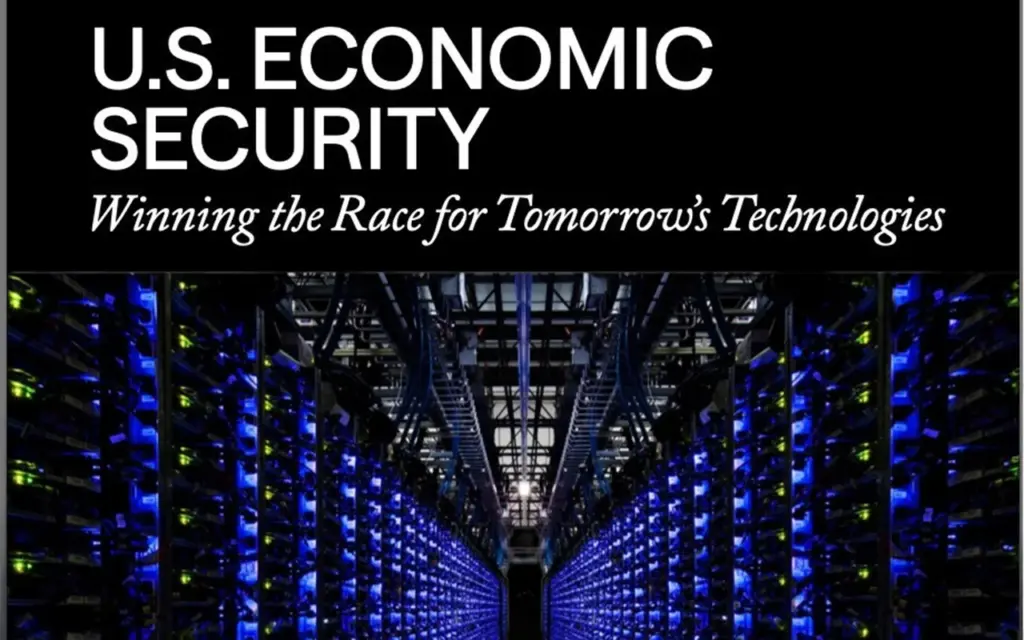
A new Council on Foreign Relations Task Force report warns that American leadership in artificial intelligence (AI), quantum computing, and biotechnology is under threat, with dangerous supply chain vulnerabilities and insufficient investment putting the nation at a strategic disadvantage.
The bipartisan report paints a sobering picture of the challenges ahead. China has spent $900 billion over the past decade on AI, quantum, and biotech development, outpacing U.S. investment in key areas, and spending twice as much on quantum technologies alone. Meanwhile, the Council on Foreign Relations (CFR) explains private capital in America has retreated from these sectors due to long development timelines and uncertain commercial demand, with early-stage biotech financing plummeting “65 percent in the first half of 2025.”
Dangerous Dependencies
The report highlights alarming supply chain vulnerabilities that could be exploited during geopolitical tensions. The United States depends on China for 70 percent of its rare earth elements overall and 99 percent of heavy rare earths. In the semiconductor ecosystem, 30 percent of printed circuit boards and 60 percent of essential chemicals come from China. The biotech sector faces even steeper dependencies, with 80 percent of key starting materials and 33 percent of global active pharmaceutical ingredient capacity sourced from China.
These concentrated supply chains create strategic chokepoints that could be weaponized, the Task Force warns, particularly if tensions with China were to escalate.
Practical Recommendations to Counter Risks
To address these vulnerabilities and secure U.S. technological leadership, the Task Force proposes several targeted interventions:
Manufacturing and Supply Chains: Build on the Trump administration’s AI Action Plan by bringing critical semiconductor component manufacturing—including chemicals, printed circuit boards, and IC substrates—back to the United States. Establish a national network of advanced biomanufacturing hubs and fund companies to maintain six-month stockpiles of essential pharmaceutical materials from trusted sources.
Quantum Computing: Accelerate development of the world’s first utility-scale quantum computer through Defense Department procurement, using government demand to stimulate private sector innovation and production capacity.
Critical Minerals: Expand the National Defense Stockpile, streamline permitting processes, and collaborate with allies to map alternative mineral sources and develop recovery and substitution technologies.
Workforce Development: Support the machinists, electricians, and trades workers essential for manufacturing and maintaining advanced technology infrastructure, building on existing talent strategies.
Institutional Capacity: Create an Economic Security Center at the Department of Commerce to improve coordination, technical expertise, and public-private partnerships in monitoring and enforcing technology controls.
The Task Force emphasizes these measures are designed to unleash rather than constrain the U.S. innovation ecosystem, enabling the private sector to scale and deploy technologies globally. Given the rapid pace of technological change, the report also offers principles to guide future policymakers in deciding when market intervention serves genuine national security interests.
The full report provides detailed analysis of vulnerabilities and comprehensive recommendations for maintaining American leadership in the technologies that will define the coming decades.