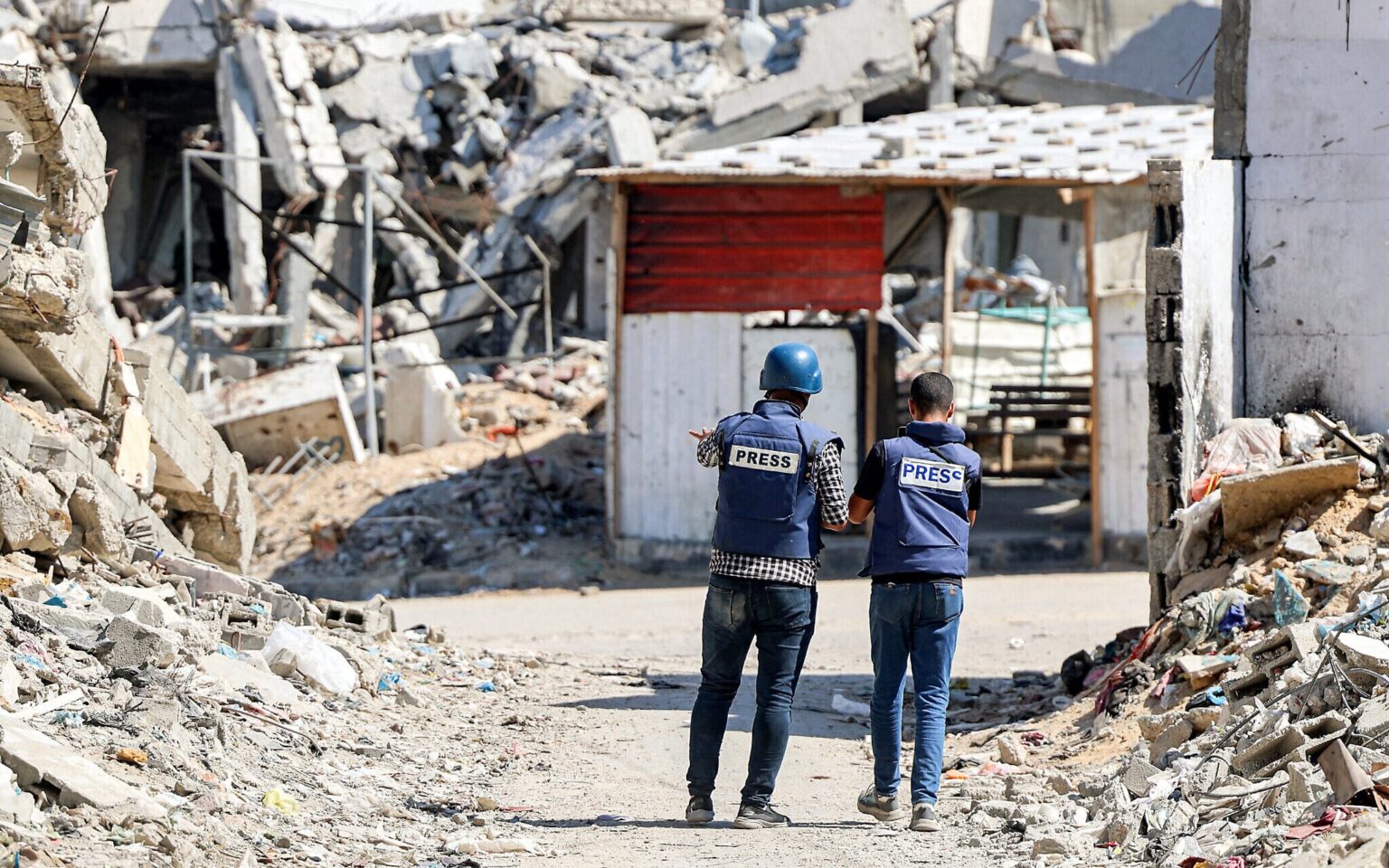
An international media association on Tuesday criticized the Israeli government for maintaining its ban on unrestricted media access to Gaza, calling the move disappointing, at the same time as foreign nations continued to keep the heat on Israel over its decision to bar dozens of nonprofit organizations from operating in the enclave.
Israel’s barring of foreign media and decision to halt the work of 37 NGOs inside the Strip come nearly three months into a tenuous ceasefire, and as conditions remain dire for many of the war-torn enclave’s 2.3 million residents.
The government told the Supreme Court in a submission late Sunday that the ban on foreign journalists should remain in place, citing security risks in the Gaza Strip.
The submission was in response to a petition filed by the Foreign Press Association (FPA) — which represents hundreds of journalists in Israel, the West Bank and Gaza — seeking immediate and unrestricted access for foreign journalists to the Gaza Strip.
“The Foreign Press Association expresses its profound disappointment with the Israeli government’s latest response to our appeal for full and free access to the Gaza Strip,” the association said on Tuesday.
“Instead of presenting a plan for allowing journalists into Gaza independently and letting us work alongside our brave Palestinian colleagues, the government has decided once again to lock us out,” despite the ceasefire in the enclave, it added.

Palestinian journalists carry posters and mock coffins with pictures of their colleagues who were killed during the war in Gaza and read “stop the media genocide, journalism is not a crime,” during a symbolic funeral to commemorate the second anniversary of the war in Gaza, in front of the United Nations office, in the West Bank city of Ramallah, October 8, 2025. (AP Photo/Nasser Nasser)
Since the outbreak of the war in Gaza, triggered by the Hamas-led massacre in Israel on October 7, 2023, Israeli authorities have barred foreign journalists from independently entering the devastated enclave.
Instead, they have allowed only a limited number of foreign reporters to enter Gaza on a case-by-case basis, embedded with its military forces operating inside the Strip. While Israeli journalists have been granted more opportunities to enter the enclave, they too must be embedded with troops to go in.
The FPA filed its petition in 2024, after which the court granted the government several extensions to submit its response.
Last month, however, the court set January 4 as a final deadline for the government to present a plan for allowing media access to Gaza. In its submission, the government maintained that the ban should remain in place, citing security risks in the territory.
“This is for security reasons, based on the position of the defence establishment, which maintains that a security risk associated with such entry still exists,” the government submission said.
The government also said that the search for the remains of the last hostage held in Gaza, was ongoing, suggesting that allowing journalists in at this stage could hinder the operation.
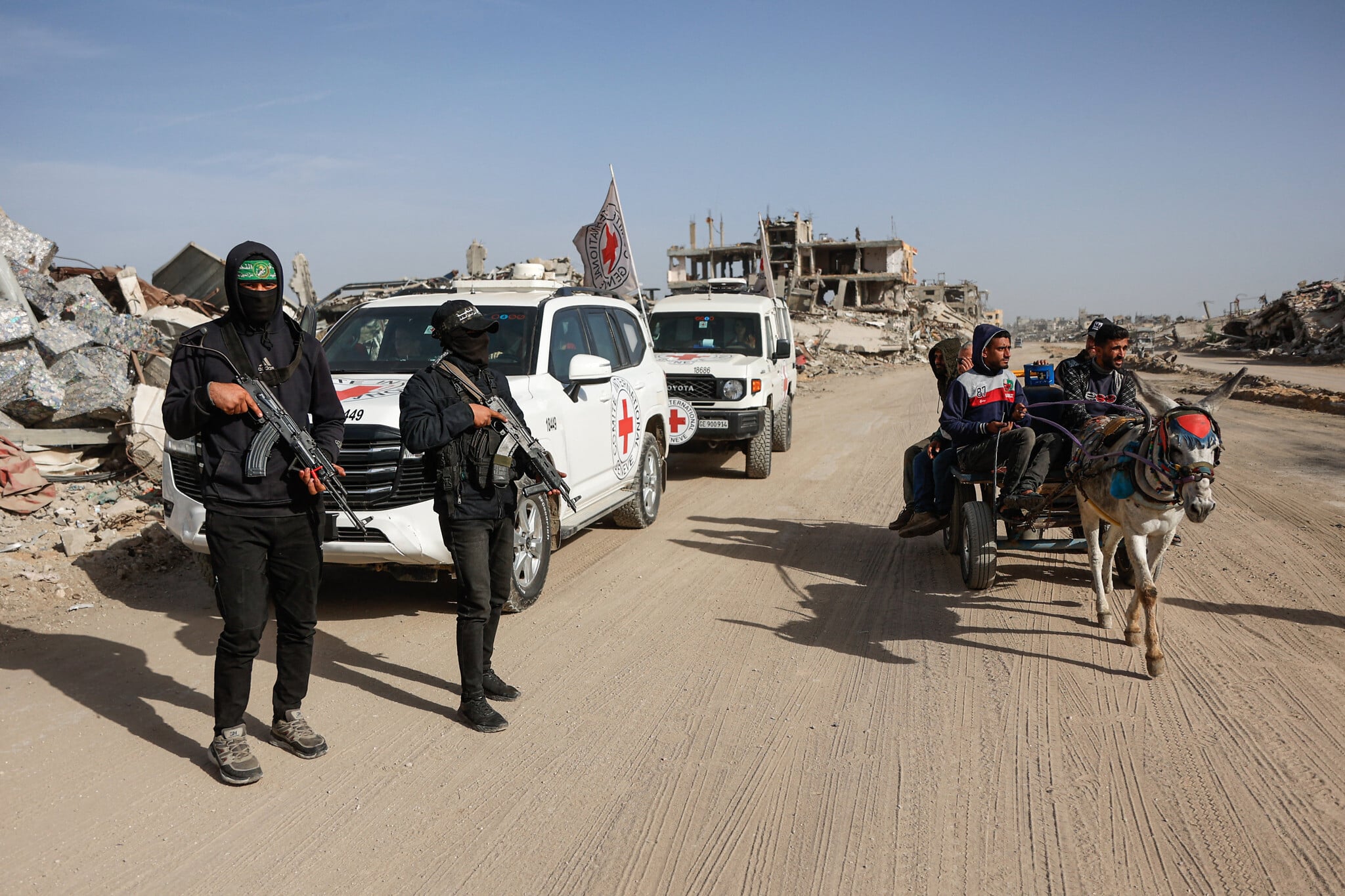
Hamas gunmen are present as Egyptian workers, accompanied by members of the International Committee of the Red Cross, search for the remains of the last Israeli hostage, Master Sgt. Ran Gvili, in the Zeitoun neighborhood of Gaza City on December 8, 2025. (Omar AL-QATTAA / AFP)
The remains of police Master Sgt. Ran Gvili, whose body was abducted to Gaza after he was killed during Hamas’s 2023 invasion, have still not been recovered despite the ceasefire.
The FPA said it planned to submit a “robust response” to the court, and expressed hope the “judges will put an end to this charade.”
“The FPA is confident that the court will provide justice in light of the continuous infringement of the fundamental principles of freedom of speech, the public’s right to know and free press,” the association added.
The Supreme Court is expected to issue a ruling on the matter, though it is unclear when a decision will be handed down.
EU officials urge Israel to reverse ban on NGOs in Gaza
Also on Tuesday, the European Union criticized Israel after the Diaspora Affairs Ministry announced last week that the licenses of 37 international nonprofits operating in Gaza and the West Bank would not be renewed for 2026, due to what it said was their failure to comply with stringent new requirements to register with the government.
The list includes multiple branches of Doctors Without Borders and Oxfam, the Danish and Norwegian Refugee Councils, Caritas Internationalis, an umbrella for Catholic charities, the Quaker-founded American Friends Service Committee, and the International Rescue Committee.
The Defense Ministry has claimed that the expiration of the licenses will not affect aid provisions in Gaza, but humanitarian groups have nevertheless sounded the alarm, with the UN and leading NGOs warning that the organizations still licensed by Israel are “nowhere near the number required just to meet immediate and basic needs” in Gaza.
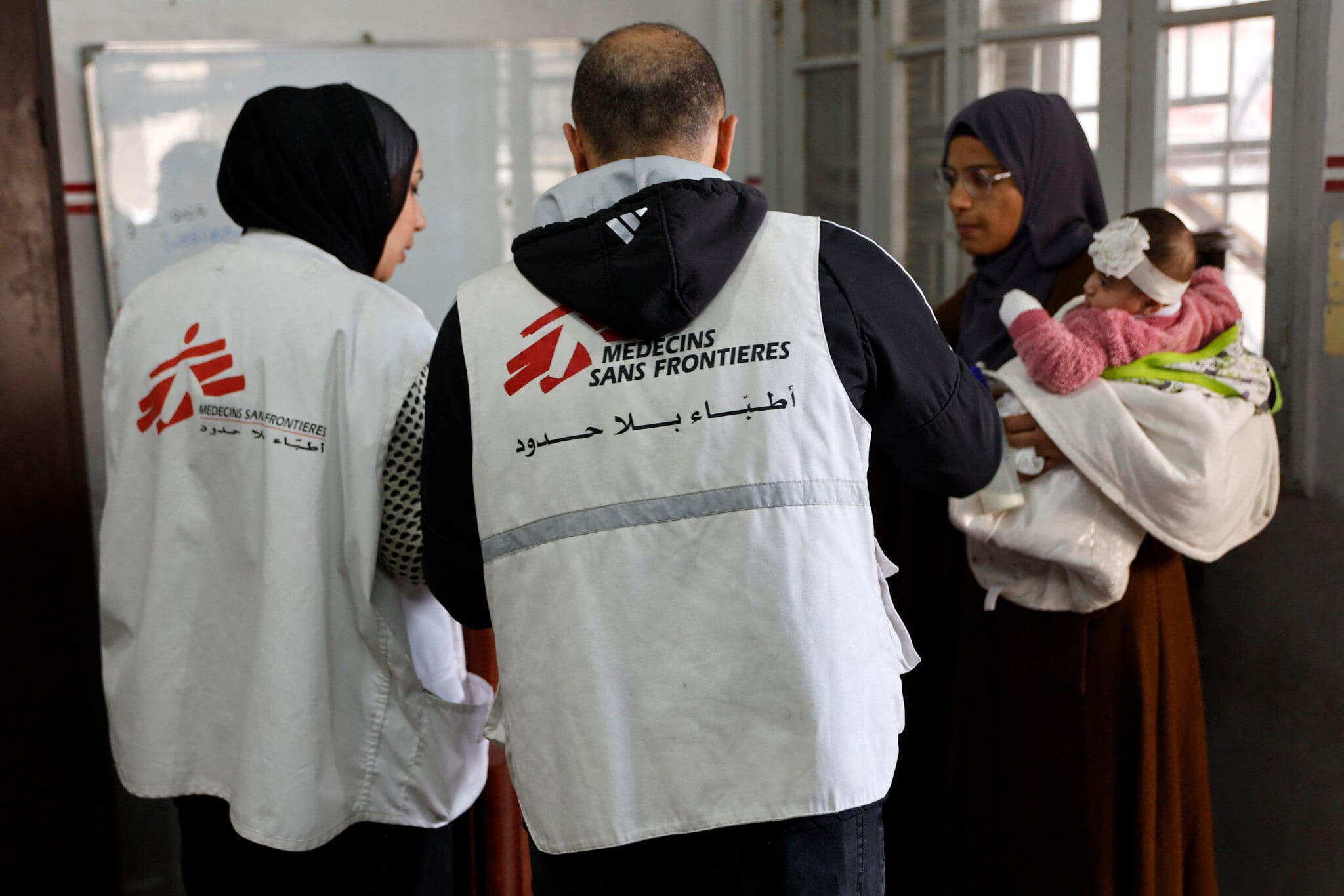
A Palestinian woman arrives with a child at the Doctors Without Borders or Médecins Sans Frontières (MSF) clinic, in the al-Rimal neighborhood of Gaza City on New Year’s Eve, December 31, 2025. (Omar AL-Qattaa/AFP)
The High Representative of the European Union for Foreign Affairs, Kaja Kallas, and EU commissioners Hadja Lahbib and Dubravka Suica reiterated their warning in a joint statement on Tuesday.
“The humanitarian situation in Gaza continues to worsen,” they wrote. “As winter sets in, Palestinians are left exposed to heavy rain and falling temperatures, without safe shelter. Children remain out of school. Medical facilities are barely functioning, with minimal staff and equipment.”
Urging Israel to allow international NGOs to operate uninterrupted, the EU officials stressed that “without these international NGOs, humanitarian aid cannot be delivered at the scale needed to prevent further loss of life in Gaza.”
“To deliver aid rapidly, safely and at the scale required, international NGOs must be able to operate in a sustained and predictable way. Without them, life-saving assistance cannot reach people in need,” they reiterated, appearing to suggest that Israel’s decision to bar the organizations could be a violation of international law.
“Humanitarian aid delivery and service provision for civilians depends on access,” they wrote. “Under International Humanitarian Law, all parties to a conflict must allow and facilitate the rapid and unimpeded passage of principled humanitarian relief.”