
A version of this story appeared in CNN’s What Matters newsletter. To get it in your inbox, sign up for free here.
The Trump administration may have notified oil companies that it was preparing to nab Venezuela’s leader, at least according to statements made Sunday by President Donald Trump.
But congressional leaders were kept in the dark about the early morning Saturday raid.
That disconnect might stick a thumb in the eye of lawmakers, who are meant to jealously guard their constitutional powers over the federal government.
But the feeling from many Republicans on Capitol Hill is that it’s no big deal for a variety of reasons:
“Notification of Congress in advance of really critical and hypersensitive missions, to me, seems ill-advised anyway,” Senate Majority Leader John Thune told CNN’s Manu Raju on Monday.
Thune is a member of the “Gang of Eight,” the heads of key committees and members of party leadership on both sides of the aisle who typically would be briefed before a significant US military engagement.
A few Republicans, such as Sen. James Lankford of Oklahoma, say the Gang of Eight should have been notified, but this is not a loudly expressed view.
There is precedent for keeping information about military action from lawmakers — such as when President Barack Obama ordered the raid that killed Osama bin Laden in Pakistan.
The War Powers Resolution of 1973 was passed in response to the Vietnam War by a united Congress over Richard Nixon’s veto as a way to force presidents to consult lawmakers before and after military action. It does require a notification within 48 hours after an action. But it also stipulates that the president should consult with Congress before launching a military attack “in every possible instance.”
The Gang of Eight got together for an after-that-fact briefing about the Venezuela operation on Capitol Hill Monday, which is in line with the War Powers Act. Not everyone was satisfied. Key lawmakers who were excluded from that briefing — including Senate Judiciary Committee Chairman Charles Grassley, an Iowa Republican — demanded to know why they were kept in the dark, since Nicolás Maduro was captured in order to face an American courtroom.
The entire operation has blended US military power with the justice system in a novel way, which has also provided another justification for lawmakers being kept in the dark before it happened — though it undercuts Trump’s rhetoric that the US is in an undeclared war over drugs.
Sen. Tom Cotton, the Arkansas Republican who chairs the Senate Intelligence Committee, said over the weekend that there was no need for the administration to consult Congress in advance because this action, although it utilized the US military, was more like a law enforcement action.
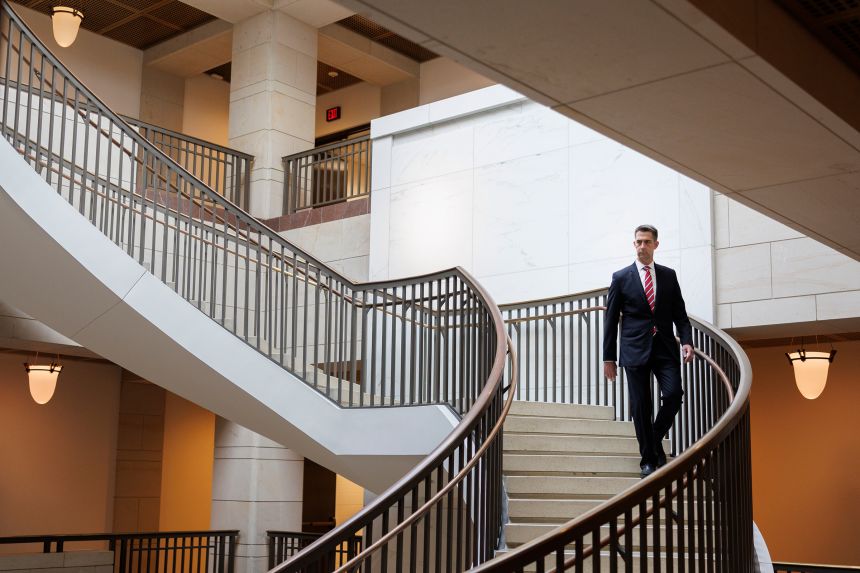
“Congress isn’t notified when the FBI is going to arrest a drug trafficker or cyber criminal here in the United States, nor should Congress be notified when the executive branch is executing arrests on indicted persons,” Cotton said on Fox News.
There’s another argument floating around that everyone who reads the news should have known something was up.
Sen. Bernie Moreno of Ohio told CNN’s Jake Tapper that everyone should have known what Trump was about to do.
“When you mobilize that kind of military in the Caribbean, it’s pretty obvious,” Moreno said. “It was obvious to everybody, except for maybe Maduro.”
In fact, White House officials said in public that Trump was not planning to use the military inside Venezuela without congressional approval. But that distinction could have to do with viewing the attack — which is not known to have cost American lives, but did kill numerous people inside Venezuela — as a law enforcement action.
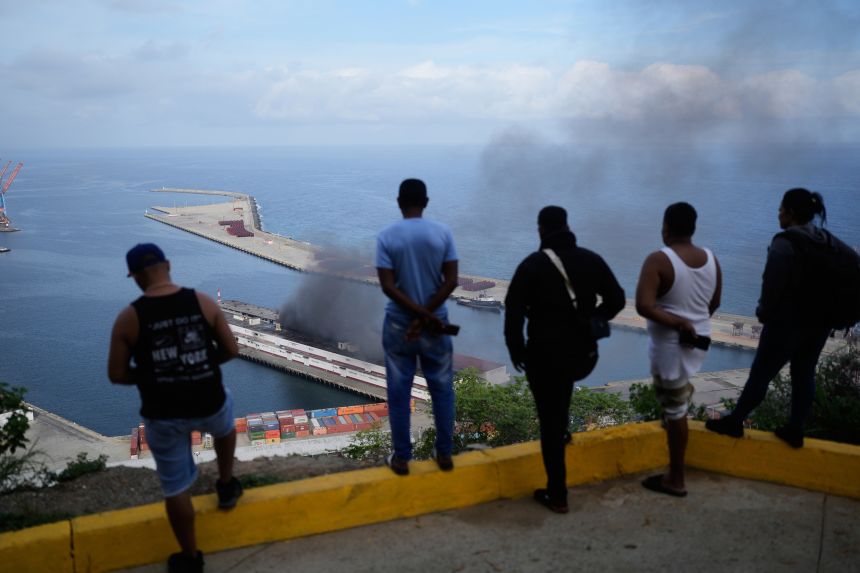
This argument also doesn’t deal with the fact that the administration should be telling Congress about still-unknown details like how much operations will cost and what’s the plan for Venezuela in the future.
But the White House has leaned heavily into emergency powers as a way around sharing these kinds of details.
Sen. Mike Lee styles himself as a lawmaker with a deep respect for the Constitution. During the first Trump administration, the Utah Republican supported a bipartisan resolution to bar the president from offensive military action in Iran without congressional approval. Trump ultimately vetoed that resolution. (Lee hasn’t yet supported something similar to constrain Trump in his second term.)
Lee initially questioned the legality of the Venezuela raid in social media posts Saturday. But after a phone conversation with Secretary of State Marco Rubio, he posted that the raid was likely justified because the deadly force utilized by the military was to protect people executing an arrest warrant.
“This action likely falls within the president’s inherent authority under Article II of the Constitution to protect U.S. personnel from an actual or imminent attack,” Lee said in a follow-up post.
“Inherent power” is a fancy way of saying the power to do this type of thing doesn’t appear in the Constitution or law, but it’s basically implied that the president should have the power to protect the country.
To argue for the risk of an imminent attack, you have to agree with the idea that Maduro is a “narco-terrorist,” as the Trump administration alleges, and that the drug trade represents an imminent attack on the US. That stance is debatable since Americans choose to buy the drugs. And the drugs causing the most American deaths are opioids — not cocaine.
The War Powers Resolution requires the cessation of military action by the US after 60 days without congressional approval, but since the military does not appear to have placed any long-term troops on the ground in Venezuela, that may not apply here. A Navy armada does remain in the Caribbean.
A resolution under the War Powers Act to demand congressional approval for military action in Venezuela was filed by Democratic Sen. Tim Kaine and Republican Sen. Rand Paul last month. It should see a vote this week. A similar vote failed in October despite support from two Republicans: Paul and Sen. Lisa Murkowski of Alaska. Three more Republican votes would be required to pass the resolution.