
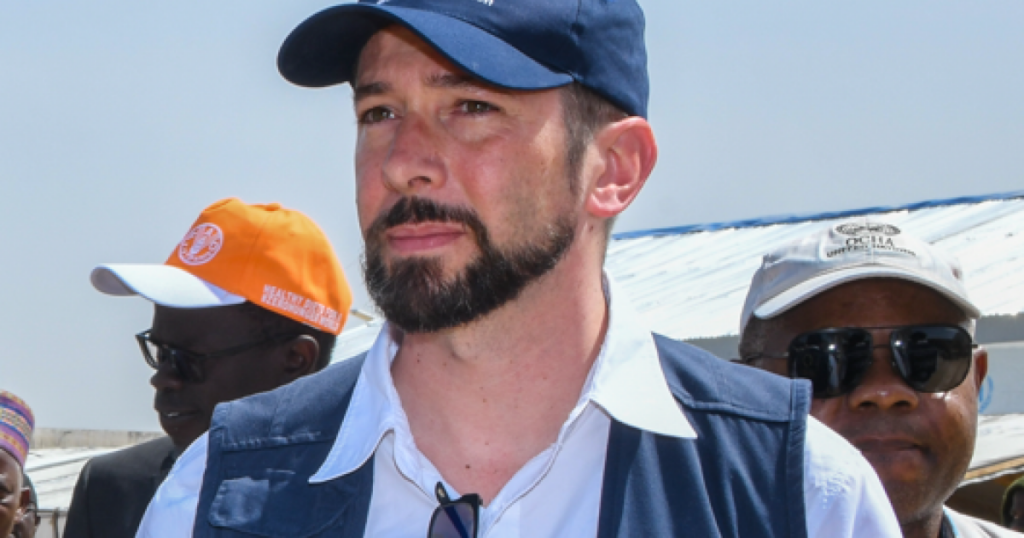
For more than 2 decades, Hilaire has worked across the humanitarian sector – from India to Africa, from the media room of Médecins Sans Frontières to the remote jungles of Colombia. Today, he leads the EU’s humanitarian communication work in Latin America and the Caribbean (LAC), a region where overlapping crises, entrenched violence, and recurring natural disasters shape daily life for millions.
His path into humanitarian aid required a bit of effrontery.
Starting out with a sense of purpose
In 1999, after spending 6 months in India witnessing extreme poverty, he walked into the Médecins Sans Frontières office in France and “offered” to volunteer.
‘I literally pushed open the door, went to the reception and annoyed the poor receptionist to death saying: “I’m your new volunteer,” until she got rid of me, by sending me to the Communication department on the third floor.’
Before joining the European Commission, he worked as a journalist in Africa and later moved to Latin America, where he began his work with the EU.
Staying motivated when news is difficult
‘The humanitarian and development system is in a state of depression,’ he says frankly. ‘National civil societies too.’
So where does motivation come from?
‘From the people around you.’
Visiting projects, meeting partners, seeing practical solutions in action – that is what resets his energy.
‘Especially when those partners are local people helping their neighbours,’ he adds. It’s about helping those who help. Whether responding to disasters or to violence, the drive to “leave the world a bit less messy” remains central to his work.
Navigating overlapping crises
Working in LAC means grappling with layers of crises, often decades long.
Extreme violence in Colombia, Haiti, Mexico or Central America, Ecuador and South America, remains one of the primary drivers of humanitarian needs. Armed groups use brutality strategically to control communities and territory. This is compounded by increasingly extreme natural hazards, as well as:
- chronic poverty
- food insecurity
- attacks on education
‘It’s easy to lose sight of LAC,’ he says.
‘But it’s healthy to go back to basics: we treat needs. We help people who are displaced – provide basic health care, feed those who can’t afford food, protection for targeted communities, get kids back in school, support for those on the move, fleeing persecution or atrocities.’
Giving a voice to affected people is, for him, still one of the most vital parts of the job.
Humanitarian funding cuts: what it means for the region
Recent reductions in humanitarian funding have had a major impact. 70% of humanitarian budgets in Latin America and the Caribbean previously came from the United States – so the downturn hit hard.