
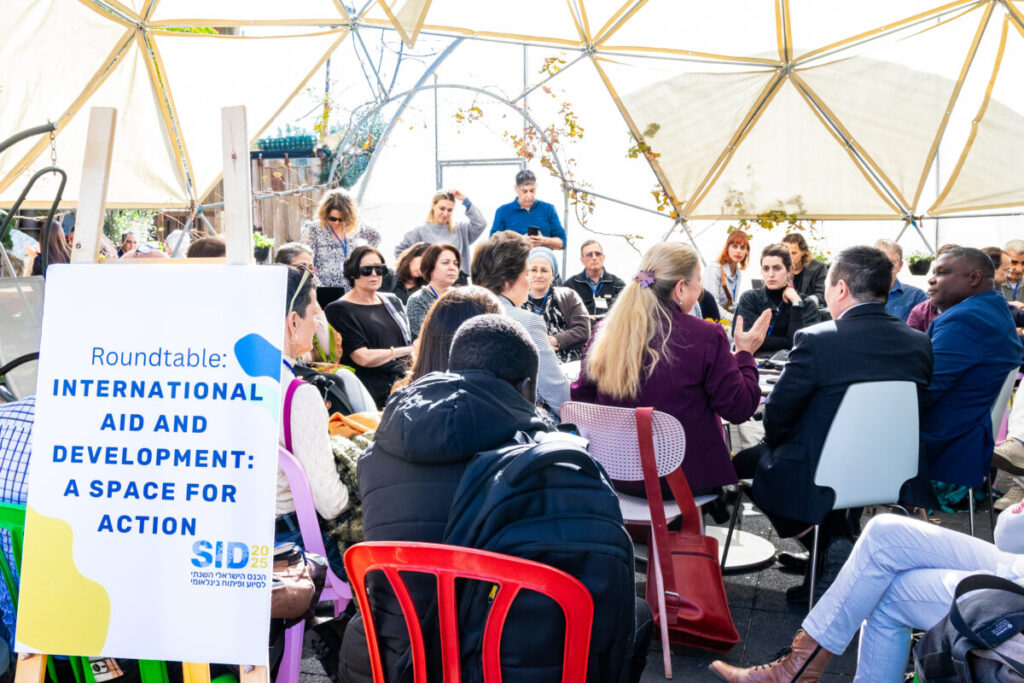
It is a hard time to be an international development or humanitarian aid organization. It is an even harder time to be an Israeli international development or humanitarian aid organization, facing much of the same challenges as other groups — namely, a gutting of American federal support through USAID and a resulting scramble for the remaining resources — while also dealing with overt and subtle boycotts, ideological purity tests and general exclusion from the field.
These are the findings of a recent study of the field following more than two years of war in Gaza by the Society for International Development-Israel, which is being released this week ahead of the group’s conference later this month. The survey was conducted among 20 Israeli aid and development nonprofits, for-profit companies and representatives of academic programs operating in Israel and abroad. Half of the respondents said that since the Oct. 7 terror attacks, they have seen a drop in donations, in some cases a sharp one. More than one-third reported particular struggles securing multiyear grants, making long-term planning more difficult.
In addition to the fundraising issues, many of the respondents reported antisemitic or anti-Israel experiences. This includes roughly half of the respondents saying that since the war began, they have lost or scaled back partnerships with overseas partners. Sixty percent reported antisemitic or anti-Israeli experiences, as well as a quarter saying that they had felt forced to state their opinions about the war in Gaza as a litmus test. This has resulted in 40% of organizations saying that they have since downplayed their Israeli identity or otherwise changed “how they present their work,” according to the survey.
But the survey was not all bad news, with follow-up interviews indicating a high degree of resilience, with respondents showing a high degree of adaptability and grit, according to Ayelet Levin-Karp, the CEO of SID-Israel.
eJewishPhilanthropy’s Judah Ari Gross spoke with Levin-Karp today to better understand the results of the survey and the Israeli development and humanitarian aid field.
JAG: The numbers in your survey are severe and there’s obvious value in having data, but they do not seem particularly surprising to me, considering what we’ve heard and seen anecdotally over the past two years. Just a few weeks ago, for instance, we reported on IsraAid scaling back its headquarters and international missions because of some of the fundraising issues addressed in the survey. Did anything in this report stand out to you?
Ayelet Levin-Karp: Yeah, there was nothing there that was very surprising for us. But first of all, it is important to put numbers to our experiences and our feelings. In many ways, I will say that it’s [describing] a phenomenon that anybody in Israel who deals with the external world has experienced. Anyone who’s working in academia or businesses or many different sectors is feeling that pushback, but I feel that in our community, which is very involved with the humanitarian work in Gaza and is generally very liberal, I think we’re feeling even more of that.
I must say that these are not nice figures to see. It’s upsetting and also disappointing that these are the reactions that our community is getting when it’s really going out there to help and do good globally. It’s also really remarkable to keep in mind that with everything going on internally in Israel and with the pushback that we’re getting from the world, most of our organizations and companies did not close [their doors] and are still continuing to do this amazing work that they’re doing throughout the world. [It shows] the resilience of this community and its inner drive. We’re not looking for permission from anybody to do what we want and think is right to do. We’re continuing to do it even when it’s becoming much harder.