
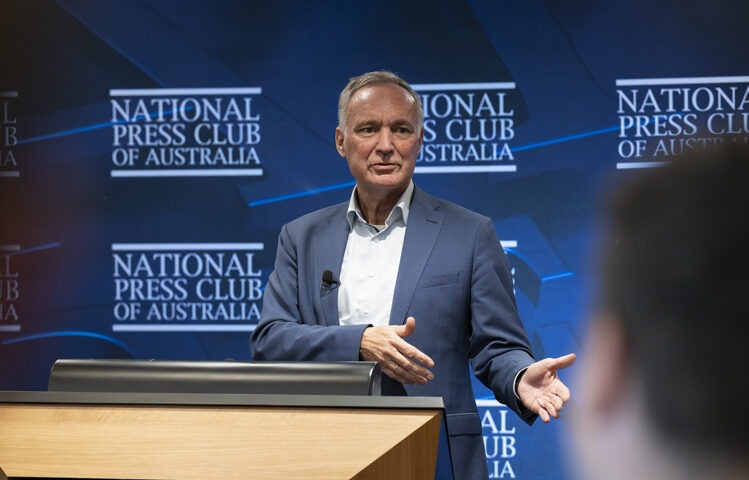
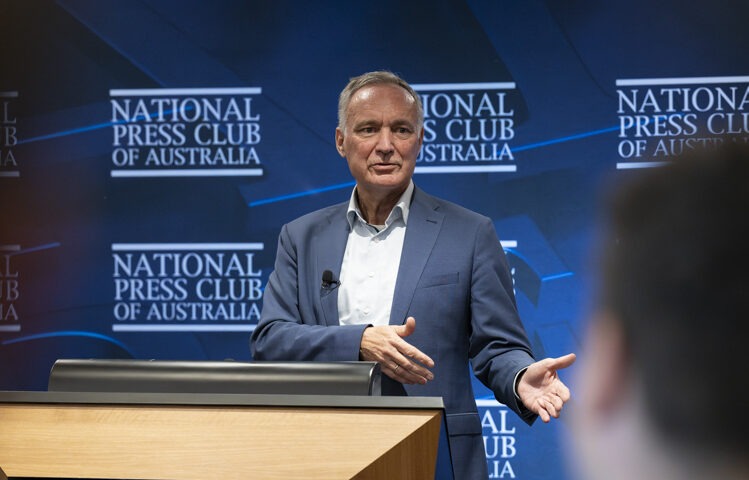
When Dutch General Tom Middendorp speaks, the world’s security apparatus pays attention. As the former chief of defence of the Netherlands and current chair of the International Military Council on Climate and Security, Middendorp, widely known as the ‘climate general’, has spent years articulating a brutal truth born of combat in Afghanistan and Somalia. His simple message is that scarcity is a weapon, and its primary means of delivery is the collapse of food and water systems.
For Australian policymakers, Middendorp’s observation should strike a nerve. We have long looked to the Netherlands as a beacon of agricultural innovation. We admire its mastery of water management, its technology and its logistical efficiency. Yet, we have failed to import its most critical strategic insight: that food security is not merely an economic concern, but a hard security imperative.
For Middendorp, food is the foundation of stability. He argues that you cannot separate conflict from the resources that underpin it. While his primary lens is climate, he demonstrates how environmental shocks create the very fractures that adversaries exploit. In Uruzgan, he saw that no rain meant no crops, no crops meant no food, and no food led to the perfect recruitment ground for extremism. He realised that military might alone could not secure a region if the fundamental human need for sustenance was weaponised through scarcity.
This logic applies directly to the hardening geopolitical landscape of the Indo-Pacific. Whether the disruption comes from a drought, a cyberattack on logistics infrastructure, or a blockade of critical trade routes, the outcome is the same. A compromised food system creates a vulnerable state.
This is a lesson Australia has yet to absorb fully. We treat food production as a commercial statistic, taking comfort in the fact that we produce enough food for 75 million people while ignoring the fragility of the systems that guarantee its quality and delivery. We confuse abundance with resilience.
It is critical to recognise that food security is not just about volume; it is about the integrity and quality of the system itself. Australia’s global reputation is built on providing safe, high-quality and nutritious food. This ‘clean and green’ brand is not just a marketing slogan, but rather a form of sovereign capability. In a world of increasing food fraud, contamination and supply chain opacity, the ability to guarantee the safety and nutritional value of our produce is a strategic asset.
The quality of our food system depends entirely on a complex web of inputs—such as fuel, fertiliser, chemicals and data—that are largely imported and vulnerable to global shocks. A disruption to the supply of phosphate or diesel exhaust fluid AdBlue doesn’t just reduce our yield; it compromises our ability to maintain the quality and safety that our trading partners rely on. If we cannot secure critical inputs, we cannot secure the quality. And if we lose quality, we lose trust.
This loss of trust would have profound implications for our Indo-Pacific statecraft. We live in the most disaster-prone and geostrategically contested region on earth. For many of our Pacific and Southeast Asian neighbours, food security is an existential threat. Malnutrition and stunting remain significant challenges in our region, stifling economic potential and fuelling social instability.
If Australia wishes to remain the partner of choice in the Pacific, our ability to help secure regional food systems is our most potent form of soft power. This engagement requires sharing the expertise of our systems, our biosecurity protocols and our nutritional standards, because a well-fed Indo-Pacific is a more stable one. Conversely, if our own food systems are viewed as brittle, our credibility and capacity to project influence will diminish. We cannot export stability if we cannot guarantee it at home.
The Department of Agriculture, Fisheries and Forestry is currently developing a National Food Security Strategy. This is a foundational piece of work for the nation. However, for this strategy to achieve its full potential, it cannot be left to the agriculture portfolio alone to implement. It requires a reciprocal commitment from our national security agencies, the Department of Home Affairs and the Department of Defence to view food systems as critical infrastructure.
We have followed the Dutch lead on technology. It is time we followed them in mindset. We must stop assuming that because we are a net food exporter, we are immune to insecurity. In an era of continuous and concurrent crises, a nation that cannot guarantee the integrity and quality of its food systems cannot guarantee its sovereignty. The upcoming National Food Security Strategy provides the architecture for resilience. It offers a chance to build genuine collaboration across government agencies and civil society to protect our national standing.
AI contributed no ideas to this article—Andrew Henderson.