
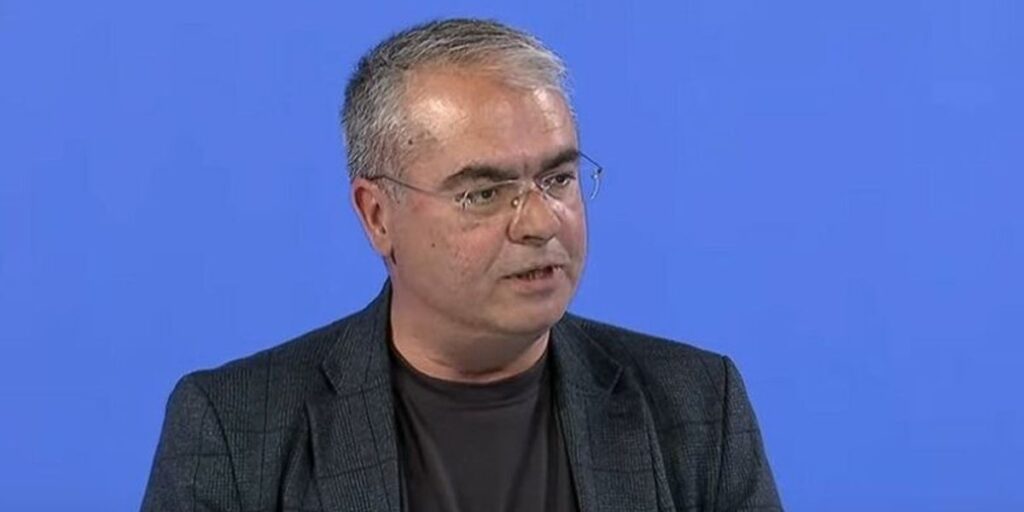
Inciting interethnic and interreligious division remains a systematic, planned and multidimensional instrument in Serbia’s strategy to destabilize Kosovo, assesses Arben Fetoshi, director of the Institute for Hybrid Warfare Studies ‘Octopus’, in an analysis published on the occasion of Orthodox Christmas.
According to Fetoshi, narratives of interethnic and interreligious division have hindered the integration of the Serbian community in Kosovo and have been used to instrumentalize it against the Republic of Kosovo.
These narratives, he emphasizes, have been accompanied by a perfidious “victimization”, where Kosovo is presented as a “terrorist” state that “violates” religious freedoms, Albanians as “Islamic extremists”, and most recently the Albanian diaspora as “interference” against understanding and coexistence in Kosovo.
While interethnic division forms the foundation of this strategy – through framing Kosovo as a threat to local Serbs and “justifying” Belgrade’s intervention – interreligious division, according to the analysis, includes the active and sophisticated role of the Serbian Orthodox Church in efforts to portray Kosovo as a radical and intolerant society in the eyes of the international community.
Fetoshi emphasizes that these two constants of the destabilizing strategy are amplified especially during festive periods, such as Orthodox Christmas today, when Đurić’s claims of “harassment” and “pressure” or the triumph of Bishop Hilarion’s “Heavenly Kingdom” can be more easily accepted by domestic and international opinion.
“Instead of holidays being moments of reflection for peace and coexistence, Orthodox Christmas is instrumentalized in the strategy of victimization, to promote the perception of a ‘danger’ to the Orthodox faith and Serbian religious heritage in Kosovo,” he assesses.
According to the director of the Institute Octopus, through synchronized statements by state officials, representatives of the Serbian Church, and the media in Serbia, a narrative of “siege” and “persecution” is being constructed, which aims to keep the Serbian community in a state of permanent isolation and fear.
This, according to him, constitutes a sophisticated tool of hybrid warfare that aims to damage Kosovo’s image and arouse suspicion among Western partners.
“While in normal societies, religious holidays strengthen social cohesion, in the case of Serbia they are misused as political “weapons” in the name of religion,” says Fetoshi, underlining that religious freedom and tolerance in Kosovo have been and remain inviolable cultural values, beyond constitutional guarantees.
According to Fetoshi, exposing this strategy is essential for regional stability and peace in the Balkans, while a clear response, based on the historical facts of interfaith coexistence and respect in Kosovo, remains necessary to neutralize the use of holidays as a means of destabilization.