
Europe (Brussels Morning Newspaper) – France has officially banned food imports containing traces of five pesticides already prohibited under EU regulations.
The decree, which was released on Wednesday, forbids the importation of food that contains remainders of the pesticide glufosinate and the pesticides mancozeb, thiophanate- methyl, carbendazim, and benomyl.
These chemicals were preliminarily accepted at low residual situations on imported products, but they’re presently banned for use within the EU due to health and environmental hazards. They’re used on crops ranging from avocados and mangos to wheat, soybeans, and potatoes.
The agriculture ministry claims that France wants to make sure that foods entering its market adhere to the same safety standards as those used for domestic production since it now views those maximum residue levels as being too high.
The advertisement coincides with an exceptional meeting of EU husbandry ministers in Brussels, where the long- delayed EU- Mercosur agreement is formally on the table.
After further than 25 years of development, the agreement would gradationally establish what authorities relate to as the largest free- trade area in the world involving the 27- nation EU and Uruguay, Brazil, Argentina, and Paraguay. The
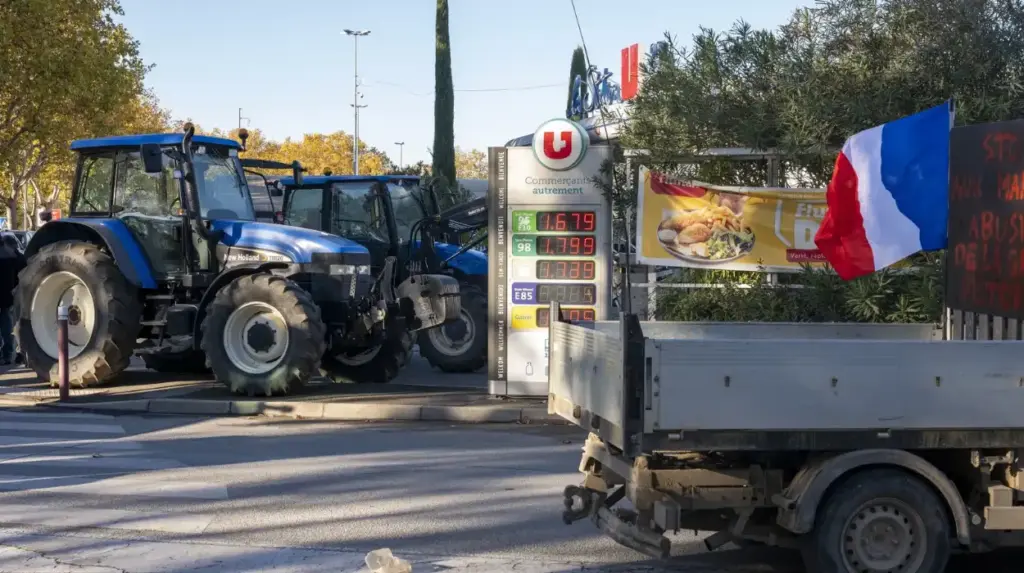
Stewing a surge of cheaper significances made under laxer regulations, French husbandry groups, formerly mustered over enterprises about income, environmental norms, and foreign competition, are pushing Paris to blackball the deal.
The pesticide action has been presented by Prime Minister Sébastien Lecornu as a “first step” to shield farmers and consumers from what Paris views as unfair competition from manufacturers not subject to EU-level regulations.
Although they point out that only a small portion of the bloc’s total food imports are now impacted by these substances, Commission officials have indicated that they are open to reviewing regulations on trace residues of prohibited pesticides.
The French rule might provide a precedent for other EU countries looking to match trade strategy with more stringent domestic environmental and health regulations if Brussels accepts it.
However, it might also exacerbate already tense negotiations with Mercosur allies, who have cautioned against what they see as covert protectionism disguised as conditionality based on health or the environment.
How will the ban affect Mercosur trade negotiations?
France’s ban on food significance with traces of five EU- banned fungicides signals a hardening station to conciliate domestic growers, potentially delaying or derailing Mercosur trade deal ratification amid ongoing EU Commission reviews set for January 20, 2026.
The measure addresses French agrarian expostulations to South American yield treated with substances like mancozeb and glufosinate, which undercut EU norms; by tensing import rules unilaterally, Paris aims to press Brussels for stricter Mercosur safeguards, though critics advise it risks retribution and WTO challenges from Brazil and Argentina.
With EU growers’ demurrers echoing France’s 2024 uneasiness, the ban bolsters Macron’s position against ratification, complicating the pact’s request for access for 99 million beef and ethanol significances while boosting French influence in final tweaks to environmental and fungicide clauses.