
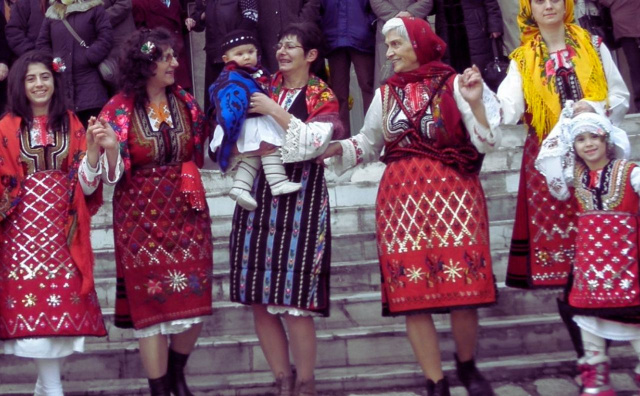
On January 8, Bulgaria marks the Day of Maternity Care, widely known as Babinden (Midwives’ Day). According to the old calendar, the holiday falls on January 21, while under the new style it is observed on January 8. The day is traditionally devoted to midwives, referred to in folk culture as “babi” (grandmothers), who assisted women during childbirth.
Babinden is among the most important traditional women’s holidays in Bulgarian folklore. Its rituals are centered on respect, gratitude, and reverence for the elderly women who helped young mothers give birth. The origins of the celebration date back to pre-Slavic times, and it was especially honored during the Bulgarian National Revival. Although many customs have faded over time, the holiday is still observed today, particularly by older generations, and is associated with cheer, laughter, and community spirit.
Early in the morning, before sunrise, mothers with children aged between one and three would traditionally go to a spring or tap to collect fresh water. A sprig of basil or geranium was placed in the vessel, along with soap and a new towel. The women would then visit the home of the midwife to perform the ritual washing. This took place beneath a fruit tree in the yard, on a wooden platform, or in front of the house steps. Each woman handed the soap to the midwife, poured water for her to wash, and gifted her the towel. In return, the midwife wiped her wet hands on the women’s skirts, symbolically ensuring fertility and easy childbirth in the future. She would also decorate them with geraniums tied with a red-and-white martenitsa thread.
During the ritual, the midwife often tossed water into the air and jumped three times, uttering blessings for health, vitality, and prosperity for the children. Afterward, the women presented her with shirts, socks, or cloths, draped over her right shoulder. In turn, the midwife tied red-and-white threads with a silver coin to the right hand of each child she had delivered and gifted them clothing. She also washed the children’s faces, as water touched by the midwife on Babinden was believed to have cleansing and protective powers.
In some regions, mothers continued bringing their children to the midwife until they reached the age of three so she could bless them. The midwife also played a role immediately after childbirth. She would take a jug of water with basil to the church, where the priest blessed it. This consecrated water was then given to the mother, who used it to wash her face and added it to the child’s bath until the 40th day after birth, a period traditionally associated with purification.
At midday, women gathered at the midwife’s home for a festive meal. Each brought food, such as homemade bread, banitsa, boiled or roasted chicken, and a flask of brandy or wine. They kissed the midwife’s hand and offered the dishes, after which a long and abundant table was laid. The celebration was lively, filled with songs, dances, playful teasing, and symbolic rituals aimed at encouraging fertility. Later in the day, men also joined the gathering.
Since 1951, Babinden has been officially recognized as the Day of Midwives and Gynecologists, honoring the profession alongside its deep-rooted cultural traditions.