
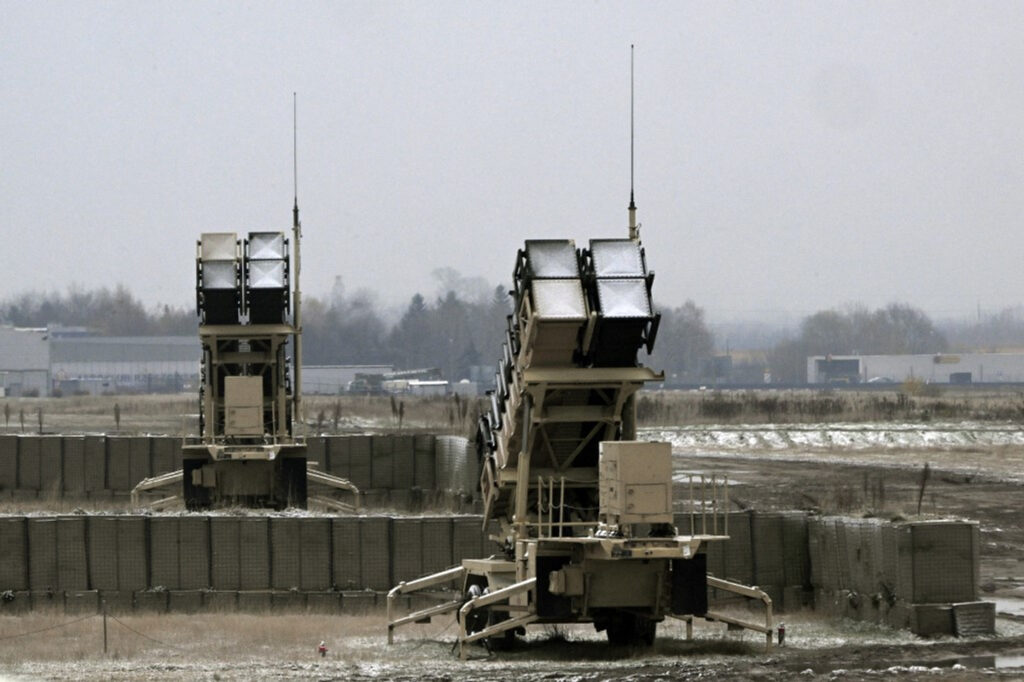
The United Kingdom has bolstered Ukraine’s air defenses by delivering modern short- and long-range systems, including operational Raven platforms and the newest Gravehawk complexes, the UK Defence Journal reported.
UK Veterans Minister Al Carns confirmed that 13 Raven systems are already in service with Ukrainian units.
Follow our coverage of the war on the @Kyivpost_official.
Designed to counter drones, aircraft, and helicopters near the front line, Raven uses the Royal Air Force’s adapted AIM-132 ASRAAM missile launched from ground-based platforms. Its key advantage is rapid deployment, enabling Ukrainian forces to respond quickly to aerial threats, though it has limited capability against cruise missiles.
To protect critical infrastructure from long-range Russian strikes, London has also begun supplying Gravehawk systems. Ukraine has received two prototypes so far, with a contract for 15 additional systems. Carns said the first batch from that order will arrive shortly.
Gravehawk is expected to become a core element in defending major cities and energy facilities from mass aerial attacks. The system, jointly funded by the UK and Denmark, uses Ukraine’s existing R-73 (AA-11 Archer) air-to-air missiles in a ground-based role. While primarily focused on countering drones, it also provides defensive capability against aircraft, helicopters, and potentially cruise missiles. Using an in-service Ukrainian missile is intended to simplify logistics and accelerate deployments.

Other Topics of Interest
Russia Avoids Sea of Azov as Naval Risks Grow, Ukraine’s Navy Says
Ukrainian naval officials say Moscow is increasingly avoiding the Sea of Azov as shallow waters and growing Ukrainian strike reach turns Russian warships into easy targets.
The deliveries are part of a broader £600 million ($806 million) winter air defense package, which also includes automated turrets to counter Russian drones. UK officials say the initiative is a direct response to Russia’s continued attacks on Ukraine’s energy infrastructure.
Russian strikes on Ukraine’s energy infrastructure late Wednesday left large parts of Dnipropetrovsk, Zaporizhzhia, and surrounding regions without electricity, water, heating, or communications, raising fears of a humanitarian catastrophe as temperatures are set to plunge below zero.
Officials warned that the situation could become far more dangerous in the coming days if power and heating are not restored, with forecasts showing nighttime temperatures dropping to -8°C this weekend and as low as -11°C from next Monday.