
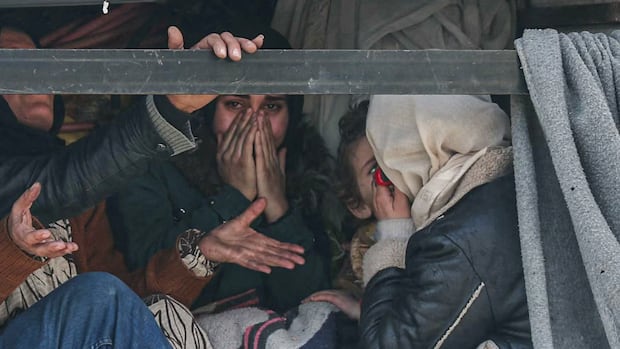
Violent clashes between the Syrian army and the Kurdish-led Syrian Democratic Forces (SDF) have continued to intensify in the northern city of Aleppo, entering a third day, as tens of thousands of civilians were forced to flee their homes.
Syrian authorities warned civilians to leave a contested area in Aleppo on Thursday, opening a corridor for them to evacuate, saying they would begin “targeted operations” against the SDF in the neighbourhoods of Sheikh Maqsoud, Ashrafieh and Bani Zaid.
The fighting, which erupted on Tuesday, escalated as multiple people were reportedly killed and dozens more wounded.
Both sides have accused one another of deliberately targeting civilian neighbourhoods and infrastructure in the deadly standoff, which is proving to be a major challenge for Syrian President Ahmed al-Sharaa, who has pledged to unite the country after 14 years of war.
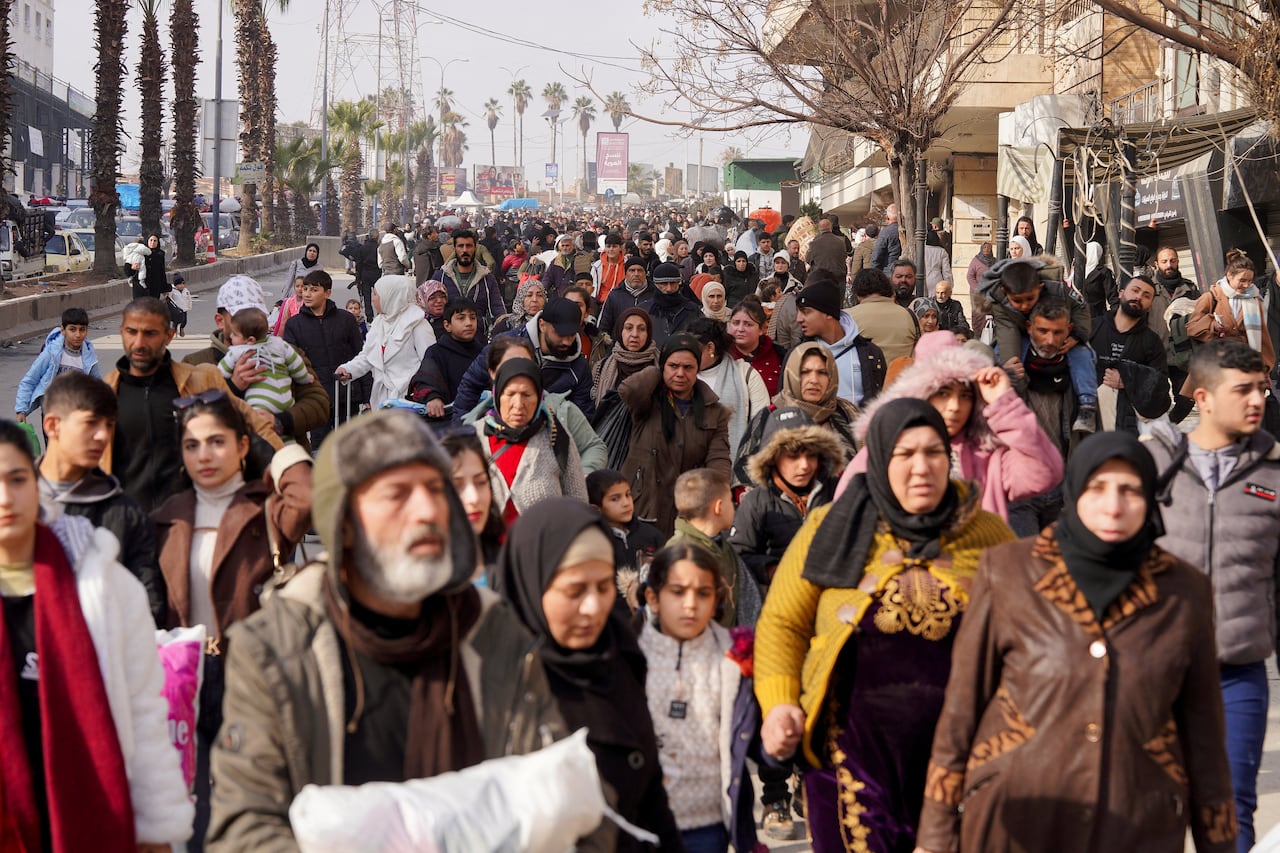
A group of civilians carry bags and belongings as they flee Aleppo on Wednesday after Syrian authorities opened a corridor for them to flee as fighting intensifies in parts of the province. (Karam al-Masri/Reuters)
Rasha Murhez, Syria country director with Save the Children, said the non-profit group estimates the number of civilians forced to flee Aleppo in the last 24 hours rose to more than 16,000 — of whom half are children.
“Other families remain in their houses, with limited access to food, clothing or fuel for heating with nighttime temperatures as low as 1 C,” Murhez said in a statement Thursday.
“Save the Children is calling for all parties to immediately halt hostilities, to ensure the protection of all civilians from violence, especially children.”
Aleppo’s directorate of social affairs and labour meanwhile says it estimates that roughly 140,000 people have been internally displaced across the province.
“There’s a large percentage of them with difficult medical issues, elderly people, women, and children,” said Mohammad Ali, operations director with the Syrian Civil Defence in Aleppo.
Government officials said at least seven civilians and one soldier have been killed in the surrounding government-controlled areas, while the SDF says at least eight civilians were killed in the Kurdish-majority neighbourhoods. Dozens were reported to have been wounded on both sides.
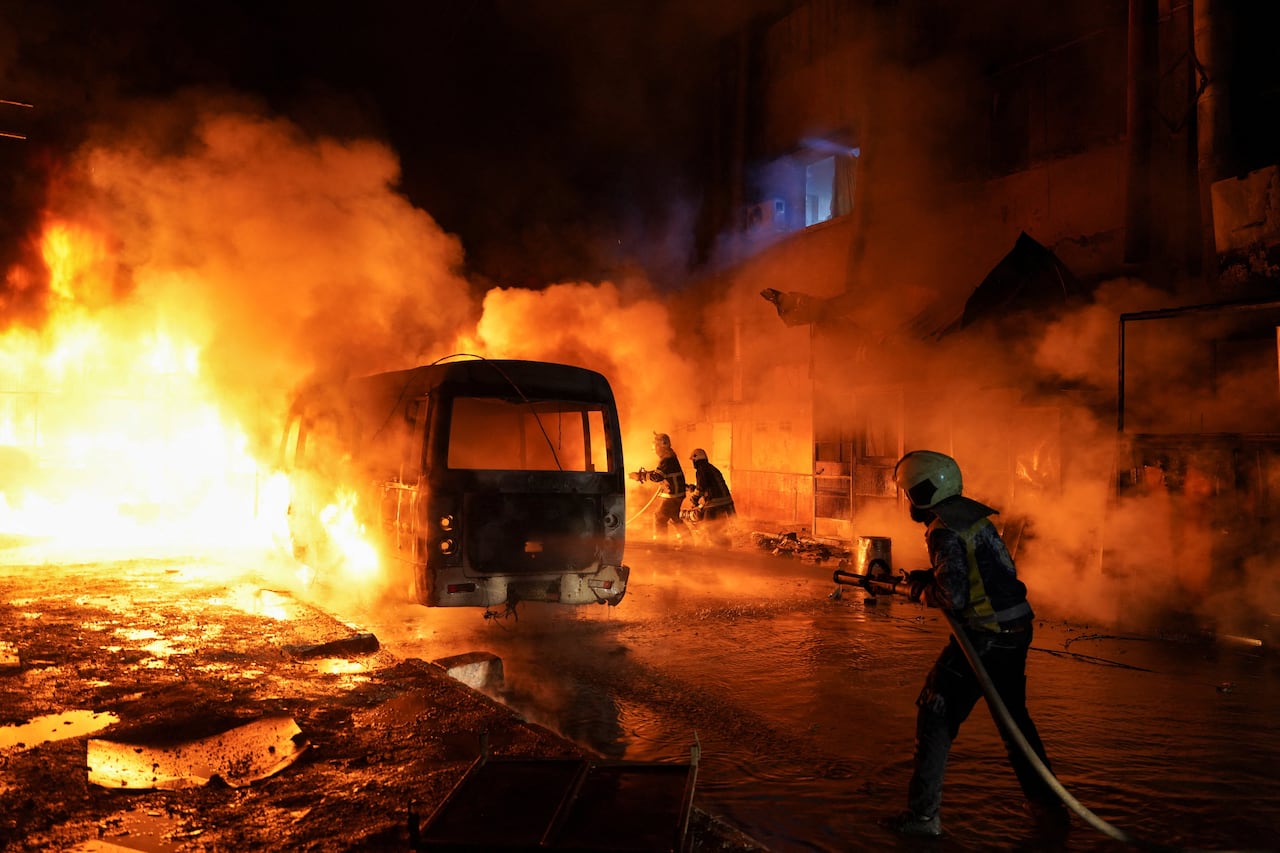
Members of the Syrian Civil Defence work to extinguish a fire after shelling in Aleppo as violent clashes enter a third day between the Syrian army and SDF on Thursday. (Karam al‑Masri/Reuters)
A fierce exchange of fire extended into Thursday night as rescue workers scrambled to put out blazes ignited by the shelling.
The United Nations has expressed concern at the violence and called for de-escalation.
UNICEF said it is responding to the “urgent needs” of families forced to flee their homes as hostilities escalate, by distributing hygiene kits at shelters across the province.
“UNICEF continues to scale up its response as needs grow,” it said in a post on X.
What is the SDF?
The SDF is a U.S.-backed alliance that controls much of northeastern Syria and has been Washington’s main local partner in the fight against ISIS.
Kurdish-led authorities established a semi-autonomous administration in those areas and parts of Aleppo during Syria’s 14-year war and have resisted fully integrating into the Islamist-led government that took power after former dictator Bashar al-Assad was ousted in late 2024.
A U.S. State Department official said in a statement Thursday that the U.S. “is closely monitoring the situation” and urged “restraint on all sides.”
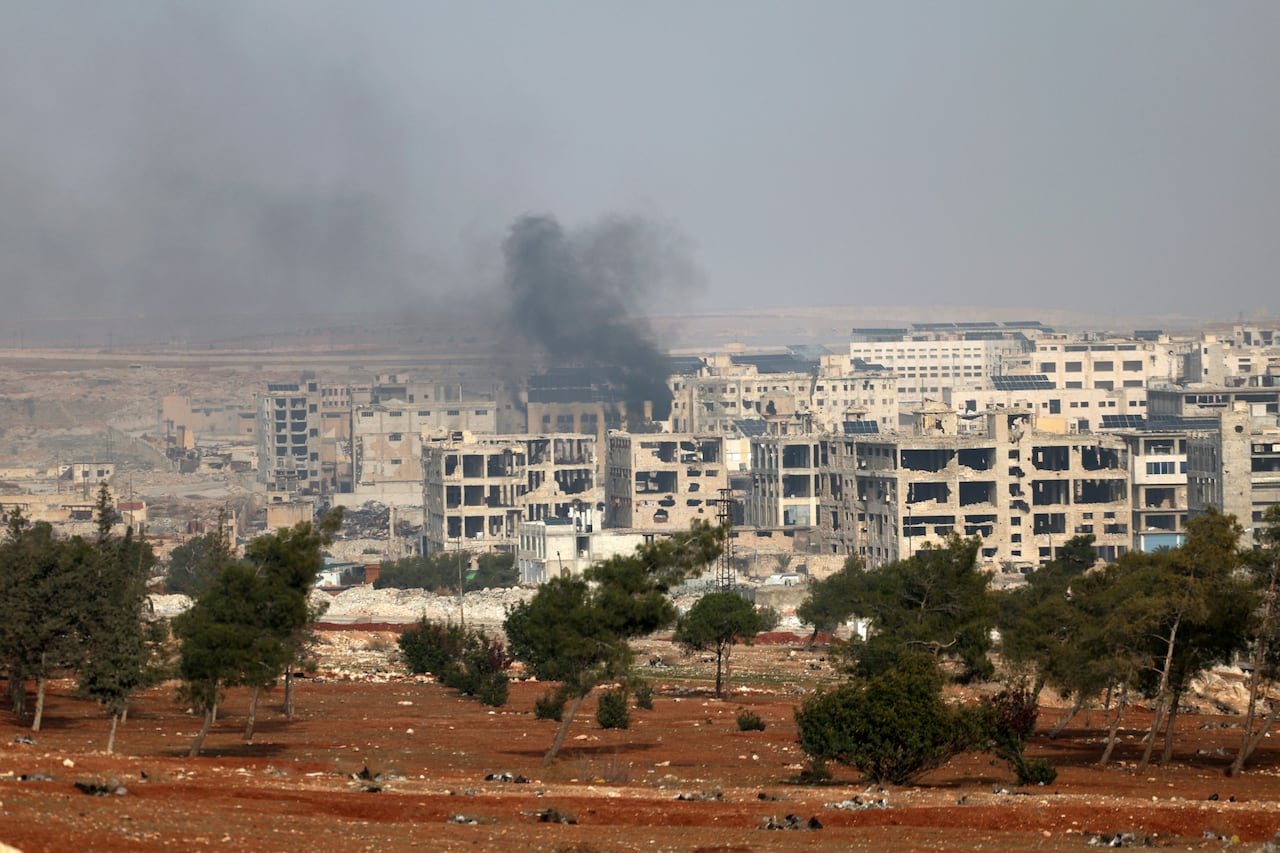
Columns of smoke rise from Aleppo’s predominantly Kurdish neighbourhoods of Sheikh Maqsoud and Ashrafieh on Thursday where Syria’s military warned civilians to evacuate. (Omar Haj Kadour/AFP/Getty Images)
It said U.S. envoy Tom Barrack is trying to facilitate dialogue between the two sides.
“All parties should focus on how to build a peaceful, stable Syria that protects and serves the interests of all Syrians, rather than pushing the country back into a cycle of violence,” the statement said.
Turkey considers the SDF a terrorist organization because of its association with the Kurdistan Workers’ Party, or PKK, which has waged a long-running insurgency in Turkey.
Why did the fighting start?
Plumes of smoke rose above the city’s skyline at dusk and the boom of artillery could be heard across Aleppo Thursday as Kurdish fighters tried to repel the troops’ advance and cling on to neighbourhoods under their control.
The recent clashes come amid an impasse in political negotiations between the central state and the SDF.
The leadership in Damascus under al-Sharaa reached a deal in March with the SDF — which controls much of the northeast — for it to fully merge with the Syrian army by the end of 2025, but progress has been limited, with both sides accusing the other of stalling.
There have been disagreements on how it would happen. In April, scores of SDF fighters left Sheikh Maqsoud and Achrafieh as part of the deal.
Officials from the central government and SDF met again on Sunday in Damascus, but government officials said that no tangible progress had been made.
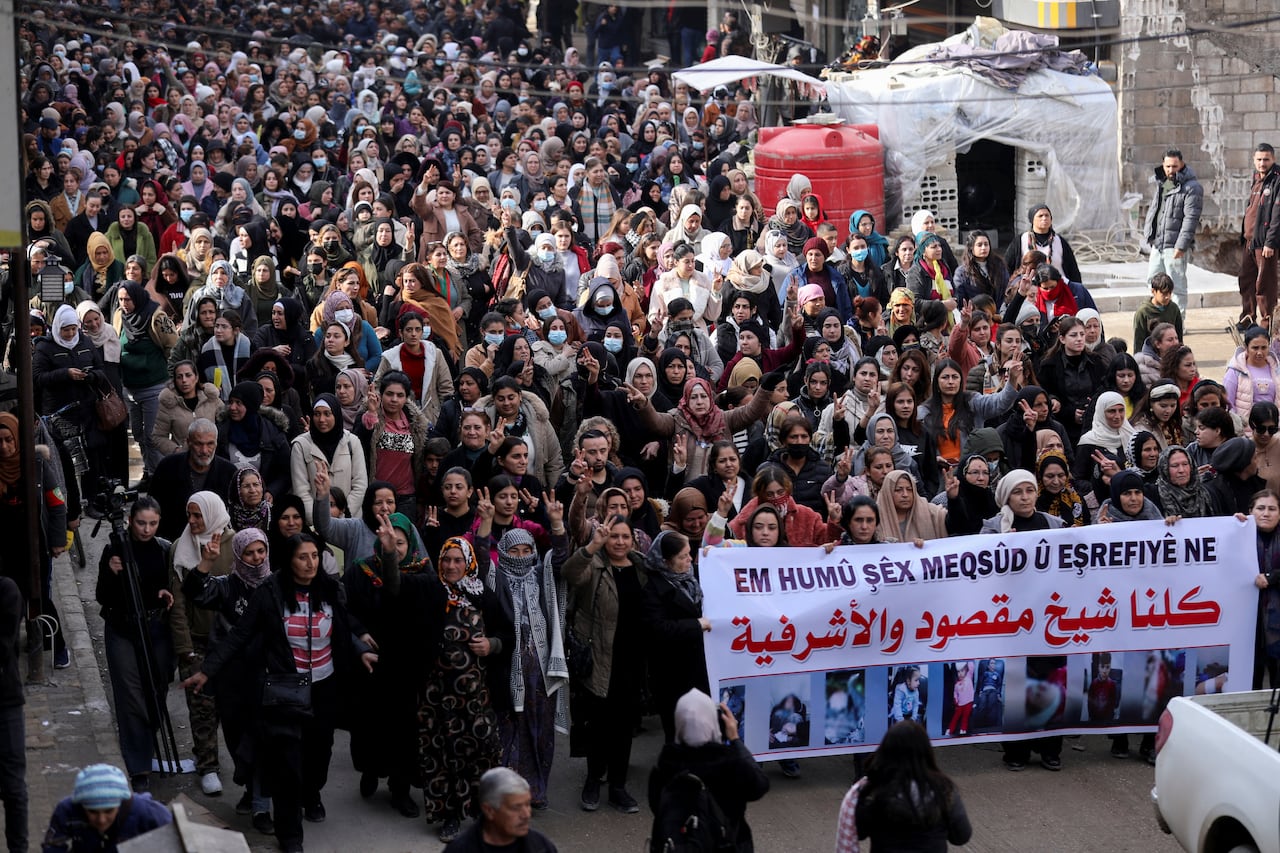
Syrian Kurds attend a Wednesday protest in in Hasakah, in solidarity with the people in the neighbourhoods of Sheikh Maqsoud and Ashrafieh. (Orhan Qereman/Reuters)
Some of the factions that make up the new Syrian army, formed after the fall of Assad in a rebel offensive in December 2024, were previously Turkey-backed insurgent groups that have a long history of clashing with Kurdish forces.
In the city of Qamishli in the Kurdish-controlled northeast, thousands of protesters gathered Thursday, chanting, “SDF, we are with you until death.”
Sawsan Khalil, a protester in Qamishli who was displaced from Afrin in Aleppo province in a 2018 Turkish offensive against Kurdish forces there, called for the international community “to feel for the Syrian people who have been killed for no reason” in Aleppo.
Izzeddin Gado, co-chair of the Qamishli city council accused the government forces of “following a foreign and regional agenda from Turkey.”
How is Turkey involved?
The Turkish Foreign Minister Hakan Fidan described the SDF as the “greatest obstacle for peace in Syria.”
Diplomats warn that failure to integrate the SDF into Syria’s army risks further violence and could draw in Turkey, which has threatened military action against Kurdish fighters it regards as terrorists.
Turkey’s Ministry of National Defence said Thursday that the “operation is being carried out entirely by the Syrian army” while Turkey is “closely monitoring.”
“Syria’s security is our security,” the statement said, adding that “Turkey will provide the necessary support should Syria request it.”