
Abstract
The war in Ukraine, and the rise of China, has reasserted the strategic significance of Central and Eastern Europe in the new world order by transforming the region from a peripheral security zone into Europe’s geopolitical centre of gravity. This MKI Perspective conceptualises the role and orientations of two of the region’s growingly most significant actors: Hungary and Poland. It argues that due to their evolving threat perceptions, these states have transitioned from sole consumers of security to influencers to how Europe’s security could be conceptualised. The article identifies the emergence of two diplomatic frameworks and national strategic orientations among these members – forward-defensive (embodied most forcefully by Poland) and assertive-sovereigntist (Hungary) – each reflecting differing historical legacies, threat perceptions, and domestic political priorities that will potentially define eastern Europe’s security architecture post-Ukraine.
Introduction
Central and Eastern Europe (CEE) constitutes a key strategic theatre with unique historical and geopolitical considerations for Europe’s security. The overarching problem with unpacking these considerations, as one analyst noted, “lies in understanding the effectiveness of NATO’s enlargement policies in enhancing regional security.” Moreover, external great power actors, such as China and Russia, are purposefully and inadvertently assisting in the reconfiguration of the CEE region as an active bridge, a dynamic zone all its own, between the east and west. For example, China’s Belt and Road Initiative is opening new horizons for the region, and for Hungary and Slovakia in particular, by empowering them to pursue economic renewal and strategic autonomy. Further, the Russo-Ukraine War has been a catalyst for advancing the multipolar world order within which the CEE nations are trying to find their place, and leveraging their newfound confidence and important geopolitical positions to influence the direction that Europe, writ large, should take. In turn, given these developments, and the return of great power politics and blocs in the international system, there is a need to not only assess the efficacy of NATO enlargement, as NATO underwrites the area’s security, but also how certain key NATO players within the CEE region are seeking to shape their security environment with competing emerging frameworks about what direction states should take in confronting the new era; many of whom define it by the perceived Russian threat.
Those frameworks, which can be discerned from the policy practices and official rhetoric of key CEE nations, can be described thusly: a forward-defensive posture embodied most forcefully by Poland and an assertive-sovereigntist framework being exemplified by Hungary’s approach. While there are some crossovers within the policy practices constituting these developing frameworks, identifying the broad thrusts of how certain states, within this critical region, are navigating great power competition and its perceived threats, is necessary to understand broader emergent trends within European diplomacy that are battling to define it and outcomes.
The piece will be organised into three main sections. Firstly, it will explore what alliances are and why states join them. Next, the following two sections will delve into the two emerging, yet competing, frameworks being developed. It would be beyond the scope of the piece to study all states of CEE. In turn, it will primarily focus on two case-studies: Poland and Hungary. These two nations are strategically significant as they are NATO’s and the European Union’s buffers against Russia (as are others such as the Baltics, Slovakia, Romania, and Bulgaria). Further, they also have acquired large statuses in European geopolitical discourse. Poland is the largest economy and military in the region and is thus emerging as Europe’s eastern power centre. Hungary, under Victor Orban, has become a disciplined and assertive actor within Europe. Moreover, Hungary occupies a geopolitically central location in the Carpathian Basin, controlling transit routes between Western Europe, the Balkans, and Ukraine. Its willingness to pursue an independent, sometimes contrarian foreign policy for the noble purpose of sovereignty, nonetheless forces the E.U. and NATO to negotiate with it. Thereby, amplifying its regional influence.
Why States Join Alliances: The Balance of Threat
In international relations, an alliance is a ‘formal agreement between two or more states for mutual support in case of war.’ Alliances are typically formalised by a treaty and the most critical clause is that which defines the ‘casus foederis, or the circumstances under which the treaty obligates an ally to aid a fellow member.’ One of the most famous cases of which is Article 5 in the NATO treaty which considers an attack against one an attack against all. As a Council on Geostrategy report put it: alliances are a primary source of ‘strategic advantage for countries engaged in geopolitical competition.’ However, given the anarchic nature of the international system, geopolitical alignments and realignments cause shifts in alliances. For example, the 1756 Diplomatic Revolution witnessed France align with its rival Austria; in 1939, Nazi Germany and the Soviet Union signed the Molotov-Ribbentrop Pact; in 1989, former Soviet allies hurried to join NATO.
The traditional balance of power theory posits that states join alliances to avoid domination by stronger powers. States want to protect themselves from other powerful states or coalitions whose superiority can threaten them. When entering into an alliance, states either balance which means ally in opposition to the principal source of danger or bandwagon, allying with the state that poses the major threat. Stephen Walt argues that ‘states risk survival if they fail to curb a potential hegemon before it becomes too strong.’ Walt’s balance of threat theory thus reconsiders the reasons why states join alliances by considering the level of threat posed by another, which he categorises as such: first, aggregate power (total resources, including: population, industrial, military capability, and technological prowess; second, proximity (how close the perceived threatening nation is to your state); third, offensive power (those with larger offensive capability can easily provoke an alliance than those who are militarily weaker); fourth, offensive intentions (aggressive states are likely to provoke others to balance against them). Aggressiveness refers to the willingness of an actor to use violence, ergo military force, to achieve their goals.
Therefore, perceptions of intent play a crucial role in alliance and foreign policy choices rather than considerations of power alone. For example, during the Cold War, more states allied with the more powerful superpower, United States – the de facto head of NATO – than the Soviet Union, as the former’s displayed intentions were perceived to be less aggressive than those displayed by the latter. In the current era, while the United States has had an aggressive foreign policy, the historical memory of CEE members – especially the Baltic states – of Russian (and then, Soviet) imperial domination is contributing to the definition of their threat perceptions. In this way, the constant determinant factor of European security, in the eyes of many of Europeans, is the perceived Russian hostility towards the EU and NATO. For the foreseeable, Russia will be seen as Europe’s, and particularly eastern Europe’s, biggest security threat. However, there are two key variables that are determining the responses of these institutions’ members.
First, the American shift in attitude towards Europe to focus their attention on China. Second, the degree of cohesion amongst European nations. The significance of this is that discussion of a monolithic European foreign policy is folly. Not only is NATO, and the E.U., constituted by numerous member states with distinct histories, geographies, and concerns, but they all have their own unique capabilities and interests. A unifying foreign policy can exist insofar as NATO remains intact and, therefore, the direction and capabilities (particularly nuclear) are provided by the United States. Consequently, it is more precise, for the moment, to speak of preferred frameworks pursued by constituent members and how this relates to broader alliance priorities.
Poland: A Forward Defensive Framework
Since the beginning of the Ukraine War, Poland (as well as the Baltic states in particular) have ramped up measures to further align their security with NATO, and by implication the United States, out of fear that, after Ukraine, the Russians will set its eyes on them. While there is no strong evidence for this, in international politics it is state actors’ perceptions of threats which matter. In the case of the Baltic countries and Poland, they all view Russia as an existential threat; which, given their historical experiences vis a vis the Soviet empire, it is perhaps understandable.
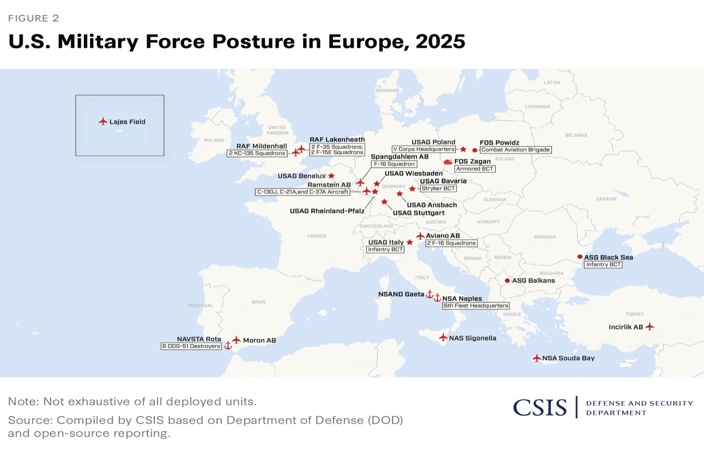
In the case of Poland, the forward defensive framework under which their foreign policy is increasingly operating can be witnessed through certain lines of action it has pursued to balance against what it perceives as the threat of Russian encroachment to its east. These lines of action, including the militarisation of its eastern border, have further situated Poland as the main NATO ally on the CEE front. One line of action that is particularly escalatory and intended to send strong signals to its neighbours, and of course Russia, is its shift towards nuclear sharing. Nuclear sharing, according to the NATO definition, consists of ‘nuclear capabilities, aircraft and infrastructure provided by a number of NATO countries for the collective defence of all.’ It has been the central feature of NATO nuclear policy since the 1950s. After Vladimir Putin deployed Russian nuclear weapons to Belarus, Polish public opinion became visibly more hawkish as did the government’s rhetoric about the country’s military strength and the need to strengthen its position within NATO. Poland’s membership in NATO has provided it with a security umbrella, of which America’s presence in Europe underwrites as the ‘pacifier’, as John Mearsheimer refers to it.
Much like West Germany during the Cold War, when NATO judged that American nuclear armed forces stationed there were vital to deterring potential Soviet aggression, similar logic is now being applied to Poland. In June 2025, a report published by the Rand Corporation advised, ‘Instead of Nuclear Weapons, Give Poland a Nuclear Umbrella.’ The report reads that, ‘U.S. nuclear bombs in Europe are a visible expression of the umbrella’ and they are currently stored in Belgium, Germany, Italy, the Netherlands, and Turkey. However, the report stated that the west would oppose Poland obtaining its own nuclear weapons since its acquisition of them could spur other states ‘in complex security environments to seek nuclear arsenals.’ For this reason, some are suggesting Poland pursue both NATO nuclear sharing and protection from the United Kingdom and France.
All this is to say that Poland is increasingly becoming seen as Europe’s first line of defence against Russian aggression. Due to its geographic position, growingly modernising military capabilities, and high defence spending (around 4.7% of GDP), compounded by the bellicose rhetoric of its leaders, it is playing a leading, and what can be described as a forward defensive role, in NATO’s deterrence posture on the eastern flank. If Poland does become the West Germany of our era, this will have destabilising implications for its environs.
Hungary: Assertive-Sovereigntist
Hungary’s accession to NATO in 1999 was not solely a foreign policy goal but, as one analyst put it, “a profound socio-political transformation, requiring extensive reforms to align Hungary’s political, economic, and military systems with Western standards.” Although the Hungary of today remains committed to staying in NATO and the EU, it does no longer pursue a singular western alignment as it sought to do in the late 1990s and early 2000s. This is because the actions of these western institutions are undermining the preservation of Hungary’s security and sovereignty; two concepts which have driven Victor Orban’s foreign policy. Hungary’s assertive-sovereigntist framework was, perhaps, best put by the Hungarian government itself in 2020 within its National Security Strategy: “Our millennial statehood, our language and culture, our history and traditions, and our system of values grounded in our Christian heritage represent a valuable contribution to the diversity of Europe. We respect different cultures, but we insist on our own Hungarian identity at all times.”
The west’s commitment to continue the Ukraine War and its ambivalent approach to China has contributed to Hungary’s carving out its own path based on its own unique economic and security interests. For example, Brussels has pursued a securitisation policy vis a vis China by introducing measures such as export controls and attempting to establish alternative supply chains. However, countries in Central Europe, such as Austria, Hungary, Serbia, and Slovakia, have diverged from this approach and the broader ‘de-risking’ discourse by pursuing policies that seek to cultivate closer economic intercourse with China. By doing so, Hungary – and the aforementioned others – are seeking to reduce dependence on any single geopolitical bloc in a strategy one could describe as strategic hedging. Pragmatism and sovereignty define Hungary’s framework towards China as opposed to the EU’s ideological approach. A consequence of such divergent approaches that prioritise independence and sovereignty will be the undermining of European unity and the development of a diverse security architecture.
We also see this assertive pursuit of sovereignty in Hungary’s approach to the Russo-Ukraine conflict. Unlike the Baltic states or Poland who view Russia as an existential security threat, and are committed to continuing the war in Ukraine despite it now being obvious Russia has the military and strategic advantage, committed to imposing self-defeating sanctions on Russia, and committed to the advancement Ukrainian membership to NATO and the EU, Hungary’s disagreements with these measures – and the backlash it has faced by western politicians and media in response – has further emboldened the pursuit and strengthened the legitimacy of the assertive-sovereigntist framework.
Hungary, under Orban, has set the standard to many small European powers worried about becoming dependent or subdued by either the western bloc or by Russia. For example, Orban has resisted pressure to relinquish its imports of Russian energy and, in fact, secured an exemption from western imposed energy sanctions on Russia at the dismay of Europe’s elite. Unlike the forward defensive CEE states, such as Poland or the Baltics whose rhetoric and diplomacy vis a vis the emerging great power competition between Russia and the United States is defined by more aggressive and ideological tendencies, Hungary’s is much more pragmatic and balanced, seeking what Orban called ‘connectivity,’ a ‘Europe of Nations,’ and good relations with the west and east.
Conclusion: What are the implications of these frameworks for European unity?
The emergence of Poland’s forward-defensive posture alongside Hungary’s assertive-sovereigntist framework reveals that Central and Eastern Europe is no longer a passive periphery of Western security but an active arena of strategic contestation over Europe’s future direction. Rather than reinforcing unity, these divergent paths expose the limits of a coherent European security identity, as states increasingly prioritise national threat perceptions and sovereignty over collective consensus. In a post-Ukraine order, Europe’s architecture is, therefore, likely to evolve not as a single, integrated vision, but as a plural, contested system in which emerging geopolitical power centres such as Poland and Hungary shape parallel, and often conflicting, logics of security, sovereignty, and alignment.
Bibliography
Barrie, Douglas. ‘Deep Precision Strike: Europe’s Quest for Long-Range Missile Capabilities.’ International Institute for Strategic Studies (November 13th, 2025) – https://www.iiss.org/research-paper/2025/11/deep-precision-strike-europes-quest-for-long-range-missile-capabilities/
Cabinet Office of the Prime Minister. ‘Speech by Prime Minister Viktor Orban at the 23rd Session of the Hungarian Standing Conference. 17/10/2025 – https://miniszterelnok.hu/en/speech-by-prime-minister-viktor-orban-at-the-23rd-session-of-the-hungarian-standing-conference-maert/
Chae, Heeyoung. ‘Impact of NATO Enlargement on Eastern Europe Security: Case Study of Ukraine War.’ Independent Study Project (2024) – https://digitalcollections.sit.edu/cgi/viewcontent.cgi?article=4787&context=isp_collection
Courtney, William. ‘Instead of Nuclear Weapons, Give Poland a Nuclear Umbrella.’ Rand Corporation (June 9th, 2025) – https://www.rand.org/pubs/commentary/2025/06/instead-of-nuclear-weapons-give-poland-a-nuclear-umbrella.html
Ekmanis, Indra. ‘Contesting Russia: The Baltic Perspective.’ Foreign Policy Research Institute (October 28th, 2024) – https://www.fpri.org/article/2024/10/contesting-russia-the-baltic-perspective/
Elefteriu, Gabriel. ‘Why Alliances Matter.’ Council on Geostrategy (December 20th, 2023) – https://www.geostrategy.org.uk/research/why-alliances-matter/
Gheciu, Alexandra. ‘Security Institutions as Agents of Socialization? NATO and the “New Europe.”’ International Organization 59:4 (2005), pp. 973-1012. – https://www.jstor.org/stable/pdf/3877834.pdf?refreqid=fastly-default%3A460a431c04201e5289a354f2b2603226&ab_segments=&initiator=&acceptTC=1
Goldgeier, James M. ‘The U.S. Decision to Enlarge NATO.’ Brookings Review (1999) – https://www.brookings.edu/wp-content/uploads/2016/06/goldgeier.pdf
Jablonsky, David. ‘Pre-Emptive Use of Force: The Churchill Experience and the Bush Doctrine.’ International Churchill Society (June 9, 2013) – https://winstonchurchill.org/publications/finest-hour/finest-hour-141/preemptive-use-of-force-the-churchill-experience-and-the-bush-doctrine/
Jervis, Robert. Perception and Misperception in International Politics: New Edition. (California: Princeton University Press, 1976).
Kiley, Sam. ‘Ukraine Cannot Win Against Russia, Warns British Field Marshal.’ The Independent (October 19th, 2025) – https://www.independent.co.uk/news/world/europe/ukraine-russia-war-defeat-david-richards-world-of-trouble-podcast-b2844349.html
Leoni, Zeno. ‘Trump, Kissinger, and the Myth of a New World Order.’ Kings College London (August 27th, 2025) – https://www.kcl.ac.uk/trump-kissinger-and-the-myth-of-a-new-world-order
National Security Archive. ‘NATO Expansion – The Budapest Blow Up 1994.’ – https://nsarchive.gwu.edu/briefing-book/nato-75-russia-programs/2021-11-24/nato-expansion-budapest-blow-1994
Posen, Barry R. ‘European Military Autonomy: What Comes First?’ The International Institute for Strategic Studies (October 8th, 2025) – https://www.iiss.org/online-analysis/survival-online/2025/european-military-autonomy-what-comes-first/
‘Remarks by High Representative/Vice-President Kaja Kallas at the EP Plenary Session Key Debate on the Upcoming NATO Summit on 24-26 June 2025.’ – https://www.eeas.europa.eu/eeas/remarks-high-representativevice-president-kaja-kallas-ep-plenary-session-key-debate-upcoming-nato_en
Rizova, Tatiana P. ‘East of the “Iron Curtain”: Why Did Post-Communist Countries Join NATO?’ Mediterranean Journal of Social Sciences 5:27 (2014) – https://www.richtmann.org/journal/index.php/mjss/article/view/5225/5042
Royal Air Force. ‘Royal Air Force Surveillance Aircraft Patrol Border with Russia in Joint Mission with US and NATO Forces.’ (October 10th, 2025) – https://www.raf.mod.uk/news/articles/royal-air-force-surveillance-aircraft-patrol-border-with-russia-in-joint-mission-with-us-and-nato-forces1/
Scazzieri, Luigi. ‘The Road to Readiness: How the EU Can Strengthen Military Mobility.’ European Institute for Security Studies (October 23rd, 2025) – https://www.iss.europa.eu/publications/briefs/road-readiness-how-eu-can-strengthen-military-mobility
Schell, Orville. ‘Trump Risks Driving Europe into China’s Embrace. Xi Jinping Will Be Delighted.’ The Guardian (May 13th, 2025) – https://www.theguardian.com/commentisfree/2025/may/13/donald-trump-china-xi-jinping-us-europe
Schmitt, Oliver. ‘The Defense of Europe: A New Crisis of Principles.’ Politique Etrangere (2025), pp. 77-89. – https://shs.cairn.info/journal-politique-etrangere-2025-3-page-77?lang=en
Stroud, Liv & Lena Rouche. ‘“War in Ukraine is like WW1 but with Drones,” says Foreign Fighter.’ Euro News (October 10th, 2024) – https://www.euronews.com/2024/02/12/war-in-ukraine-is-like-wwi-but-with-drones-says-foreign-fighter
Sus, Monika & Lukasz Kulesa. ‘Breaking the Silence: Explaining the Dynamics Behind Poland’s Desire to Join NATO Nuclear Sharing in Light of Russian Aggression against Ukraine.’ The Non-proliferation Review 30:4 (2023), pp. 241-263. – https://www.tandfonline.com/doi/epub/10.1080/10736700.2024.2432807?needAccess=true
Walt, Stephen M. ‘Alliance Formation and the Balance of World Power.’ International Security 9:4 (1985), pp. 3-43 – https://www.jstor.org/stable/pdf/2538540.pdf?refreqid=fastly-default%3A6f36c090994a8dadca0b8c91686f643f&ab_segments=&initiator=&acceptTC=1
Zemanek, Ladislav. ‘Central Europe and the Future of China-EU Relations.’ Valdai Discussion Club (October 6th, 2025) – https://valdaiclub.com/a/highlights/central-europe-and-the-future-of-china-eu-relation/