
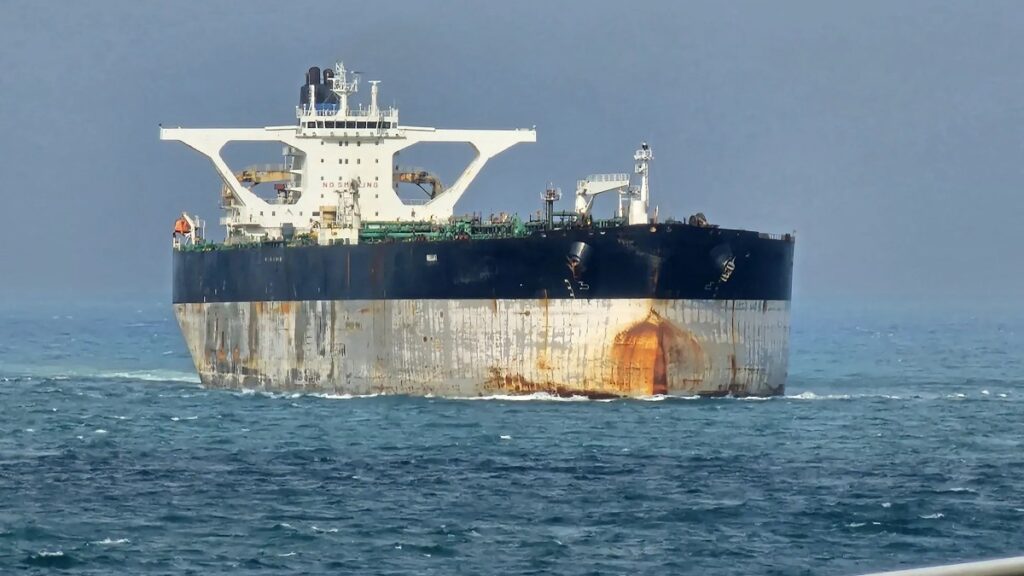
A sanctioned “zombie” ship is among ten Russian shadow fleet vessels that sailed through the Channel on Thursday, a day after British forces helped the United States to seize a similar tanker.
The tankers crossed British and French waters as fears mounted that Moscow could retaliate against British-flagged vessels over the seizure of the Marinera tanker in the North Atlantic on Wednesday. British spy aircraft and a Royal Navy support vessel helped the US in its mission to capture the Marinera.
Experts said the zombie tanker was so-called because it was sailing under a false identity. It was sanctioned by the US in 2024 over concerns it was involved in distributing illicit Russian oil and was sailing under a false name and Cameroonian flag as it entered the Channel.
The vessel crossed paths with Sierra, which is sanctioned by the UK and was previously escorted by Russian warships, and other tankers carrying oil products from Russian ports. They included Aria, registered under the flag of Barbados, which is under sanctions by the US and entered the Channel on Thursday, on its way to port near St Petersburg.
Six of the vessels transiting the Channel in the past 24 hours are under UK or US sanctions.
Separately, the US navy is pursuing a number of sanctioned oil tankers in the Atlantic Ocean, according to The New York Times, after they made an apparent co-ordinated attempt to evade a US maritime blockade on Venezuela.
The vessels, most of which are believed to be carrying oil, made a break from the South American country this week and are now hundreds of miles from land and seemingly heading east towards Africa and Europe.
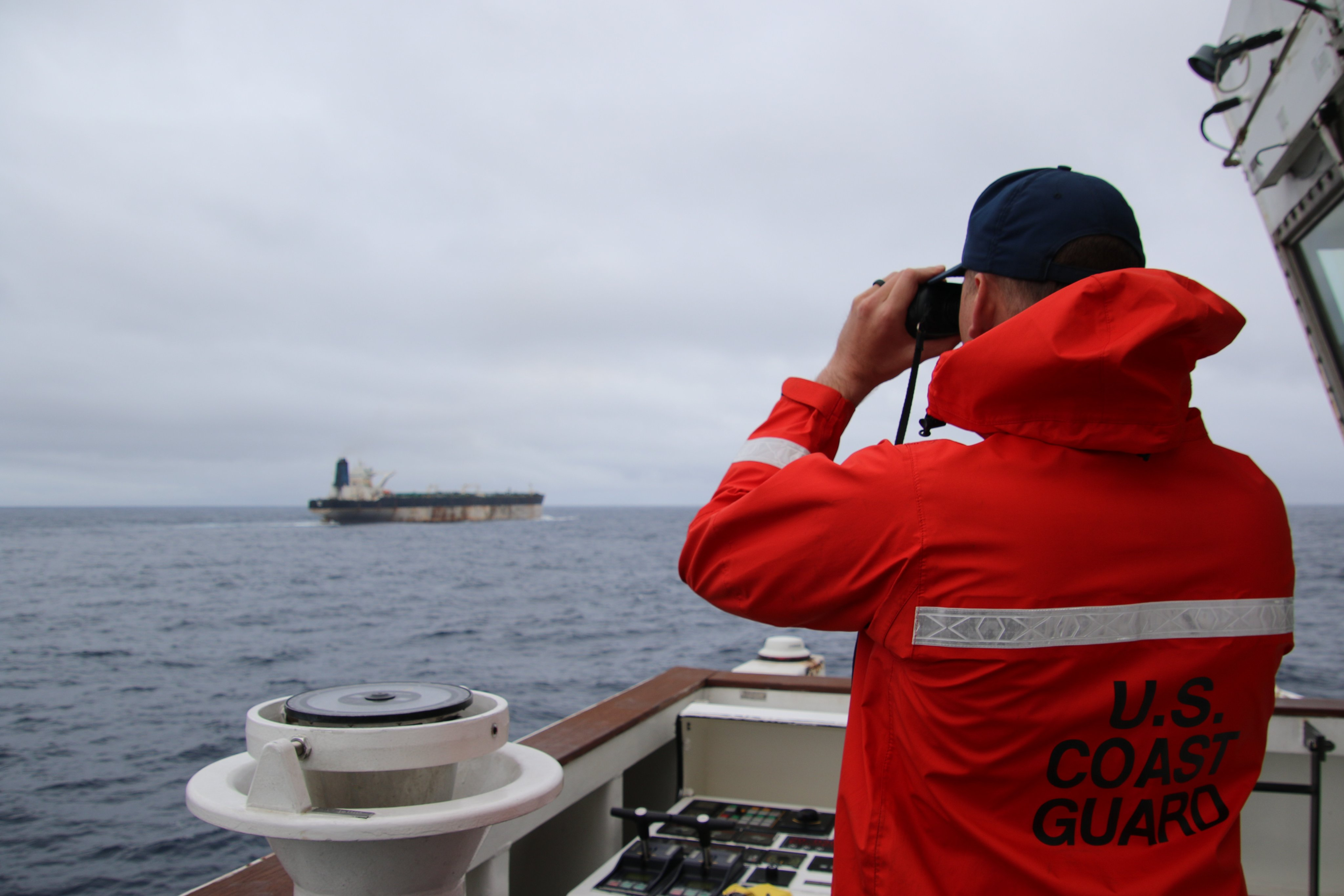
A member of the US coastguard observing a Venezuelan-linked oil tanker off British waters
US_EUCOM/X/PA
Analysts warned that capturing more Russian ships could prompt tit-for-tat seizures of British vessels. William Freer, a research fellow at the Council on Geostrategy think tank, said Iran had previously tried to detain a UK-linked tanker in retaliation for a seizure.
He said: “There is the potential that the Russians may try and find pretexts where they can do something similar, but their ability to do so and the geography of maritime supply lines does provide them extremely limited options to do a like-for-like retaliation.”
John Healey, the defence secretary, said after the capture of Marinera that Britain would “step up” action on Russia’s shadow fleet and UK officials have not ruled out pursuing more vessels.
The zombie tanker previously sailed through the Channel in October and last month, both times carrying 730,000 barrels of Russian crude oil. It is managed by Sempre Shipping Ltd, which is based in the Seychelles. When the ship was sanctioned in 2024 it was named Tia, but has since sailed under the name Tavian and then Arcusat.
It is broadcasting a falsified identification number, and shipping registration databases label its present name and number as “never existed”.
Gonzalo Saiz Erausquin, a research fellow at the Royal United Services Institute, said the ship was “essentially attempting to disguise itself as a different unsanctioned vessel”, adding: “It has changed names and flags and claims a different identity to avoid detection.
“If the vessel is flying a false flag, which it likely is, the UK could move to detain it lawfully under international law.”
Ed Watt, head of maritime law at Addleshaw Goddard, a law firm, and author of Ship Registration: Law and Practice, said that if the UK wished to stop the tanker it would need to first be confident that it was a stateless vessel, and that it was not following an “innocent passage” through the Channel.
He said: “If the UK were emboldened to make a point here, what I would expect them to be doing would be to get on the phone to the Cameroonian registry saying, ‘Have you got a ship called the Arcusat?’ And they would say, ‘Sorry, not one of ours’.
“At that point the UK could choose to say that we are suspicious about this ship. This is not an innocent passage. This is a suspicious and stateless vessel.”
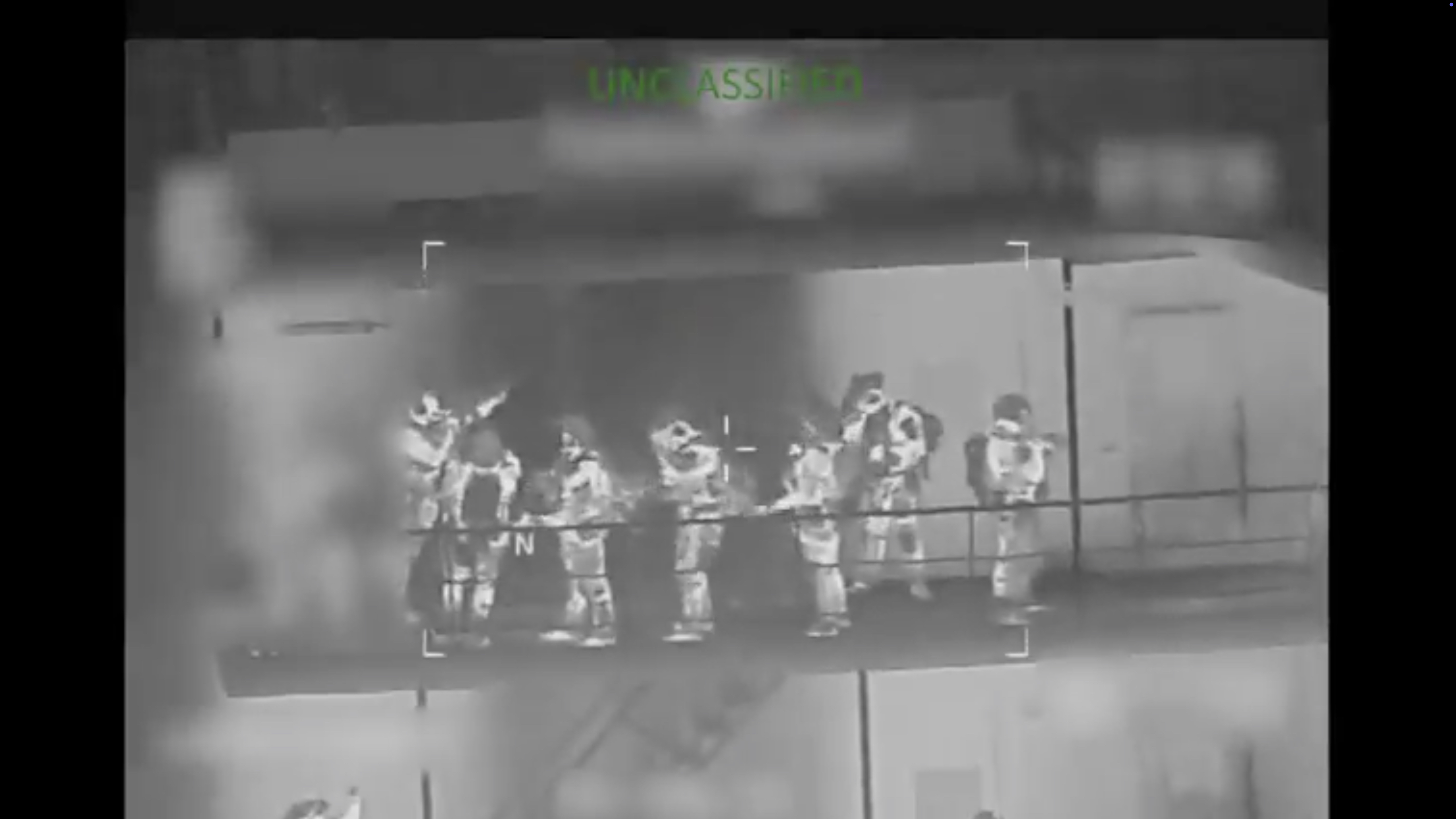
The oil tanker Sophia was also seized in the Caribbean on Wednesday
HSS/UNPIXS
The Channel is one the busiest shipping lanes in the world but also one of the most regulated. More than 400 commercial vessels a day use the Dover Strait, the busiest zone, and it is a “mandatory reporting area”.
Any ship of more than 300 gross tons must report its name, call sign and International Maritime Organisation identification number — the number falsified by the Tia, which was first identified by The i Paper. The captain must also report any hazardous cargo, its route, the course and any cargo on board.
Watt added: “Asking a falsely flagged vessel for true information is a bit like asking a terrorist if anyone has given him anything to take on this plane. They’ll tell you what you want to hear.”
Three other tankers carrying oil products from Russian ports crossed the Channel on Thursday, including Sierra, which was sanctioned by the UK in 2024 for its role in Russia’s shadow fleet.
The tanker, which has been sanctioned by the UK since October 17, 2024, has been involved in the export of crude oil and petroleum products from Russian ports and has shipped 3.8 million barrels of Russian oil in the past year.
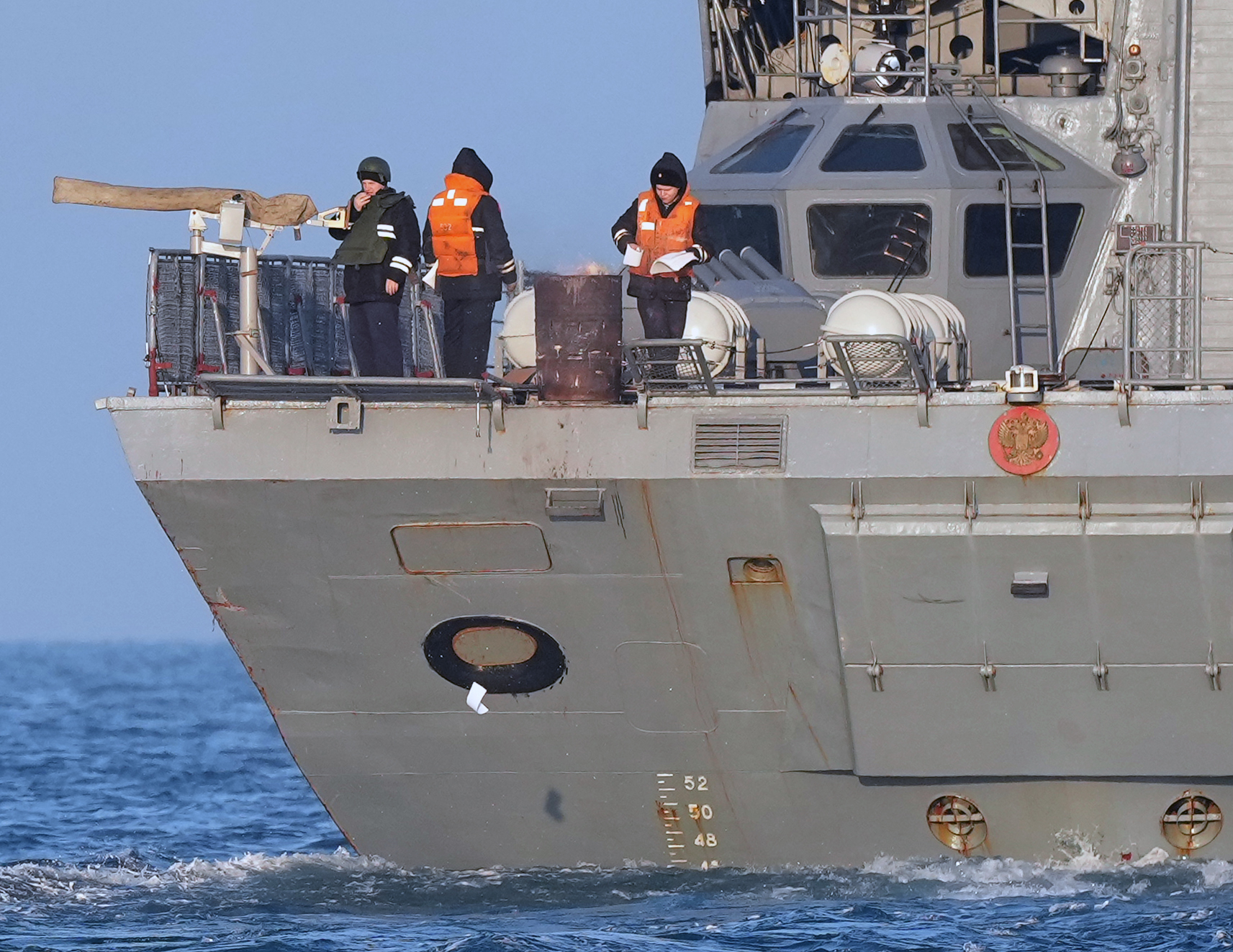
Sierra, which changed its name from Suvorovsky Prospect, is known for its use of “deceptive, high-risk shipping practices” such as switching off its automatic identification system while in transit. In June last year it was escorted by a Russian warship through the Channel.
Mark Douglas, an analyst who tracks maritime activity using transponder data, reported that the Russian corvette Boykiy met the tanker in the Mediterranean and escorted it through the Strait of Gibraltar into the Atlantic.

Boykiy’s interception
EDDIE MITCHELL FOR THE TIMES
EDDIE MITCHELL FOR THE TIMES

EDDIE MITCHELL FOR THE TIMES
Ian Massey, the head of corporate intelligence for Europe, the Middle East and Africa at the corporate intelligence firm S-RM, warned of Russia increasing the flow of “threatening” traffic in UK waters as a result of the Marinera’s seizure.
He said the Kremlin could send more shadow fleet vessels through the Channel “to test US/UK/Nato resolve”.
• False flags: how the shadow fleet is trying to hide behind Russia
Simon Jones, a former Royal Marine and chief executive of Triton International, a risk management company specialising in maritime security, said that since the interception there had been concerns UK-flagged vessels could become a target.
He said: “Is there a perceived additional threat to this? Yes, absolutely. The fact the UK was involved does to a certain extent put UK-flagged vessels at a higher risk level. I don’t think it is anything that warrants any additional security measures being put in place.”
A UK defence source said: “There is always a concern about retaliation. This was a legally sound operation.”
A Ukrainian military source suggested that although Russia would not dare take a US-flagged vessel, British-flagged vessels may be considered a softer target.
On Thursday Moscow accused the US of raising tensions and threatening international shipping with its actions. The Russian foreign ministry said the seizure would “only result in further military and political tensions”, adding that it was worried by “Washington’s willingness to generate acute international crisis situations”.
Politicians in Russia gave a typically bellicose response to the capture of the Marinera, calling for a military action against the US and Europe.
Alexey Zhuravlev, deputy chairman of the parliamentary defence committee, said the US operation was “essentially the same as an attack on Russian territory, since the tanker was flying our national flag”.