
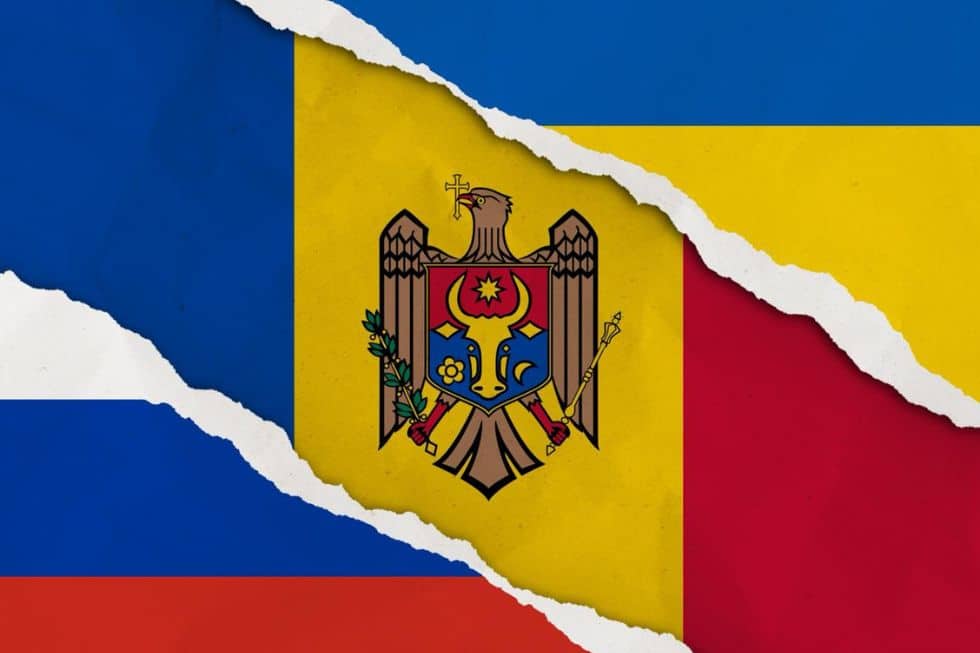
Moldova is relevant to any Ukraine–Russia peace deal, which can only be achieved through enforceable security guarantees for both countries. A small but strategically important country, Moldova is decisively pro-Europe, with its voters defeating pro-Russian parties in the most recent election.
Moldova does not border Russia. Nonetheless, Moldovans feel threatened by Russia. In February 2022, when Russia invaded Ukraine, there were concrete concerns that Russia would deem Transnistria, a pro-Russian breakaway region of Moldova, as part of Novorossiya, the historical name used during the Russian Empire to denote what is today large sections of southern Ukraine and Transnistria. Following the invasion, unconfirmed rumors circulated, with Russia warning Moldova’s President, Maia Sandu, that Russian troops would reach Tiraspol (the self-declared, unrecognized capital of Transnistria) within a couple of days and that she should leave the country to ensure her personal security.
Moldova is an outpost of democracy, bordered by Ukraine, Romania and Transnistria. On the one hand, the disputed status of Transnistria has taken a backseat to the Russia–Ukraine war. On the other hand, Moldova is a candidate for EU membership, with potential membership by 2028 or 2029. In a region often described as the new “powder keg” of Europe, Moldova’s sustainable growth and security should be a primary concern for US policymakers.
In particular, security guarantees for Moldova need to mirror those for Ukraine. These guarantees need to be a fundamental part of any lasting peace arrangement between Russia and Ukraine. Absent these guarantees, Moldova could become a new battleground for Russia, which has shown in the current war with Ukraine that it will assert its power on the borders of Europe, obstructing political, economic and social aspirations of former Soviet states to align with the US and the EU.
Moldova and the fear of the growing threat of Russia
Security in Moldova is fragile, making it a potential flashpoint. Wedged between Ukraine and Moldova, Transnistria hosts Russian troops. The current number of troops is not certain, but estimates suggest there are approximately 1,000 to 1,500 Russian troops in Transnistria. Additionally, Russia has expressed its intentions to expand this presence. The US also views Russian military presence as an instrument for preventing Moldova from joining the West. Indeed, any military conflict on Moldovan territory could thwart the country’s aspirations to integrate into Europe.
In addition, Russian propaganda exploits Moldova’s challenges with economic development and public acknowledgement of corruption. Russian media builds a fake narrative of Moldova as a failed state that needs to “reunite” with Mother Russia and its “traditional” values. The reality is quite different. Moldova scores a respectable position of 76 of 180 countries on Transparency International’s Corruption Index, ahead of Albania, South Africa and India. For context, Malta and Romania tie for 65 of 180 on the Index. And Moldova is increasing the scope of its bilateral relationship with the US, casting its lot for a shared future with the West.
Although 77% of Moldovans declared that their language is Romanian, Russian is still widely spoken throughout various regions. This increases concerns with many Moldovans that Russia may seek to replicate its strategy in Eastern Ukraine of exploiting a Russian-speaking minority to justify dividing and conquering the country. One cannot discount the psychological impact of Russia’s invasion of Ukraine on the people of Moldova. Russian troops at the border of Moldova amplify national security concerns for Moldova. Simply put, Russian power is visible to Moldovans.
According to the Institute for the Study of War, Russia actively sought to derail elections in Moldova in 2025 precisely to block its integration into democracy and Europe. This should be cause for real concern for the Trump Administration when evaluating and mitigating the risk of additional conflict in the region. The broadly accepted local sentiment is that last year’s elections in Moldova, which provided a mandate to pursue EU membership and to continue to integrate Moldova into Europe, could be considered as a turning point in the history of the country, demonstrating its choice toward the West, democracy and Europe. This fragile feeling of victory could easily be lost if there are no security guarantees for Ukraine and if the local population is led to feel insecure because of an increased threat from Russia.
In the meantime, Russian troops in Transnistria threaten regional stability and demonstrate Russia’s intent to assert its interests. Covert election interference by Russia, while less visible, threatens the democratic process in Moldova.
Peripheral vision on the regional level means securing Moldova
In negotiating a deal between Russia and Ukraine, the Trump team needs peripheral vision about the region. This means having a plan for Moldova as well as for countries in similar predicaments, such as Georgia, where Russian aggression is also tangible and disruptive to democracy.
Miscalculating the scope of security guarantees could leave Moldova in limbo, undermining any potential long-term cessation of hostilities between Russia and Ukraine. Geography matters here. Moldova is a short drive from Odessa, one of Ukraine’s key ports on the Black Sea. Destabilizing Moldova would be one way for Russia to undermine any lasting peace arrangement. This makes it urgent for the US to involve Moldova as a direct stakeholder in any deal. In addition, enabling a continued presence of Russian troops located in Transnistria could also pose a military threat to Ukraine, especially Ukrainian military forces in Odessa, which is Ukraine’s lifeline on the Black Sea.
The US must be prepared to have skin in the game to protect Moldova
Putin’s team knows Russia’s long game, which is destabilizing its neighbors to prevent them from integrating into Europe. American policymakers and negotiators must understand the degree to which Moldova could become the site of a future war with Russia.
Any negotiation with Ukraine must result in permanent and workable security guarantees for the entire region. This means Americans need to have real skin in the game, potentially to go to war with Russia when those guarantees come due, in the event of a Russian invasion of Moldova through Transnistria. Slicing Moldova out of a final agreement with Ukraine may expose the region to more armed conflict.
Moldova’s future and the requirements for peace
Recently, on the 34th anniversary of Moldova’s independence, Secretary of State Marco Rubio remarked that “The United States and Moldova share a clear-eyed commitment to building a safer, stronger, more prosperous future.” This indicates a promising position for Moldova within the Trump Administration’s vision for the region.
Moldovans want their future to be directed westward, as part of Europe, and in a strong bilateral relationship with the US. The only sustainable way to achieve this is to carve out specific, actionable security guarantees for Moldova.
Russia would like to obstruct Moldova’s gravitation westward and would have to pay a hefty price for any increase in troops in Transnistria. Anecdotally, Russia appears to have been impervious to economic pressures created by its war with Ukraine. Indeed, economic sanctions are inconvenient to Russia, but not a real deterrent, unless oil exports are targeted.
But Russia may be more vulnerable with the recent loss of Venezuela as a strategic partner, potentially exposing Russian President Vladimir Putin as an emperor without clothes.
Now may be the time for the Trump Administration to press Russia at the negotiating table. If peace between Ukraine and Russia can be achieved, it will come after arduous work by professional negotiators who know the region, Moldova’s security position included.
The stakes are high. Americans need an all-star negotiating team that can factor into any lasting deal real security for Moldova, Ukraine’s small neighbor to the west, and a democracy aspiring for full integration into Europe. We need to think of Moldova as a key stakeholder in any final peace deal, with Ukraine and Moldova having a secure place in Europe.
[Kaitlyn Diana edited this piece.]
The views expressed in this article are the author’s own and do not necessarily reflect Fair Observer’s editorial policy.