
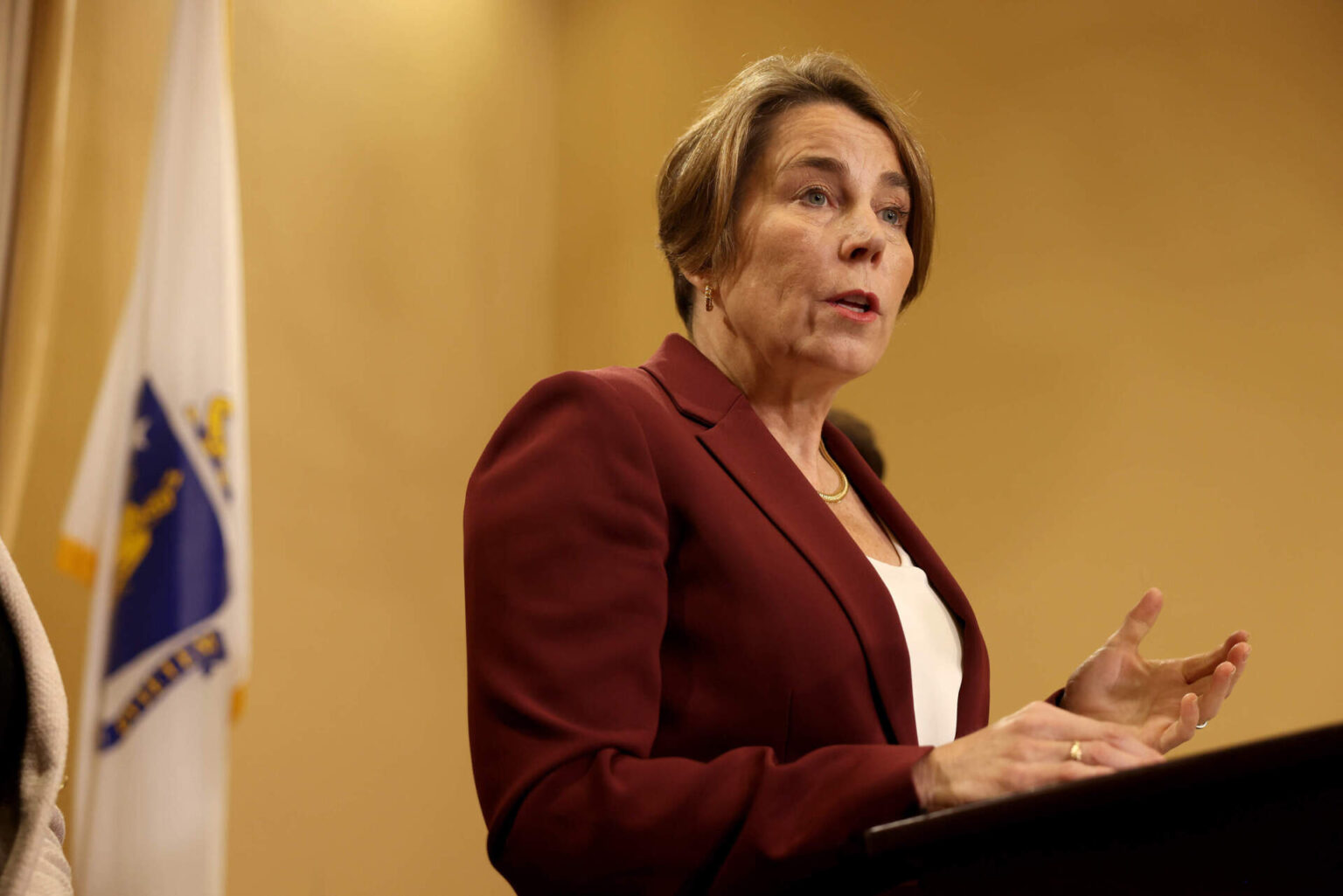
Gov. Maura Healey said Thursday that she’s tapping a special state trust fund to help about 270,000 residents whose health care costs are soaring because Congress failed to renew a chunk of federal subsidies before they expired on Dec. 31.
Those who benefit from Healey’s plan make less than 400% of the federal poverty level, which is equivalent to $62,600 per individual or $128,600 per family of four.
The plan will help most, but not all, of the people affected by the termination of the federal subsidies, known as enhanced premium tax credits.
Instead of seeing their premiums grow by double — or more — these families will pay a smaller increase — or no increase at all, Healey said. For example, a 45-year-old couple with two children in Fall River, earning $75,000 a year, will pay $206 a month for coverage, instead of the $452 a month that they would pay without the state’s investment.
The subsidies will help people who buy their insurance on the Massachusetts Health Connector, a public exchange that sells health plans to residents who make too much money to qualify for Medicaid, and who do not have coverage from an employer.
At the announcement Thursday, Healey urged Congress and President Trump to extend subsidies at the federal level. In the meantime, she said, “Massachusetts is doing what we need to do.”
“I want to do everything that we can to make sure that people can continue to have access to health care,” she said.
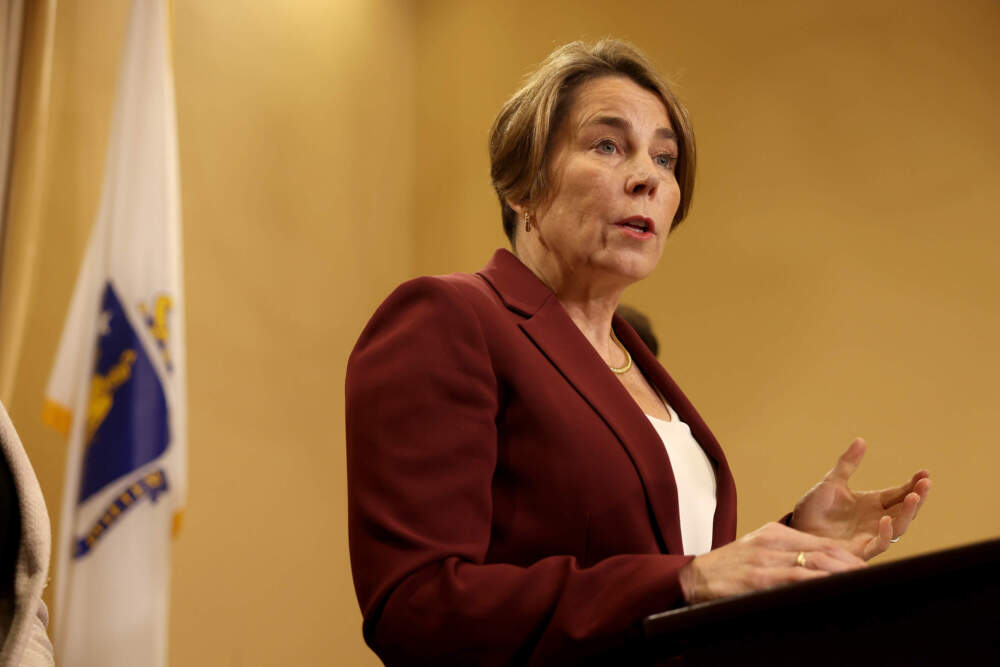 Gov. Maura Healey speaks during a press conference on rising health care costs at the State House on Nov. 10, 2025. (Jessica Rinaldi/The Boston Globe via Getty Images)
The new state subsidies were factored into premium costs that residents saw when they shopped for coverage during the enrollment period in November and December 2025 — but the administration did not announce them until now.
Massachusetts already spends millions to defray health care costs for residents based on income. That ongoing investment, combined with Healey’s $250 million addition, comes out to $600 million annually. Administration officials said that is more than any other state in the country.
But they stressed that federal help is also essential.
The U.S. House of Representatives voted Thursday to renew the subsidies for three years. But the Senate also needs to act before Americans can see relief in their monthly bills.
The federal subsidies helped defray the costs of coverage for millions of Americans.
Audrey Morse Gasteier, executive director of the Health Connector, said she and her team hear from people every day who benefit from subsidized coverage.
“This program is how they sleep at night,” she said, adding that it helps them manage chronic conditions, avoid medical debt and stay healthy.
Gasteier said about 25,000 people with Connector coverage still will not qualify for any help, without federal action.
If Congress renews federal subsidies, the state money Healey has set aside would remain in a trust fund.
More than 371,000 Massachusetts residents had enrolled in coverage through the Connector by a key December deadline. About 23,000 canceled their health plans — twice the number who canceled the previous year — which officials attributed to spiking premium costs.
Residents have until Jan. 23 to enroll in coverage that begins Feb. 1.
Chris Van Buskirk contributed to this report.
This article was originally published on January 08, 2026.