
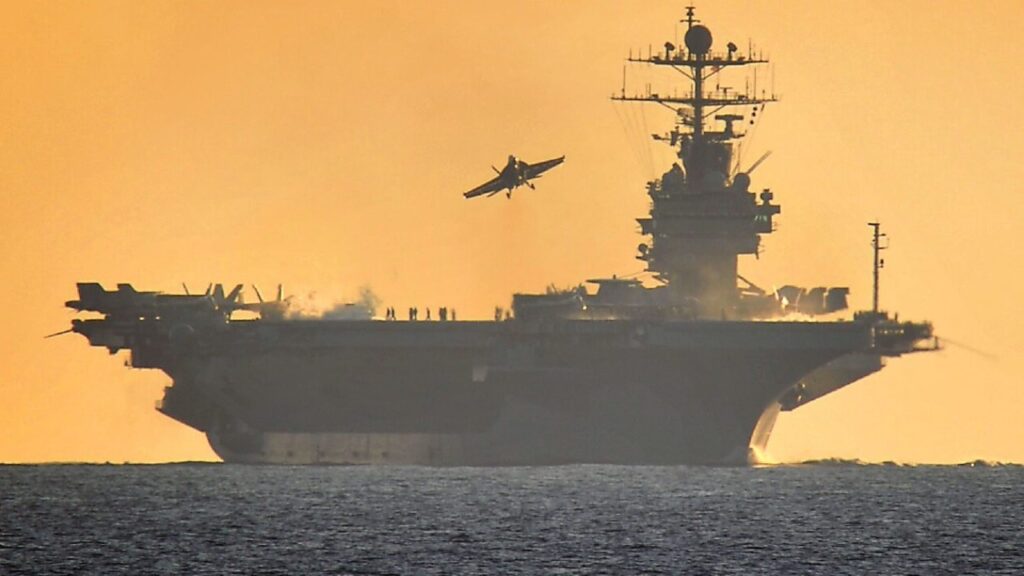
Key Points and Summary – The USS Harry S. Truman is preparing for its Refueling and Complex Overhaul (RCOH) starting in June 2026, a process expected to sideline the aircraft carrier until at least January 2031.
-However, the Navy faces significant hurdles: Huntington Ingalls Industries (HII) is already behind on preparations, and the ship requires additional repairs after a collision with a commercial vessel near Egypt in February 2025.
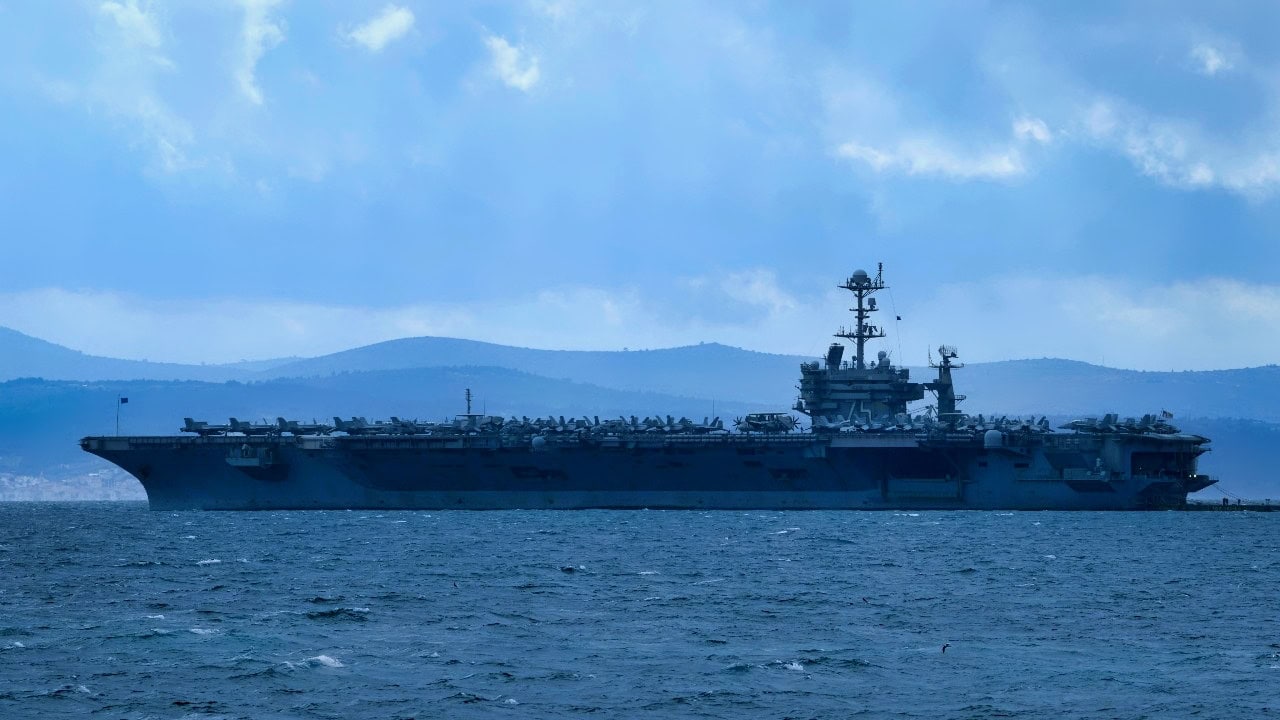
USS Harry S. Truman Aircraft Carrier. Image Credit: Creative Commons.
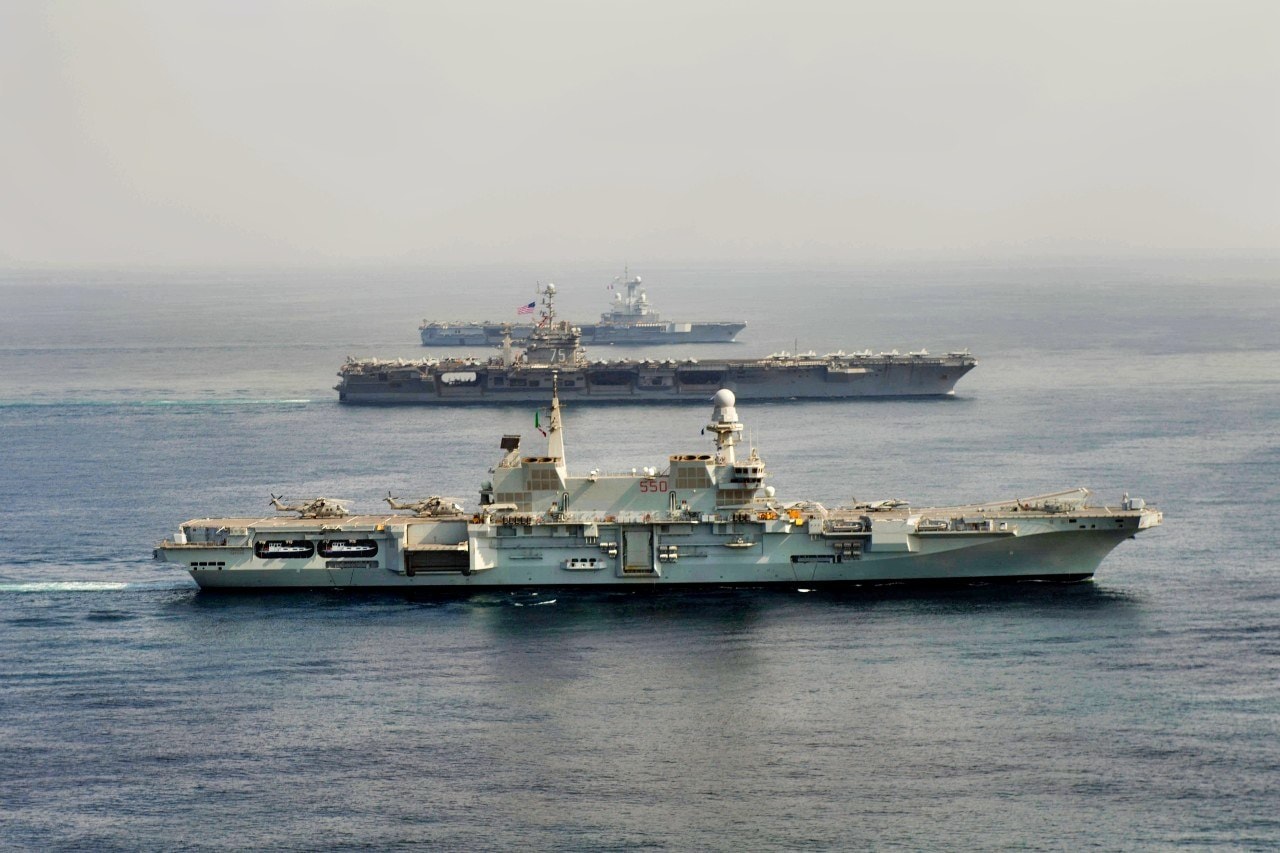
(Jan. 3, 2014) The Italian navy aircraft carrier ITS Cavour (CVH 550), front, the aircraft carrier USS Harry S. Truman (CVN 75) and the French navy aircraft carrier Charles de Gaulle (R 91), conduct operations in the Gulf of Oman. Harry S. Truman, flagship for the Harry S. Truman Carrier Strike Group, is conducting operations with Task Force 473 to enhance levels of cooperation and interoperability, enhance mutual maritime capabilities and promote long-term regional stability in the U.S. 5th Fleet area of responsibility. (U.S. Navy photo by Mass Communication Specialist 3rd Class Ethan M. Schumacher/Released)
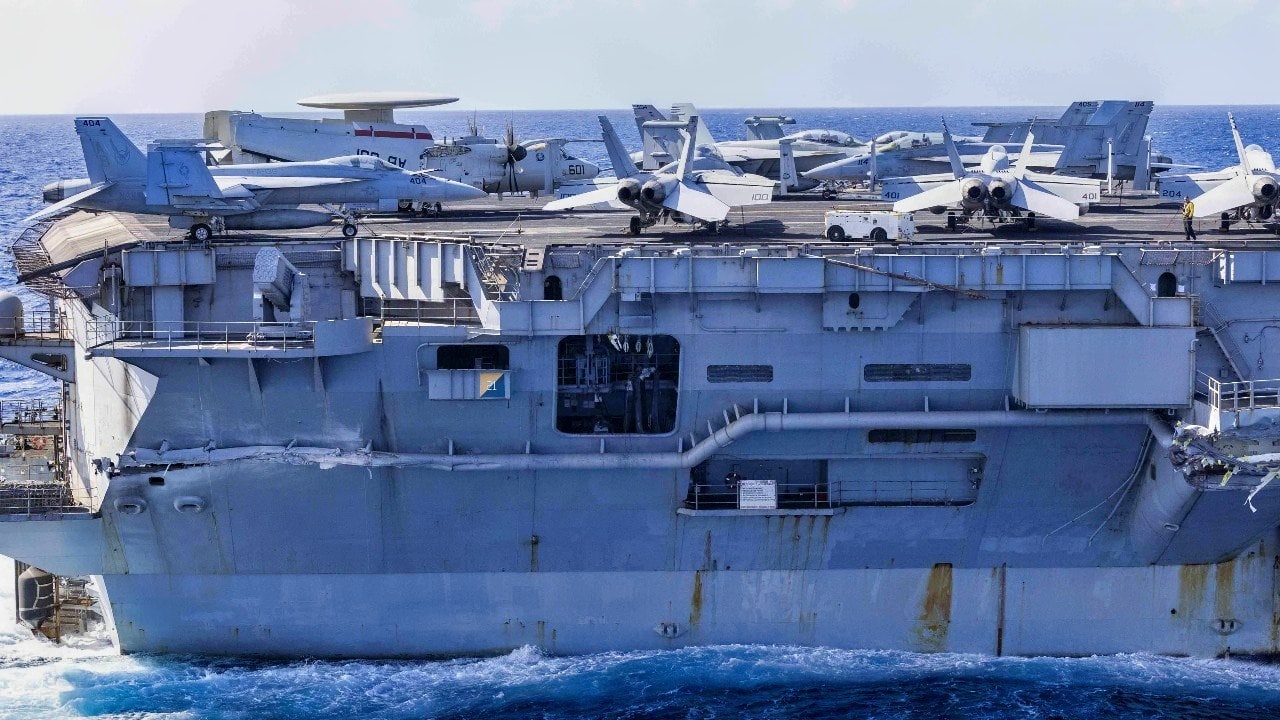
(Feb. 13, 2025) Exterior damage of USS Harry S. Truman (CVN 75) viewed from an MH-60S Sea Hawk helicopter, attached to the “Dragonslayers” of Helicopter Sea Combat Squadron (HSC) 11 following a collision with the merchant vessel Besiktas-M, Feb. 12, while operating in the vicinity of Port Said, Egypt. USS Harry S. Truman, the flagship of the Harry S. Truman Carrier Strike Group (HSTCSG), is on a scheduled deployment in the U.S. 6th Fleet area of operations supporting U.S. Naval Forces Europe-Africa to defend U.S., Allied and partner interests. (U.S. Navy photo by Chief Mass Communication Specialist Jose Hernandez)
-With the USS John C. Stennis also delayed until late 2026 and the “disastrous” six-year overhaul of the USS George Washington—marked by crew suicides and poor living conditions—looming as a cautionary tale, the Navy is rushing to implement “lessons learned” to prevent another crisis.
The U.S. Navy Is Going to Soon Be Down Another Aircraft Carrier
The United States will have to work with one less carrier for the time being as the USS Harry S. Truman (CVN-75) prepares for its upcoming Refueling and Complex Overhaul (RCOH).
This process will involve refueling the carrier’s nuclear reactor and extensive modernizations of onboard systems.
Ideally, these overhauls last around three years, but recent RCOHs have carried on almost a year longer than scheduled due to extensive repairs and technical difficulties.
Despite attempts to streamline the process, the prospect of Truman’s overhaul being completed on time looks fairly dim—Huntington Ingalls Industries is already behind in its preparations.
Truman’s Upcoming Overhaul
Planning for Truman’s overhaul formally moved into high gear in January 2024, when HII’s Newport News Shipbuilding—the only U.S. shipyard capable of performing nuclear aircraft carrier overhauls—received a $913 million advanced planning and long-lead procurement contract from the Navy.
This contract covers engineering development, ship checks, material procurement, workforce forecasting, and the early fabrication steps necessary to prepare for a full RCOH availability.
Navy statements emphasized this advanced planning phase is essential to reducing schedule risk and preventing the late discovery of work, a problem that plagued previous overhauls.
Newport News Shipbuilding officials further noted that this phase alone stretches several years before Truman actually enters dry dock, underscoring how much the Navy is attempting to push planning risks to the left in order to avoid catastrophic downstream delays.
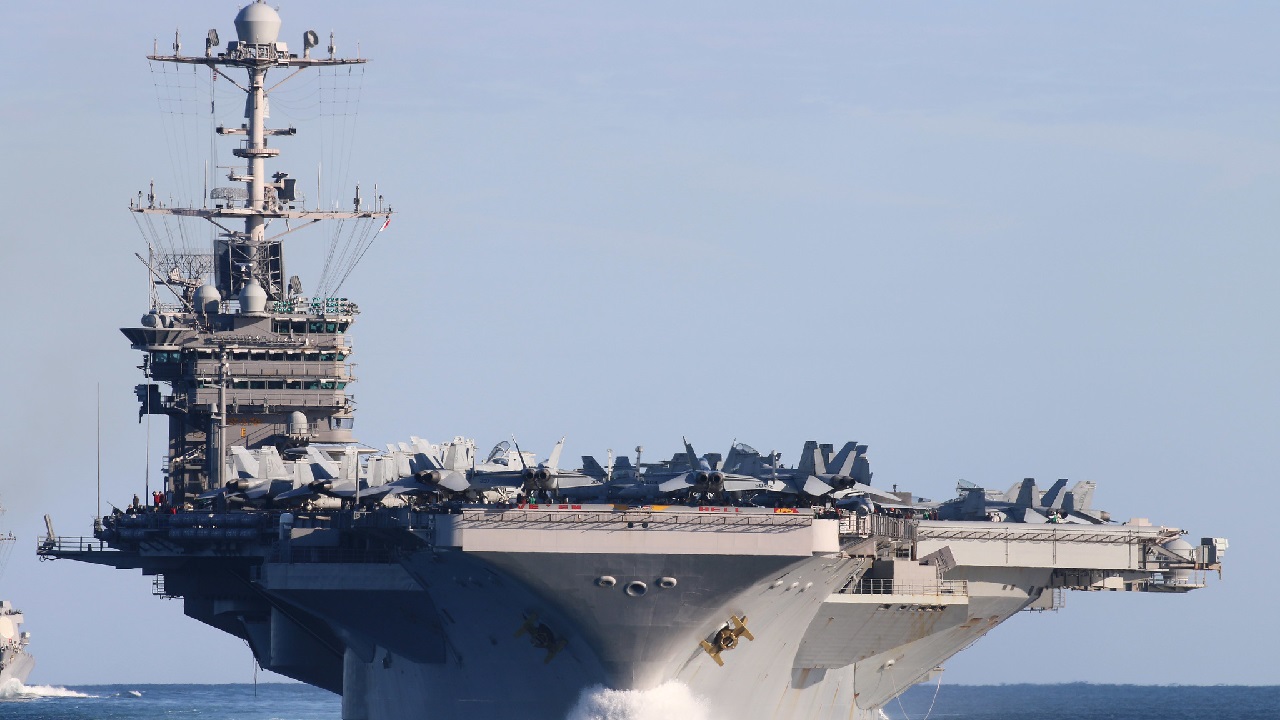
The aircraft carrier Harry S. Truman (CVN 75) participates in a composite unit training exercise (COMPTUEX). Truman is underway as a part of the Harry S. Truman Carrier Strike Group (HSTCSG) performing COMPTUEX, which evaluates the strike group’s ability as a whole to carry out sustained combat operations from the sea, ultimately certifying the HSTCSG for deployment. (U.S. Navy photo by Mass Communication Specialist 2nd Class Tommy Gooley/Released)
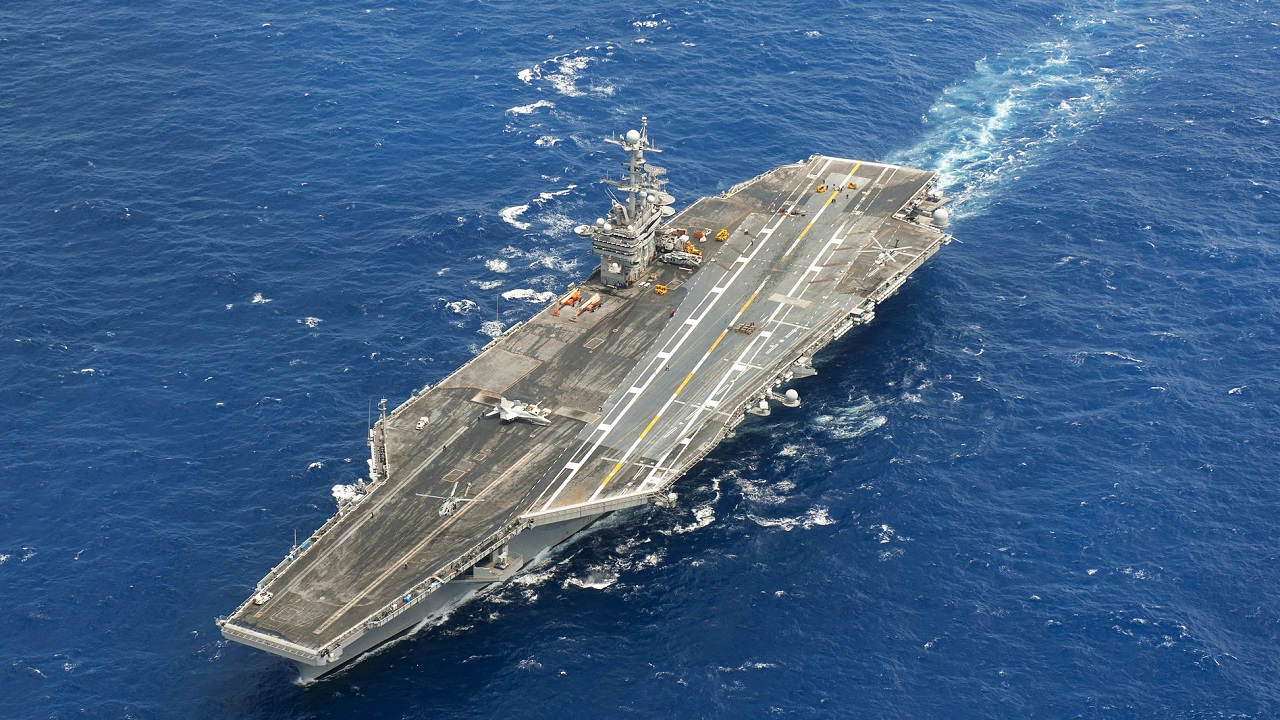
The aircraft carrier USS Harry S. Truman (CVN 75) steams through the Atlantic Ocean July 16, 2014. The Harry S. Truman was underway conducting an ammunition transfer. (DoD photo by Mass Communication Specialist 3rd Class Karl Anderson, U.S. Navy/Released)
The Truman’s RCOH is scheduled to begin in June 2026 and conclude in January 2031, a span of roughly four and a half years.
This longer timeline is notable; early Nimitz-class RCOHs were often planned at closer to four years. T
he extended schedule is probably due to the extra work specifically expected for this RCOH. In February 2025, the Truman collided with a commercial shipping vessel in the Mediterranean Sea near Port Said, Egypt.
The carrier’s nuclear reactors and watertight integrity were not affected, but the ship’s external hull suffered considerable damage.
With this in mind, it is reasonable to assume the RCOH will last considerably longer than previous overhauls.
The Legacy of the USS George Washington
The cautious timeline also reflects lessons learned from the USS George Washington’s (CVN-73’s) disastrous overhaul.
The Washington entered her RCOH in August 2017 with a four-year timeline. Instead, she remained at Newport News Shipbuilding until May 2023, spending nearly six years in overhaul—just less than the time it took to build the ship.
Navy officials attributed the delay to many factors: unexpectedly poor material condition upon arrival, extensive unplanned growth work, budgetary turbulence tied to earlier proposals to inactivate the ship, and the severe workforce and supply-chain disruptions caused by the pandemic.
Each factor alone might have been manageable, but together they overwhelmed planning assumptions and pushed the availability well beyond schedule.
The extended RCOH took a severe toll on the morale and mental health of personnel. Sailors assigned to the ship endured years of deteriorating living conditions while the carrier sat in an industrial shipyard environment not designed for prolonged habitation.
Investigations later confirmed that quality-of-life failures including insufficient services, isolation, and limited access to support facilities dragged down morale. During the yard period, multiple sailors died by suicide, which prompted Congress to intervene and forced the Navy to reassess how crews are supported during overhauls.
By the time the George Washington finally returned to sea, most of its crew had never deployed on the ship before, which complicated training missions and the fleet’s overall readiness.
The U.S. Navy is Down Another Aircraft Carrier
The USS John C. Stennis entered RCOH in May 2021 and quickly became a test case of whether the Navy had absorbed the lessons of the George Washington. While the Stennis has made steady progress, the overhaul has nonetheless slipped by more than a year.
Current Navy projections place the carrier’s redelivery in October 2026, roughly 14 months later than earlier estimates. According to the Navy, mandatory growth work, particularly in propulsion and support systems, combined with lingering industrial-base challenges from the pandemic, have all contributed to the Stennis’s slipping schedule.
All these experiences now converge in the planning for the USS Harry S. Truman. Navy leaders are keenly aware that the Truman’s RCOH will occur during a period of high global demand for carrier strike groups, limited shipyard capacity, and ongoing pressure on the industrial workforce.
At the same time, the Navy understands that another RCOH failure on the scale of the George Washington would have profound consequences for fleet readiness and public trust.
The extended planning horizon, early procurement of long-lead materials, conservative scheduling, and explicit focus on sailor welfare represent a deliberate attempt to balance operational urgency with hard-learned realism.
About the Author: Isaac Seitz
Isaac Seitz, a Defense Columnist, graduated from Patrick Henry College’s Strategic Intelligence and National Security program. He has also studied Russian at Middlebury Language Schools and has worked as an intelligence Analyst in the private sector.