
10.01.2026. 11:12h
In mid-July of last year, we decided to put our long-standing plans to visit Romania into action. Various route options were “on the table”, and in the end, the one that leads via Niš and Pirot to Sofia and Veliko Tarnovo, and then to Romania, prevailed. In Romania, we first visited Bucharest, and then three beautiful old towns in Transylvania (Brasov, Segesvar and Sibiu). The highlight, and the immediate reason for this trip of ours, was the Transfagarasan, a challenging and extremely popular road that leads through the Carpathians. As we managed to see several bears lounging by the roadside while passing through it, we fulfilled the ultimate goal of the trip. Although everything we saw and experienced during the eight-day trip exceeded our expectations – we were tired. From the Carpathians, we descended to Timisoara. The plan was to sleep overnight, walk around the city for a few hours the next day, continue to Smederevo and spend the last night in Vrnjacka Banja. On our way back from the Transfagarasan Highway, we encountered roadworks. Traffic was diverted all over the place, and we arrived in Timisoara well into the night. The owner of the apartment, who spoke excellent Serbian, told us that, unfortunately, we wouldn’t be able to drive out until late afternoon the next day because the traditional triathlon was taking place and the city center was closing. We were so tired that we said: We’ll think about it tomorrow. So we suddenly had the opportunity to get to know Timisoara better.
Forty years ago, while I was studying in Belgrade, I went to Timisoara to shop on several occasions. I bought all kinds of things, mostly dishes. Some of the cake plates are still alive. The city was gloomy, and the people were even more gloomy. Our standard of living was an unattainable ideal for them. And then, after about 40 years – everything changed.
Traditionally, we got up early the next morning and set off on a tour of the city center. The triathlon organizers had preceded us. There were signs and counters set up everywhere.
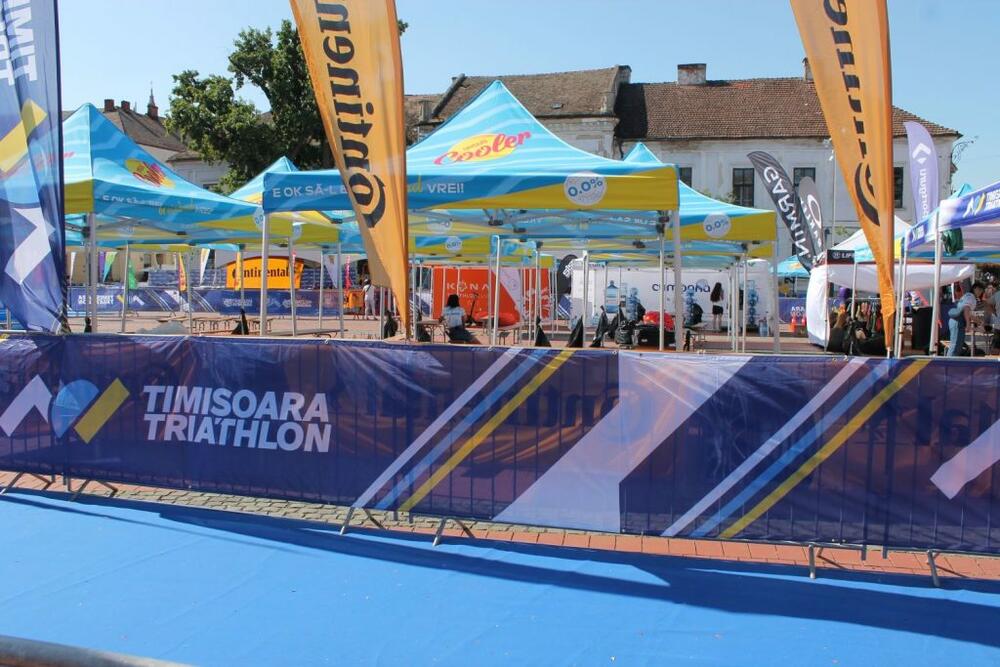
photo: Jasninaputovanja.me
Bucharest is a city with almost 2 million inhabitants. After it, about a dozen cities have between 200 and 300 inhabitants. Among them is Timisoara, the fifth in line. The city was named after the Tamiș River, which once flowed through the city. Due to frequent floods, the river’s course was shifted. Now, only the Begej River flows through Timisoara, which was used to hold the swimming part of the triathlon.
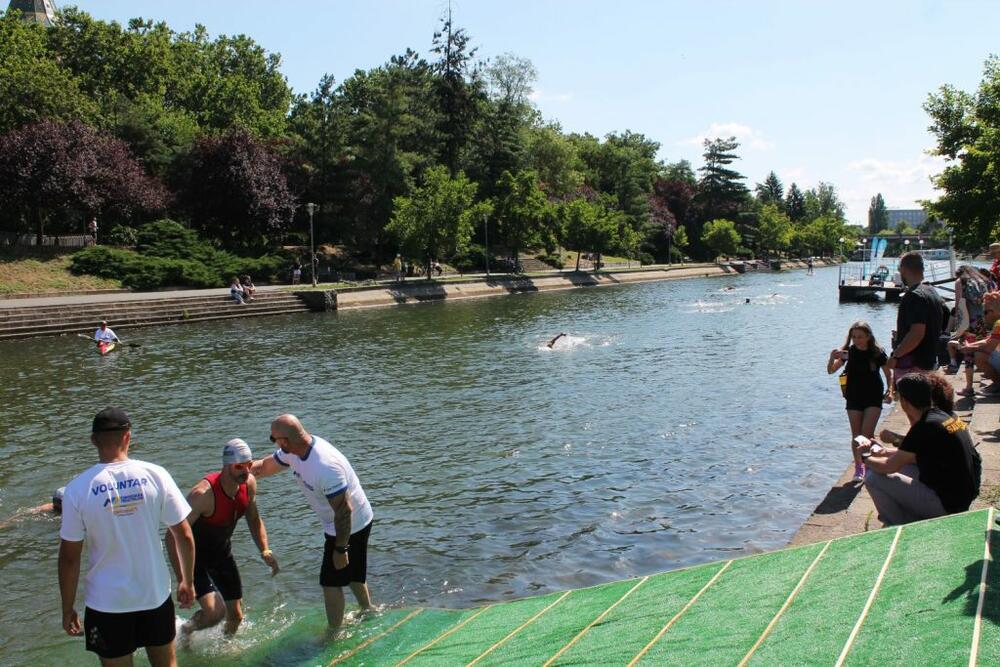
photo: Jasninaputovanja.me
Competitors who came from all over to test their endurance and running, swimming and cycling skills flooded the city. The competition was held in numerous categories, so there were a lot of children.
Timisoara pleasantly surprised us in all areas. The old buildings have been restored. They were not made “bigger, more beautiful and more modern” but just the way they were once, just “washed”. From them, we can conclude that this part of Europe had an interesting history and that before World War II it was at an enviable level of development. I read that it was often called Little Vienna because of the great influence of Austria on the architecture of the city. What is interesting is that it is adorned with ethnic and religious diversity of its inhabitants, and religious buildings of different denominations can be seen in it. In the very center of Timisoara there are three squares: Union Square, Freedom Square and Victory Square. All three are connected by alleys. There are interesting monuments on each square, and monumental religious buildings and interesting buildings are located around them.
The Square of Unity is the oldest square in Timisoara. On its edges are the Serbian Cathedral of Saint George and the Roman Catholic Church, also dedicated to Saint George. In the middle of the square is the Plague Column monument, built as a sign of gratitude by the city’s residents for the end of the plague epidemic. Around the square are many interesting buildings that attract the eyes and phones (cameras) of tourists, among which the colorful Bruk House stands out.
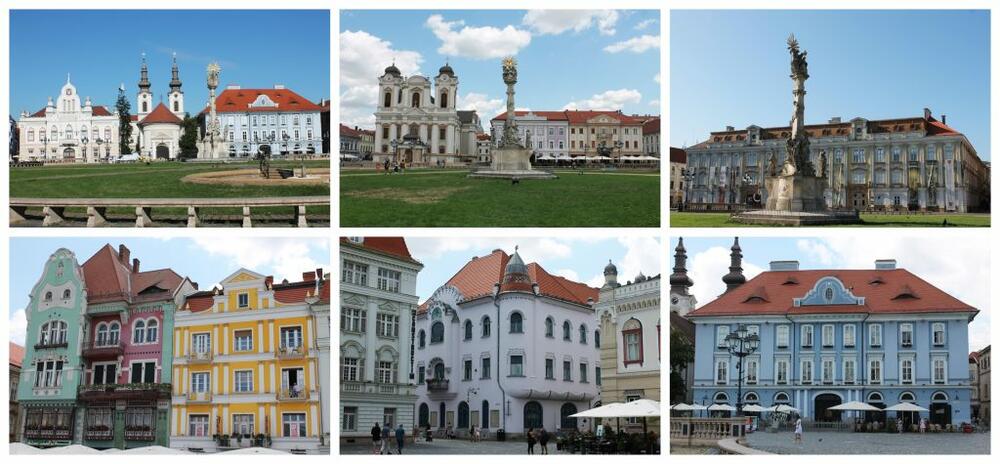
photo: Jasninaputovanja.me
Victory Square is the center of all events in the city. It is recognizable by the statue of Romulus and Remus with a she-wolf, a gift from Rome to Timișoara. The statue is a replica of the original bronze statue from the fifth century BC. On one side of the square is the magnificent Romanian Cathedral, which is considered one of the most beautiful in all of Romania. It is monumental from the outside and also impresses with its interior. Opposite it is the Opera House. It is one of the four national opera houses in Romania. It was built in 1946, but during the reign of Nicolae Ceaușescu, an entrance with a balcony was added, which was the place from which this dictator addressed the people. On the square itself, you can see an interesting, so-called Fish Fountain, a mini park, and around it there are various interesting and historically significant buildings, such as the Polytechnic building.
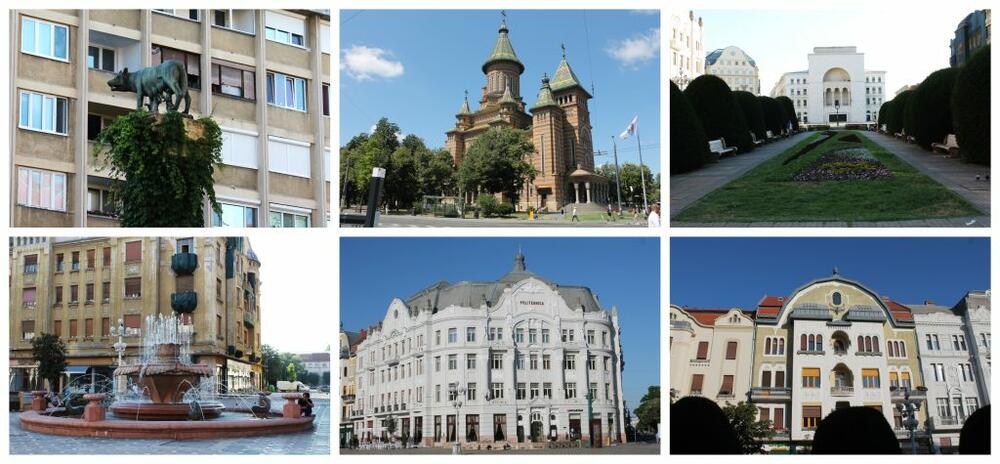
photo: Jasninaputovanja.me
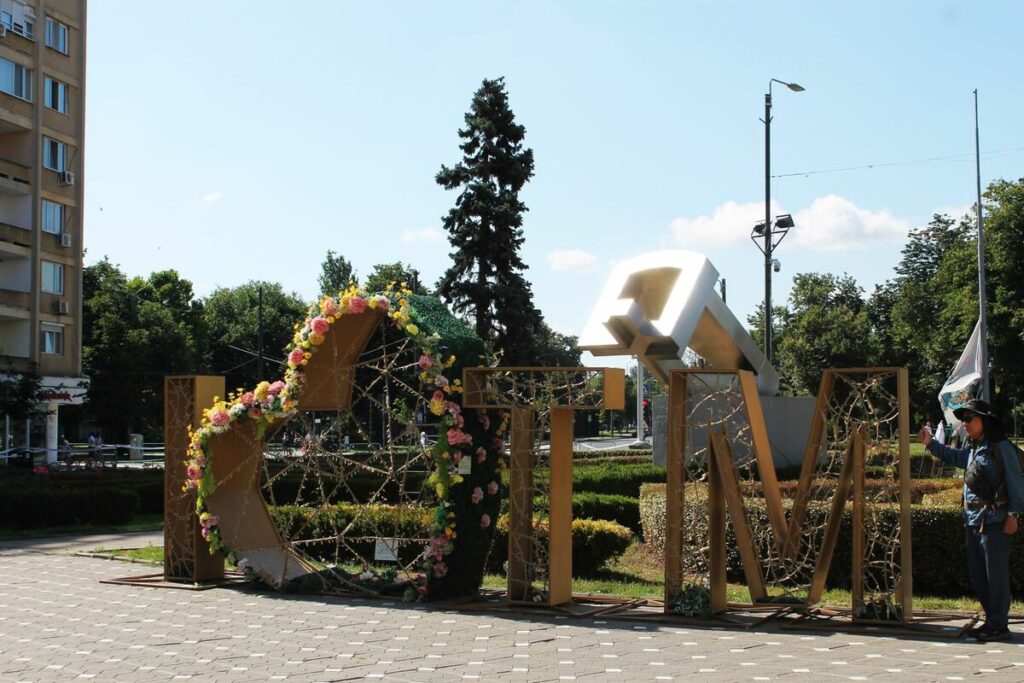
The third square, Trg Slobode, can be said to be the center of the city’s cultural life. When we were visiting the city, most of this square was used for a triathlon, so we could hardly see anything. The most important monument on this square, the Monument to the Virgin Mary – John of Nepomuk, was difficult to photograph because it was right next to, we assume, one of the race’s goals. We didn’t even see the red stone, which is why this square is sometimes called the red square.
In Timisoara, it is not only the squares that are interesting, but also the streets that connect them. Cafes covered with umbrellas can be found in many cities today. However, here it is an entire street and it looks really nice. Above another street, we also noticed butterflies, which are certainly much more attractive at night. There is more. I read an interesting fact that Timisoara is the first city in Europe, and after New York, the second in the world to introduce street lighting, and the first city in Europe to introduce trolleybus traffic. For a relatively small city, these are incredible facts.
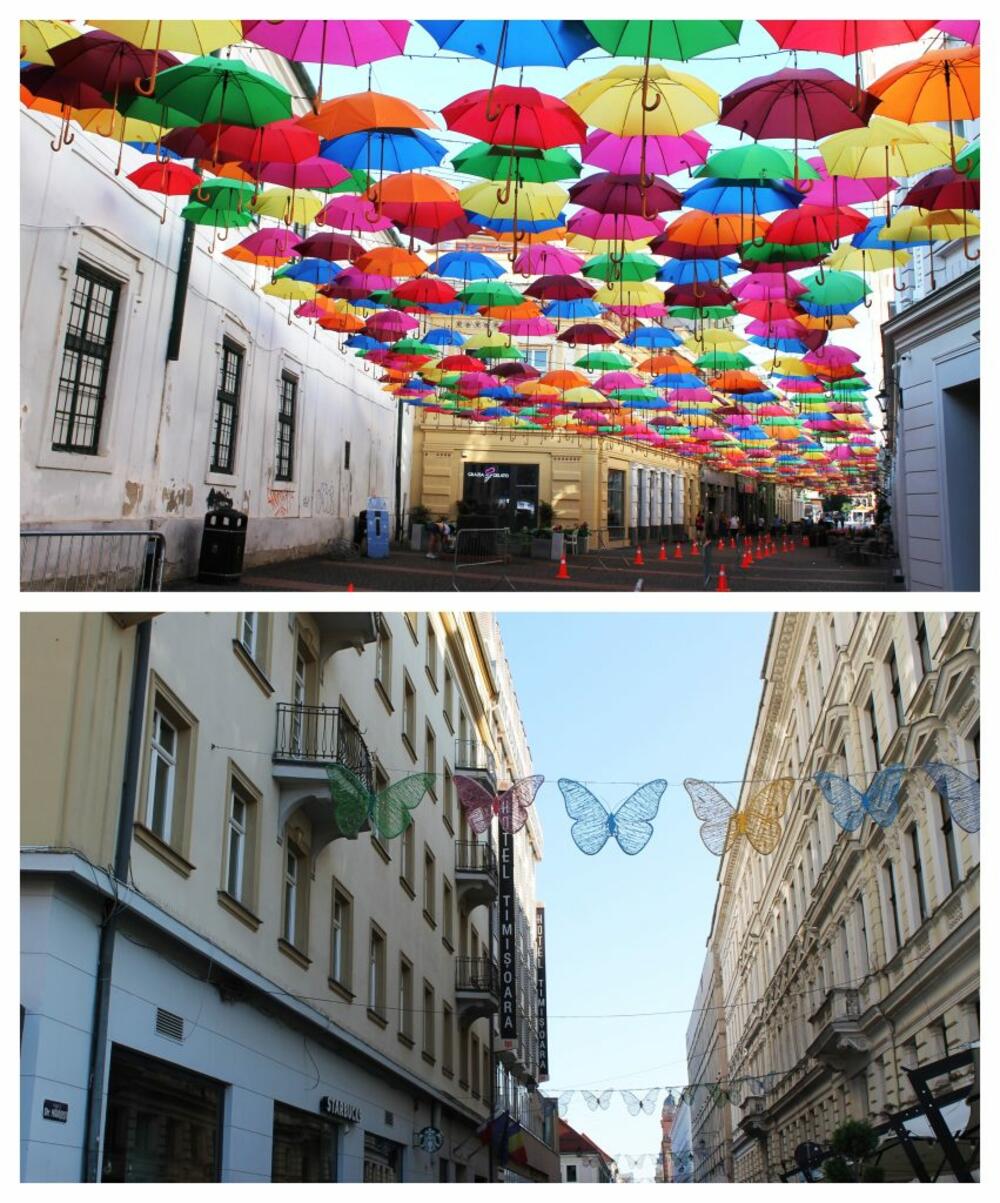
photo: Jasninaputovanja.me
The promenade by Begej is another must-see for anyone visiting Timisoara. We walked part of it, but it was “occupied” by competitors and spectators, so we headed to the city’s parks. The closest is the Central Park, which is located right next to the Romanian Cathedral. It has a huge number of busts of former residents of the city who have distinguished themselves in various fields. In the central part of the park is a large monument dedicated to the victory over fascism. We also walked through the Botanical Garden, and then went to Julius Park, which was additionally decorated on the occasion of Timisoara being declared the European Capital of Culture in 2023. Horticultural masters shaped the oak trees like cypresses, and the linden tree crowns were given the shape of cubes. There were many more interesting details there, as well as a magnificent shopping mall, but there was no time for it. They say that the most beautiful period to visit Timisoara is April, when the city holds the Flower Festival. We kept thanking “Mr. Chance” for keeping us in Timisoara longer than we had originally planned. We didn’t have time for the Rose Park, the Banat Village Museum, the Banat National Museum, the numerous castles on the outskirts of the city, and who knows what else.
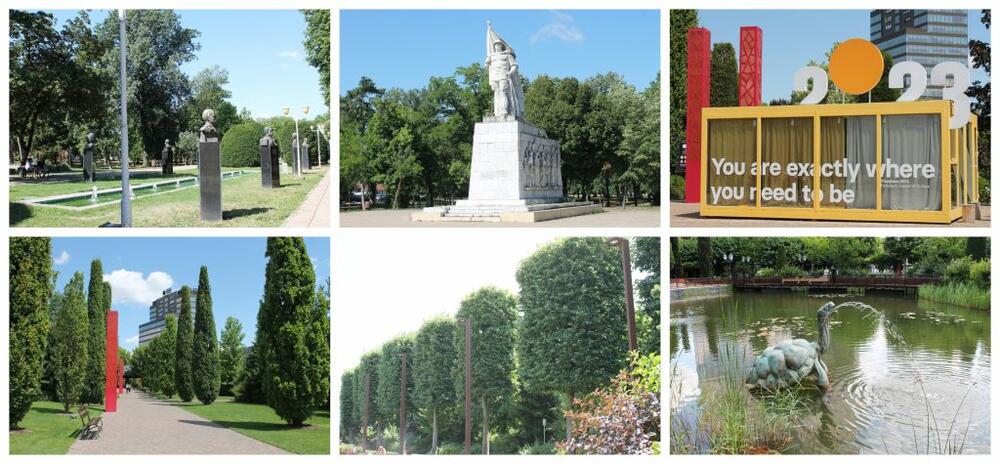
photo: Jasninaputovanja.me
There were many other interesting things that we managed to see in that one day in the wider center of Timisoara. First of all, numerous cultural institutions, as well as religious buildings, as I said, of various denominations. For the first time, I learned that there is a Greek Catholic Church, although I cannot boast that I am well-versed in that area. There is also St. George’s Square, where there are archaeological remains from some past times, and there is an interesting monument on it that depicts George “slaying the dragon”. In the Gate of the Serbian Orthodox Church is a bust of Miroslav Crnjanski, who grew up in this city. The monument that read “In memory of those deported to Bargan (1951 to 1956)” made me look for information about who was deported, why and where. It turned out that during that period, about 13.000 families with about 44.000 people who lived in the border zone with Yugoslavia were deported. They were sent to the Bargan wasteland, with nothing, so to speak. This modest monument reminds us of those tragic events and tries to save them from oblivion. What perhaps impressed me the most was the Philharmonic Hall built in 1871. There was a time when we collectively considered ourselves superior to the Romanians. Walking around Timisoara, I realized for the umpteenth time how wrong we were.
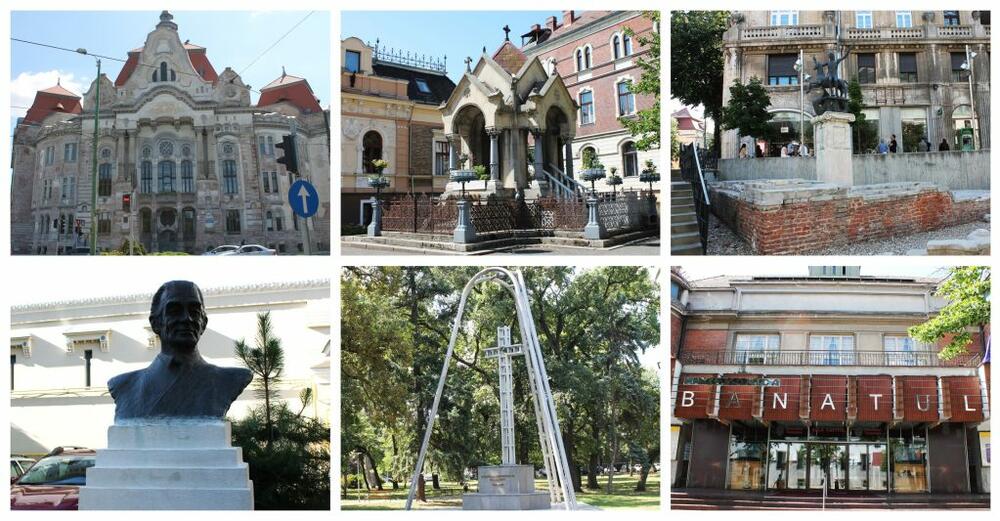
photo: Jasninaputovanja.me
What I liked most about Timisoara were the small, diverse monuments scattered everywhere. Some you can “figure out” right away, and for some you’d need a guide, because not everything can be found on the internet. Or at least not easily.
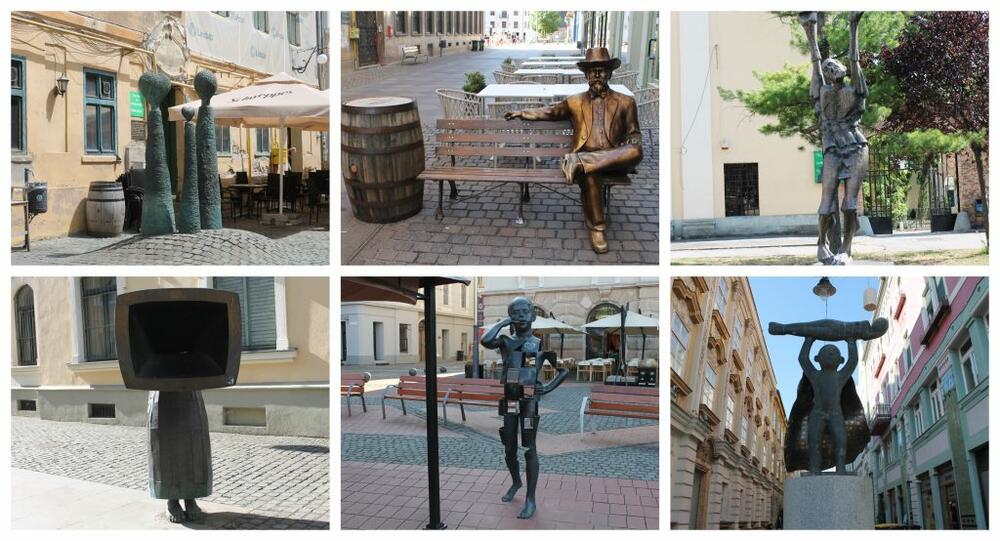
photo: Jasninaputovanja.me
And so… We couldn’t leave Timisoara without stopping by the highly recommended restaurant Beraria 700, which, in addition to its exquisite food, also has a great ambiance. Half a year after that lunch, I can’t remember what we ate, but I can say with certainty that we were satisfied. We said goodbye to Romania, and I hope to return to it again. There is still a lot to see in Timisoara, including Arad, the Merry Cemetery – Sapanta, Maramures, the Salina Turda Salt Mine and so on. Romania was a real revelation for me and I am convinced that it will soon be at the very top of Europe’s most desirable tourist destinations.

News