
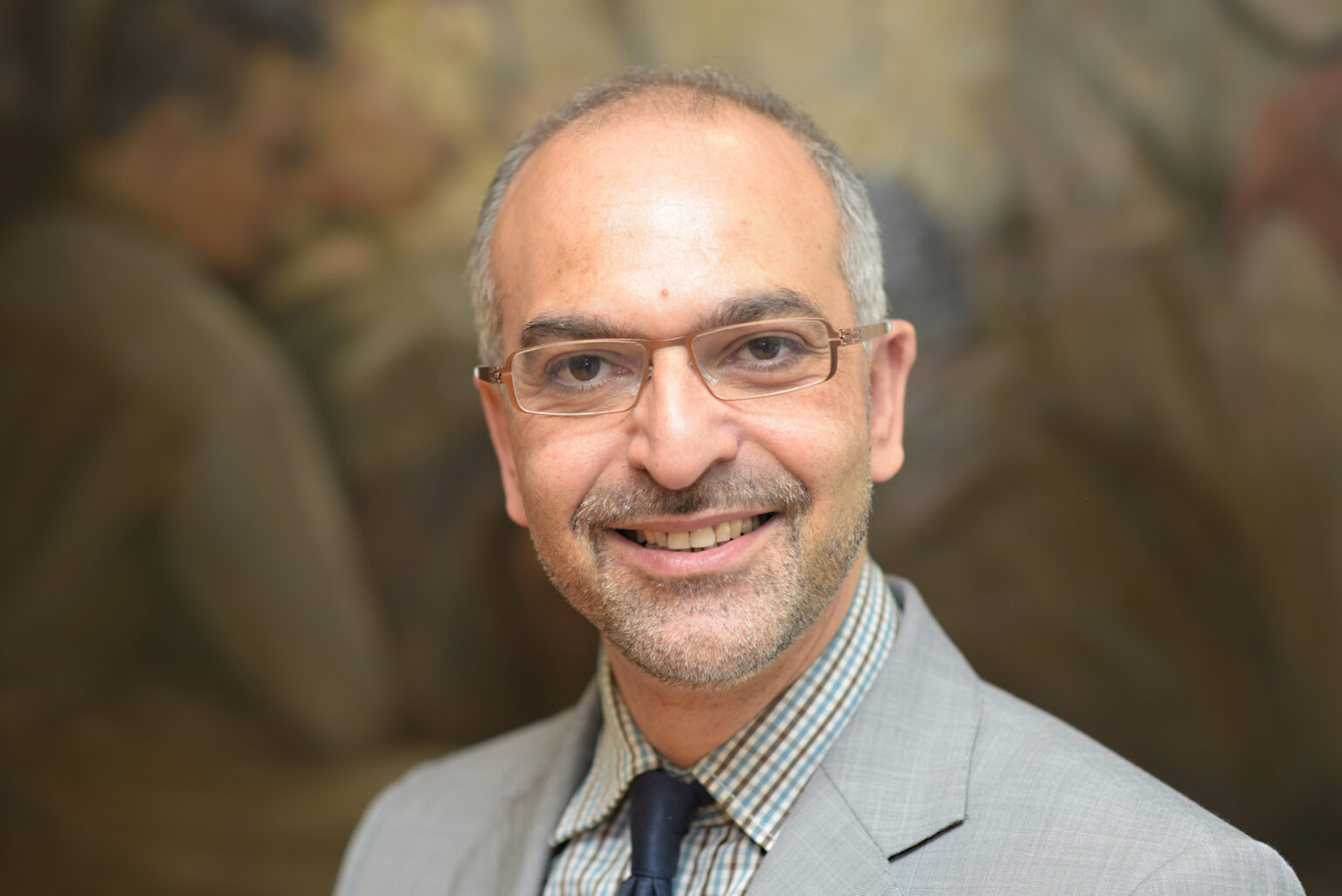
Rabat – Renowned cancer specialist Professor Jalid Sehouli, a German doctor of Moroccan origin, will receive the Federal Cross of Merit (Bundesverdienstkreuz), Germany’s highest civilian honor, on January 14.
Sehouli is the Director of the Department of Gynecology at Berlin’s famous Charité – Universitätsmedizin, one of Europe’s leading hospitals. He specializes in treating gynecological cancers, including ovarian and cervical cancer.
“I received a letter from the German President telling me I will receive the Federal Cross of Merit,” Sehouli said. “The last time I felt this happy was when I was accepted into medical school,” German media quoted him as saying.
The award will be presented in the presence of his wife, Adak Pirmorady-Sehouli, and members of his family.
Sehouli is the son of Moroccan immigrants who could not read or write. He struggled at school and received poor grades, including several fours and fives in middle school.
“I was not a top student,” he has openly said. Although he eventually earned his high school diploma, his grades were not high enough to enter medical school directly.
Instead of giving up, Sehouli trained as a nurse. His talent and determination stood out, and he was later invited to an admissions interview, which opened the door to medical studies. “That invitation letter felt just as emotional as this one,” he recalled.
Today, he holds both German and Moroccan citizenship and is considered one of the world’s leading experts in gynecological oncology.
‘This honor is also recognition for everyone who supported me’
Sehouli’s work has had a global impact, especially in improving care for women with cancer in low- and middle-income countries.
He was part of an international team of experts that developed new resource-stratified guidelines for cervical cancer, published by the European Society of Gynaecological Oncology (ESGO) in the International Journal of Gynecological Cancer this month.
These guidelines are designed to help doctors provide the best possible care even in hospitals that lack advanced equipment or funding. They offer practical alternatives for diagnosis, treatment, follow-up, and palliative care when resources are limited.
The work involved 22 international experts and was reviewed by 188 clinicians from 57 countries, including many from Africa, Asia, and Latin America, regions where cervical cancer remains a major public health issue.
The guidelines stress that limited resources should never justify poor care, and that patients should always receive the best available treatment under existing conditions.
Sehouli’s contributions have already been recognized internationally. He received one of Morocco’s highest scientific honors in 2016, awarded by King Mohammed VI, for his achievements in medical research.
“I did not do this work for prizes,” he said. “I did it out of conviction. But this honor is also recognition for everyone who supported me, and for the people I work for.”