
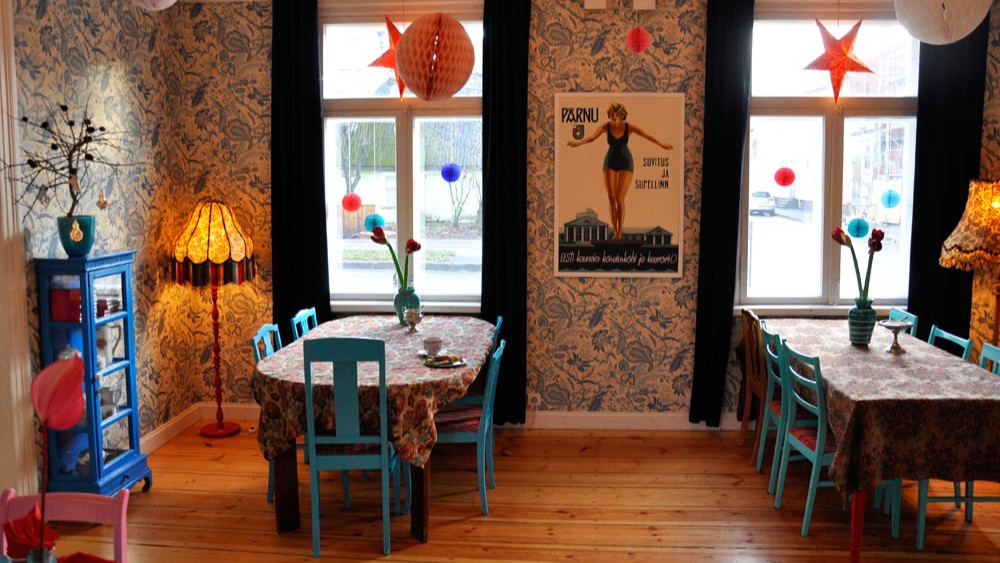
From historic cafés to modern roasteries, coffee runs as a steady thread through everyday life in Estonia.
At first glance, Estonia may not seem like a coffee country. The harsh climate suggests tea, the temperament suggests silence, and the long, dark winters could easily justify skipping straight to mulled wine. And yet, coffee has quietly evolved into part of everyday life, becoming something of a cultural constant.
Coffee first arrived in Estonia in the 18th century, entering through port cities such as Tallinn and spreading steadily through urban society. By the 19th century, cafés were already shaping public life. They were places to read newspapers, debate politics, meet artists, or simply sit for hours with a single cup, observing the world. The idea of the café as a space of presence rather than performance still defines Estonian coffee culture today.
 Café Maiasmokk, one of Tallinn’s oldest cafés. Photo: Maret Põldveer-Turay
This café culture is immediately apparent in Tallinn. For a relatively small capital, the city is remarkably dense with cafés. From historic establishments in the Old Town to modern, minimalist neighbourhood spots in Kalamaja, Kadriorg and Telliskivi, coffee is never far away. Many visitors notice it almost at once: cafés appear on nearly every corner, tucked between offices, museums and residential streets. This is no illusion – Tallinn genuinely runs on coffee breaks.
Yet this culture is not confined to the capital. Tartu, Estonia’s university town, has its own deeply rooted café tradition, shaped by students, writers and academics. Smaller cities and even towns often have at least one well-loved local café that functions as a social anchor. The difference is not enthusiasm, but scale. Tallinn has volume; the rest of the country has loyalty.
 Founded in 1895, Werner Café has long been a cornerstone of café culture in Tartu. Photo: Werner Cafe
Despite the modern look of many cafés, Estonian coffee habits themselves remain fairly traditional. At home, people tend to drink filter coffee, often strong and straightforward.
In cafés, espresso-based drinks dominate, but without excessive customisation. A cappuccino, latte or plain espresso is far more common than elaborate syrups or towering whipped-cream constructions – in fact, these are often unavailable except in a handful of specific spots. Iced coffee exists, particularly in summer, but it has not overtaken hot coffee even during heatwaves. Estonia remains firmly a warm-cup country.
 Fika Café in Tallinn’s Telliskivi Creative City. Photo: Kadi-Liis Koppel
Despite the cosy café culture, Estonians are also pragmatic about their caffeine. Coffee to go is common, especially on Tallinn’s busier streets, where people carry paper cups from neighbourhood cafés or specialty roasters as they move between work, errands or the tram.
Still, the pace rarely feels rushed. It is less about downing a quick espresso and more about keeping a warm companion close while moving through the day. Even takeaway coffee retains something of the calm, deliberate ritual that defines Estonia’s café habits.
 RØST Café in Tallinn’s Rotermanni Quarter. Photo: Marek Metslaid
Coffee, meanwhile, is rarely consumed alone – not socially, but gastronomically. A cup is very often paired with something sweet: a cinnamon bun, a slice of cake, a pastry or a piece of chocolate.
This habit has deep roots. Historically, cafés were closely tied to confectioneries, and that connection never fully disappeared. Even today, many cafés take as much pride in their baked goods as in their beans. In most places, you will find a generous selection of freshly baked treats designed to pair perfectly with your coffee, whatever your preference.
 Coffee and cakes at Gourmet Café in Kadriorg, Tallinn. Photo: Gourmet Café
To demonstrate just how deeply coffee has seeped into the national bloodstream, Estonia even managed to turn it into a Eurovision moment. In 2025, the country sent Espresso Macchiato to the Eurovision Song Contest, transforming a humble coffee order into a pop-cultural export. The song felt less like a novelty and more like an inside joke shared with the entire continent.
In today’s Estonia, coffee is no longer cheap, but nor is it treated as a luxury. It is something people buy daily – or at least several times a week – rather than a special indulgence. Paying a few euros for a well-made drink and staying as long as you like is widely accepted, both by customers and café owners. It is entirely normal to see students studying for hours in a café, just as it is to see friends lingering over a single cup all afternoon.
 NOP Café in Kadriorg, Tallinn. Photo: NOP
Interestingly, Estonia has never embraced global coffee chains in the way many countries have. There is, for example, no Starbucks – and there never has been. Independent cafés dominate instead, each with its own rhythm and regulars. This has helped preserve a strong sense of individuality in the coffee scene, where cafés feel lived-in rather than standardised.
What ultimately ties all of this together is atmosphere. Estonian cafés are generally calm spaces. Even when full, they tend to hum rather than buzz. People work, read, meet friends or sit alone without drawing attention to themselves. They are ideal places to spend an unstructured afternoon or to unwind quietly after a busy day.
 Ristikheina Café in Tallinn. Photo: Ristikheina
In recent years, coffee festivals, specialty roasters and barista competitions have added a layer of craftsmanship to this everyday habit. But the essence hasn’t changed. Coffee in Estonia isn’t about speed, productivity or spectacle. It’s about steadiness. About warming your hands. About having somewhere to go when the day grows dark at three in the afternoon.
In a country known for forests, winter light and understated social codes, coffee has become a quiet cultural ally. It fills cafés without filling the room with noise and it offers connection without demanding conversation. In Estonia, that’s not just a drink. It’s a way of being.
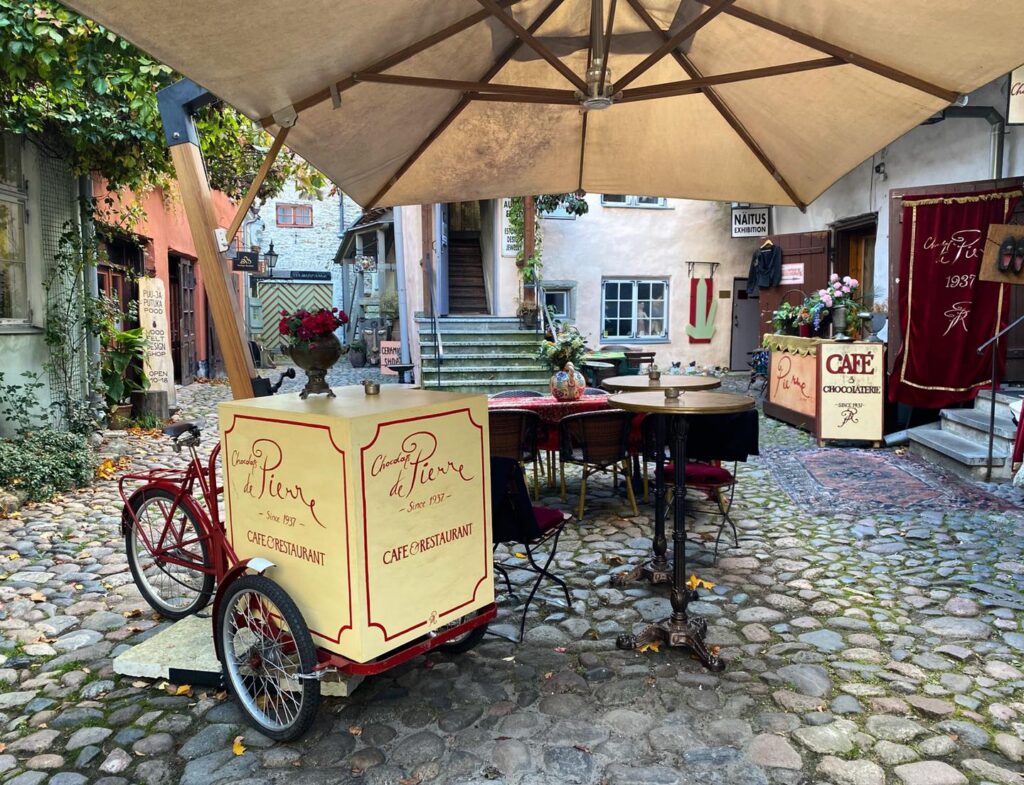 Chocolaterie de Pierre Café in Tallinn’s Old Town. Photo: Toomas Tuul