
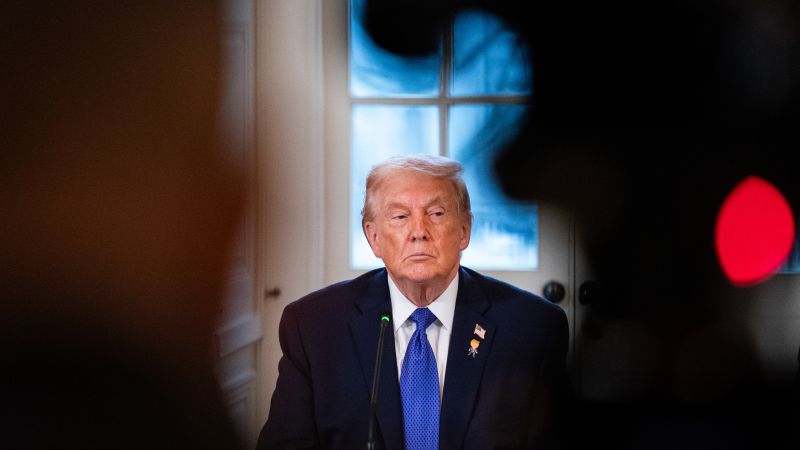
Two months ago, President Donald Trump and his allies ridiculed Trump’s opponents for their massive “No Kings” rallies. They cast it as melodramatic to compare Trump’s actions and aims to a king.
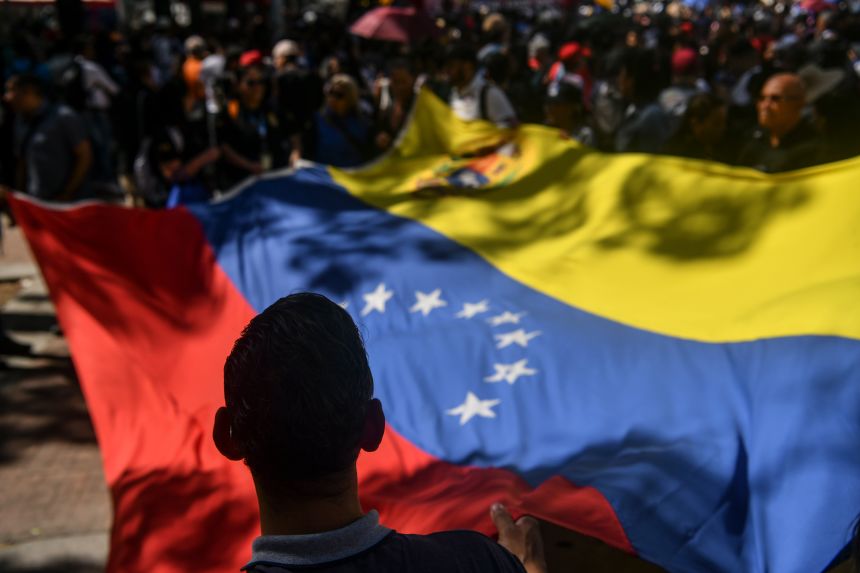
But as Trump has launched into an increasingly brazen effort to wield the threat of the US military and to dominate the Western Hemisphere – including by striking Venezuela and ousting its leader, Nicolás Maduro – Trump and top officials have taken to talking in rather king-like terms.
Trump in a New York Times interview this week said nothing could stand in his way except himself.
Asked if there were any limits that existed on his global power, Trump said: “Yeah, there is one thing: My own morality. My own mind. It’s the only thing that can stop me.”
When pressed, Trump conceded that he needed to abide by international law. But that came with a catch: He got to decide what international law constraints applied. (This is a theme with Trump, which we’ll get to.)
The Times called this Trump’s “most blunt acknowledgment yet of his worldview.” But it’s certainly not the only one.
The administration has in recent days taken to describing Trump’s efforts to dominate the Western Hemisphere in remarkably blunt terms – in which about all that matters is power and leverage.
White House press secretary Karoline Leavitt has said the United States’ leverage over a sovereign nation, Venezuela, means its “decisions are going to continue to be dictated by the United States of America.”
In an interview with CNN’s Jake Tapper early this week, White House adviser Stephen Miller described a “real world… that is governed by strength, that is governed by force, that is governed by power.”
“The future of the free world, Jake, depends on America being able to assert ourselves and our interests without apology,” Miller said.
And repeatedly, Trump and those around him have suggested this power is largely or wholly unconstrained by the law.
-
Miller in another CNN interview in October about Trump’s domestic deployments of the National Guard said Trump had “plenary authority” – meaning absolute or unqualified.
-
Before his Venezuela strike, Trump claimed that he didn’t need Congress’s approval.
-
The administration has since justified the strike not as a military operation, but a law enforcement one (to bring the indicted Maduro to justice), with the military in support. In doing so, it relied in a controversial late-1980s Justice Department legal opinion that, practically speaking, gives the president extraordinary power to send the military into a foreign country, as long as an indicted person is being pursued.
-
Trump’s actions arguably go even further than the administration did back then. While the Maduro operation has been compared to the military operation that soon followed that late-1980s DOJ memo – the ouster of Panamanian dictator Manuel Noriega – there are some key differences. Congress, for instance, had authorized the removal of Noriega, if not the use of military force to do it. And Panama had declared war on the United States.
-
After the Senate, including five GOP senators, voted this week to advance a war powers resolution restricting Trump’s ability to continue striking Venezuela, Vice President JD Vance called it a “fake” and “unconstitutional” law. He added: “It’s not going to change anything about how we conduct foreign policy over the next couple of weeks or the next couple of months.”
-
The administration has claimed the authority to kill suspected drug-traffickers on the high seas without judicial review, even outside the context of a declared war.
-
After Democratic members of Congress suggested Trump might give the military illegal orders and urged soldiers not to follow them, Trump and his administration called it seditious and treasonous – as if it were unthinkable that this could ever happen.
That last one is particularly remarkable. That’s because Trump has publicly floated giving soldiers apparently illegal orders before.
During the 2016 presidential campaign, he advocated torture and killing terrorists’ families and, when challenged on the illegality of such orders, assured that soldiers would follow them (before backing off). He in 2020 floated bombing Iranian cultural sites, which would be a war crime. Advisers have said that he frequently floats illegal things privately.
But the administration wants to treat it as unthinkable that Trump would float illegal orders.
And indeed, the administration’s posture often seems to be that such orders simply cannot be illegal, because they come from Trump.
Early in the administration, Trump signed an executive action that effectively sidelined the Justice Department’s Office of Legal Counsel – the same entity that issued the late 1980s memo and which is normally charged with evaluating the legality of administration actions.
“The president and the attorney general’s opinions on questions of law are controlling on all employees in the conduct of their official duties,” Trump’s executive action said.
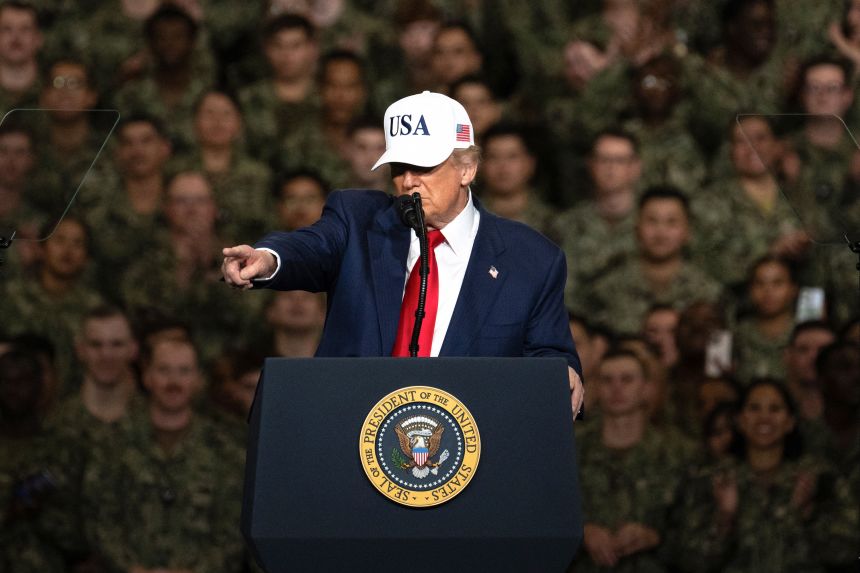
And the administration has walked up to the line of saying it’s simply not a soldier’s place to evaluate the legality of Trump’s orders.
“All orders, lawful orders are presumed to be legal by our service members,” Leavitt said in November.
Now, in the Times interview, Trump suggests there really isn’t any law that’s binding him in such orders – and his broader campaign in the Western Hemisphere.
These are hardly the first instances of Trump claiming extraordinary and even unchecked powers.
During his first term, he repeatedly made such comments about domestic matters – including in 2019 claiming that Article II of the Constitution gave him “the right to do whatever I want as president.”
And Trump, this term especially, has repeatedly pressed the bounds of his authorities, taking actions that sometimes appear transparently illegal and challenging the courts to stop him.
But Trump is now taking this sensibility to the broadest stage yet: the world stage.