
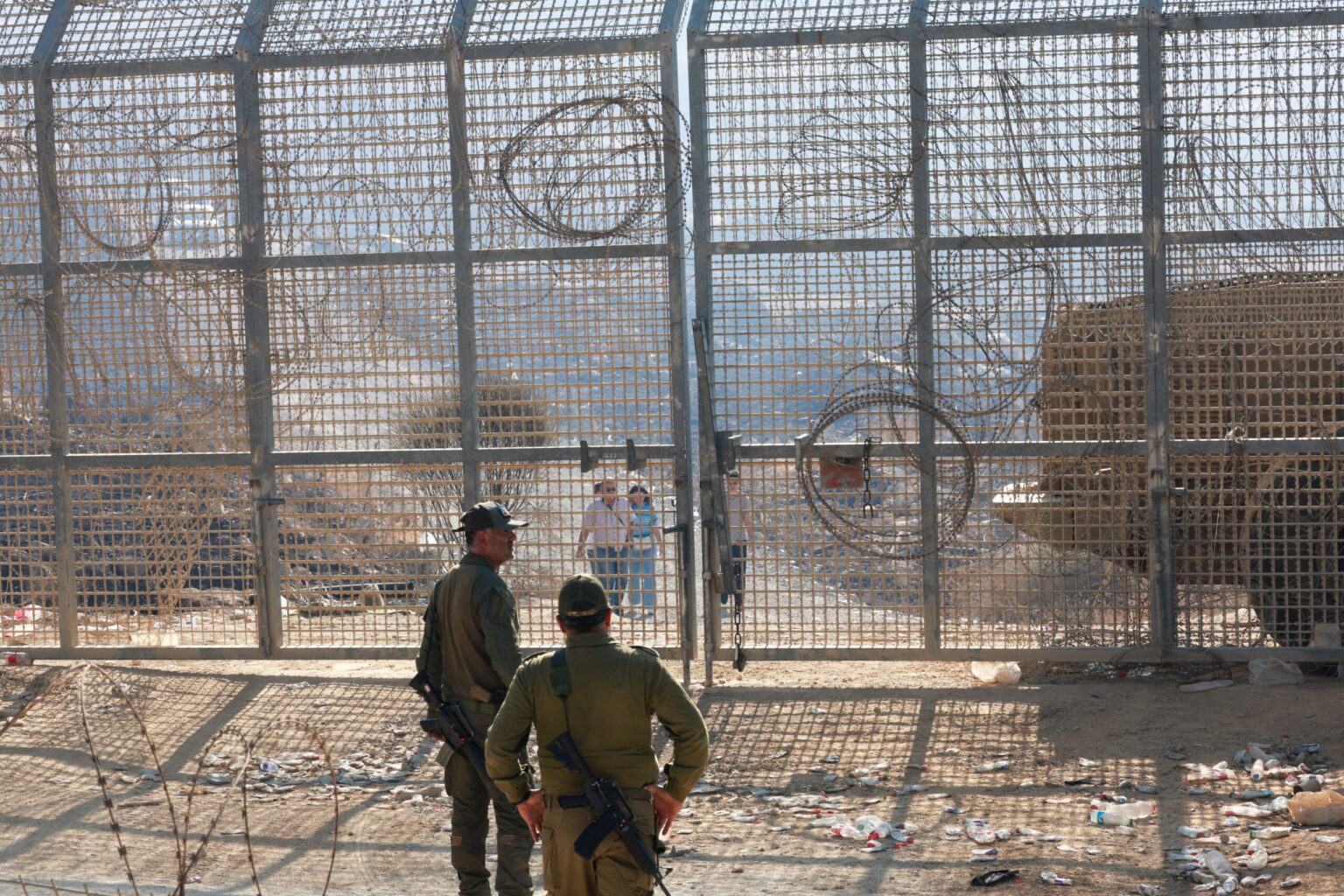
One of the most notable events of December was the report that Russia, with U.S. approval, is preparing to act as a mediator in reaching an agreement between Syria and Israel. Such a deal could formally end the state of war between the two countries that has existed since 1948. The main parameters of the proposed agreement became known as early as the summer of 2025. However, the parties were ultimately unable to reconcile their interests at that time.
If signed, the key benefits for Israel could include: the creation of a demilitarized zone on the Syrian side of the Golan Heights; a ban on deploying any missile systems, air defense complexes, or other offensive weapons there; security guarantees for Druze-populated areas that Israel views as potential allies; restrictions on the rebuilding of the Syrian army with Turkish involvement.
In turn, the new Syrian government of Ahmad ash-Sharaa (Abu Mohammad al-Julani), which came to power in Damascus after the fall of the Ba’athist Assad regime in November 2024, was counting on large-scale investments and aid packages for post-war reconstruction — primarily from the United States and the Gulf states.
Contradictions and Opportunities
American efforts to bring representatives of the two mutually hostile countries to the negotiating table — at the very least to establish a long-term and sustainable ceasefire — have actually been known for quite some time. As early as May 2025, Donald Trump signed an executive order lifting economic and diplomatic sanctions on Syria, and the very next day he met in Riyadh with the «interim president» Ahmad ash-Sharaa.
Both in Israel and in Syria, everyone clearly understood that full diplomatic relations were not realistic at this stage: the Syrians were unlikely to agree to this without Israel returning the Golan Heights — something Israel would never do after the failed experience of the 1990s and Trump’s recognition of Israeli sovereignty over the Golan during his first term.
Therefore, both sides were, in principle, interested in an intermediate option — the formal termination of the state of war. However, until very recently they had been unable to overcome at least two significant obstacles.
The first was Israel’s demand to retain forward operating bases on the Syrian side of the Golan Heights until a more or less stable security model is established along its northeastern border. These positions were established by the IDF after the collapse of the pro-Iranian and pro-Russian Alawite Assad regime in December 2024 and the rise to power of a pro-Turkish (though now declaring its «moderation») Sunni Islamist leadership. In the long term, Israel insists on creating a security zone in the areas of southern Syria adjacent to its border — precisely where, for the past decade and a half, Israel has managed through a combination of political and «military» diplomacy to prevent the emergence of another Iranian anti-Israeli front. Another goal is to block the appearance of military infrastructure belonging to the current main patron of the Syrian regime — Turkey. Turkey’s relations with Israel are currently at their lowest point in history.
Particularly telling was Turkish President Recep Tayyip Erdoğan’s reaction to the trilateral summit of the leaders of Israel, Greece, and Cyprus held in Jerusalem on December 22. Among other topics, the meeting discussed ways to jointly counter Ankara’s ambitions in the Eastern Mediterranean. According to media reports, almost immediately after the summit, Turkish defense and foreign ministries received instructions to treat Israel as «threat number one» for Turkey.
Another serious irritant for Ankara has been Israel’s firm opposition to Erdoğan’s attempts to effectively establish control over Gaza and keep the radical Islamist Hamas — ideologically close to the Turkish leadership — in power there. This was supposed to be achieved, among other things, through a significant Turkish military presence within the future «stabilization forces in the Gaza Strip,» which are supposed to emerge as part of the post-war arrangement for the sector promoted by Washington. It is obvious that Israel categorically opposes any civilian — let alone military — presence of the openly hostile Turkish regime (and its ally Qatar) on its southwestern and northeastern borders.
While the feasibility of any plans in Gaza remains highly uncertain, the parties involved in the Syrian track currently show much greater optimism. While direct negotiations and mutual visits by Israeli and Syrian leaders are not yet on the table, the key question remains: who can become a mediator in indirect — and no longer purely behind-the-scenes — contacts. With all possible reservations and conditions, the Russian candidacy may prove acceptable to all participants.
The greatest readiness for such a format has so far been demonstrated by Syrian leader Ahmad ash-Sharaa, who — to Ankara’s obvious displeasure — is conducting his own cautious game with the Russian leadership. During his first visit to Moscow in October 2025, ash-Sharaa promised to «respect all previous agreements between Syria and Russia,» including the preservation of the Russian naval base in Tartus and the Hmeimim airbase. In addition, the parties agreed on a package of programs in the economic and defense industry spheres. The plan also envisaged food supplies and measures to increase the combat capability of the Syrian armed forces. That these intentions were not limited to verbal declarations was confirmed by the visit to Moscow on December 23 of the heads of two Syrian ministries — foreign affairs and defense. They discussed with Vladimir Putin ways to expand military, political, and economic cooperation, with special emphasis, as reported by the Syrian state agency SANA, on «strategic partnership in the defense industry.»
For its part, the Israeli leadership may also be ready to return to the previous informal understandings with Moscow regarding the «separation of interests» in Syria — the rules that operated after the appearance of Russian Aerospace Forces and ground contingents there in 2015, sent to save the Assad regime. For some time these arrangements quite adequately served Israel’s security interests: the Russians received advance warnings from the Israeli side and did not interfere with IDF airstrikes on vehicles transporting Iranian weapons through Syria to Lebanon (for Hezbollah). Moscow also did not particularly obstruct Israel’s efforts to prevent the strengthening of pro-Iranian groups in the border areas of the Golan Heights — especially since the Kremlin itself was far from enthusiastic about the fact that Tehran was reaping the main dividends from saving the Assad regime.
As early as the spring of 2024, some Israeli politicians hinted at a willingness to tolerate the continued Russian presence in Syria, viewing it as a counterweight to Turkish influence in the country and the region as a whole. Roughly the same idea was recently expressed by a «senior Israeli official» (the traditional euphemism for an unofficial statement by the prime minister or someone from his inner circle) when commenting on Russia’s increased activity in Syria. According to him, «Russian involvement is not necessarily bad [because] Russia can act as an anti-Turkish factor.» At the same time, he immediately added that negotiations on security with Damascus are progressing more slowly than expected «due to the unstable situation in Syria.» Among other things, this remark may have contained a hint at one of the most contentious points for Israel. According to media reports, Ahmad ash-Sharaa is interested in Moscow’s support in resisting Tel Aviv’s demands for the creation of a broader demilitarized zone in southern Syria. On this issue, ash-Sharaa even found partial understanding from Donald Trump during their meeting in the White House in November 2025 — which immediately drew sharp criticism from Benjamin Netanyahu, who accused the Syrian leader of «excessive arrogance.»
It was on these disagreements that the process of interim normalization with Israel could have — as had happened with previous similar attempts — been finally shelved, which, in fact, the Syrian leader himself essentially acknowledged at the time. However, in the last week of December 2025, it became known that thanks to «significant efforts by U.S. President Donald Trump,» a compromise on the southern Syria issue had nevertheless been reached (the specific points of this agreement have not yet been made public at the time of writing). According to information from the Israeli channel i24, citing a source close to Ahmad ash-Sharaa, the parties do not rule out the possibility of signing the corresponding agreement «at the highest level in one of the European countries» in the near future. According to the same data, the document may also include a «diplomatic annex.»
Russia and Turkey in the Syrian and Regional Context
If all this is not wishful thinking, then the losing side in this story appears to be Ankara. Just a few months ago, there was near-certainty in Turkey that with the coming to power in Damascus of a pro-Turkish regime, one of the most difficult stages in implementing the neo-Ottoman doctrine (i.e., the expansion of Turkish influence into territories and countries that once belonged to the Sublime Porte) — a doctrine close to Erdoğan’s circle — had been successfully completed.
The White House is clearly interested in a sharp reduction of its presence in Syria (which is one of the main reasons for seeking normalization of its relations with Israel). The Arab monarchies of the Gulf, while declaring readiness to invest in Syria’s reconstruction, are still refraining from concrete steps, waiting for stabilization in the country. Iran, with the fall of the Assad regime, has practically completely lost its influence there.
Against this background, Ankara apparently counted on being able to reach an agreement with yet another rival-partner with interests in Syria — Moscow — in the same way it had done during the years of the Syrian civil war, when Russia and Turkey supported opposing sides. The Russian leadership does indeed consider Turkey an important partner, despite the regular ups and downs in bilateral relations. In theory, Moscow’s own interests in some areas may coincide with Ankara’s, including in Syria. However, Russia’s current position toward Turkey appears distinctly ambivalent.
The current developments are taking place against the backdrop of growing irritation in Moscow with Recep Tayyip Erdoğan’s policies. Key factors include Turkish arms supplies to Ukraine, a sharp decline in Russian-Turkish trade compared with the peak figures of 2022, and the curtailment of previously promising energy cooperation. Added to this are the Turkish-backed overthrow of the pro-Russian and pro-Iranian regime in Syria, as well as Ankara’s attempts to strengthen its influence in the post-Soviet space, where Russia’s presence — distracted by the war in Ukraine — is objectively weakening.
Over the past two years, this irritation — fueled, as the Kremlin sees it, by Erdoğan’s political flirtation with the Trump administration and the European Union without prior consultation with Moscow — has been gradually approaching a critical point. Many observers consider Ankara’s readiness to return the S-400 air defense systems purchased ten years ago to Russia in exchange for the lifting of U.S. sanctions against Turkish defense enterprises and American F-35 deliveries to be one of the main triggers of the latest cooling in Russian-Turkish relations.
In practice, even this story is no longer the main problem in Russian-Turkish relations today — they can improve as quickly as they deteriorated. Far greater weight belongs to a different, more long-term issue: Turkey’s attempts to become an active player in Central Asia. Moscow still hopes to keep this region within its sphere of influence, despite the obvious desire of the local countries to diversify their system of strategic partnerships with global power centers. In recent months, the United States has also become noticeably more active there.
As far as one can judge, this trend has not yet caused serious concern in the Russian leadership. The leaders of the Central Asian states, while demonstrating rapprochement with the West, continue to maintain emphatically correct relations and cooperation with Russia. But another factor is even more important for Moscow: according to existing assessments, Donald Trump himself (or at least this is how it is perceived in the Kremlin) views Central Asia within the framework of a new version of the Monroe Doctrine as a zone of Russian influence. If this is really the case, then Moscow has no reason to restrain its growing irritation with Ankara’s ambitions for leadership in the Turkic world and its active interference in other zones of Russian interest. This is precisely why, even having reached mutual understanding with the Ahmad ash-Sharaa regime, the Kremlin is in no hurry to accommodate the Turkish leadership on the Syrian issue — especially against the background of the resumption of contacts (not yet «special,» but quite substantive) between Netanyahu and Putin.
The Israeli Perspective
The remaining question is what position Israel should take in this new situation: seek to restore the previous tactical partnership with Russia based on the coincidence of certain interests and adherence to rules that suited both sides, or — taking into account the recent negative experience — refrain for the time being from far-reaching steps and commitments on the Russian track.
As we have noted earlier, the first serious signal that the «special relations» between Israel and Russia were not as stable as they seemed came with the incident in Syrian airspace in September 2018. Then one of the Syrian S-200 air defense missiles, fired in response to an Israeli strike on Iranian targets, shot down a Russian Il-20 electronic reconnaissance aircraft of the Aerospace Forces. The Russian side almost immediately placed responsibility on the Israeli Air Force, which at that moment was conducting an operation to destroy Iranian equipment for the production of precision-guided missiles. The Russian Defense Ministry claimed that Israeli F-16s had allegedly used the Russian aircraft as cover, exposing it to Syrian air defense fire.
The next stage of cooling relations began with the full-scale Russian invasion of Ukraine in February 2022. Against the background of the war, voices in Israel grew increasingly loud in expressing dissatisfaction with Russia’s strategic rapprochement with Iran. This issue became particularly acute during the current large-scale Middle Eastern war that Israel and its allies are waging against the Iranian axis, which began on October 7, 2023, with the bloody attack by the Hamas terrorist group on Israeli communities in the south of the country. In this war, Moscow has taken — albeit initially mostly at the declarative level — a fairly clear side against the Jewish state. This marked the final departure of the Kremlin from the many-year policy of balancing between various centers of power in the Middle East and cooperating with all regional players.
It is still difficult to predict how seriously Moscow — where there is still some euphoria from the resumption of «constructive» dialogue with the U.S. president — is ready to return to the previous regional doctrine of being an «honest broker» between conflicting parties. Or whether Russia’s current involvement in the new round of the Syrian geopolitical game is merely a pinpoint operation pursuing a single concrete goal: preserving legitimate military presence in the Mediterranean basin.
For Israel, it apparently makes sense to accept — albeit with reservations — the proposed options for closing one of the 6−7 fronts on which it is currently forced to fight. The most interesting aspect of the whole story, as Israeli Middle East scholar Dina Lisnyanskaya notes in her Telegram channel, is that the preservation of the Russian presence in Syria actually reduces the likelihood of a direct Turkish-Israeli military clash on Syrian soil. Whether this is truly the case will become clear in the very near future.