
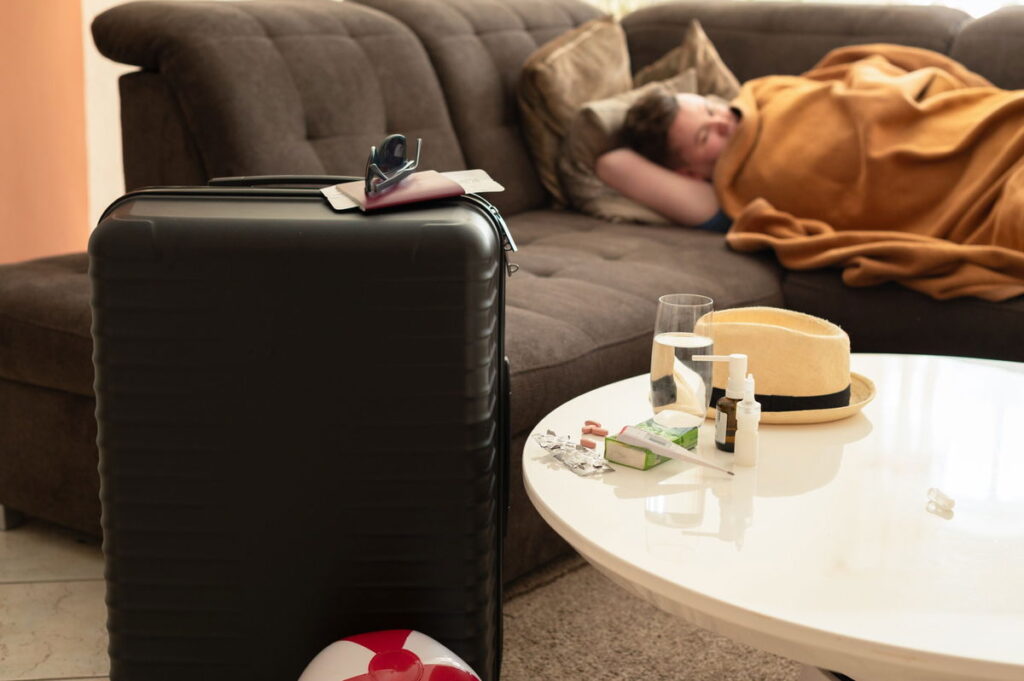
To reclaim lost holiday days, the employee must notify their employer and provide a valid medical certificate. Photo credit: S. Vatolina/Shutterstock
Spanish labour law confirms that workers who fall ill while on holiday do not lose their right to annual leave and can reclaim the affected days under the Estatuto de los Trabajadores. The protection is set out in Article 38, which establishes that holidays must be enjoyed separately from periods of certified sickness.
The rule applies when an employee enters incapacidad temporal, temporary incapacity, either before a scheduled holiday period begins or while annual leave is already under way. In such cases, the days covered by sick leave do not count as holiday and must be taken at a later date once the employee has recovered.
What Article 38 says
Holidays and sick leave are legally separate
Article 38 of the Estatuto de los Trabajadores states that when annual leave coincides with temporary incapacity caused by illness, accident, pregnancy, childbirth or breastfeeding, the worker has the right to take their holidays at a different time. The law applies regardless of whether the illness begins before the holiday starts or partway through it.
Most Read on Euro Weekly News
The statute also allows postponed holidays to be taken after the end of the calendar year in which they were generated. Workers have up to 18 months from the end of that year to use the recovered days, ensuring that illness does not permanently erase their entitlement to rest.
How workers must claim their holiday days
Notification and medical certification required
To reclaim lost work holidays , the employee must notify their employer and provide a valid medical certificate confirming temporary incapacity. Without officially recognised sick leave, the period will continue to count as holiday, even if the worker was unwell.
Once the sick leave ends, the employer is legally required to allow the worker to reschedule the missed holiday days. While the exact dates must be agreed, the right to recover the leave itself cannot be refused.
What this means for expats working in Spain
Equal rights regardless of nationality
For expats working in Spain, Article 38 applies in exactly the same way as it does for Spanish nationals. Employment rights under the Estatuto de los Trabajadores are based on the existence of an employment contract in Spain, not on nationality or country of origin.
This means foreign workers who fall ill during holidays are entitled to reclaim those days, provided they are registered with the Spanish social security system and obtain official sick leave through the public healthcare system or an authorised medical provider. The right applies to EU and non-EU workers alike.
Expats should be aware that medical certificates issued abroad may not always be automatically recognised. In practice, employers and social security authorities usually require documentation issued or validated in Spain. Prompt communication with employers and early contact with a local doctor are therefore essential when illness occurs during holiday periods.
Why the rule exists
Protecting the right to rest
The separation of holiday time and sick leave reflects the purpose of annual leave under Spanish and European labour law. Holidays are intended to provide rest and recovery, while sick leave exists to allow workers to heal and receive medical care.
Allowing illness to consume holiday entitlement would undermine the protective function of labour law and penalise workers for circumstances beyond their control. The rule ensures that health issues do not result in the loss of legally guaranteed rest time.
What employees need to know
- Workers who fall sick during holidays can reclaim those days under Article 38
- The illness must be covered by certified temporary incapacity
- Recovered holidays can be taken after the calendar year ends
- Employees have up to 18 months to use postponed holiday days
- Expats working in Spain have the same rights as Spanish workers
Labour specialists note that most disputes arise from missing documentation or delayed communication rather than from disagreement over the law itself. Employees are advised to inform employers immediately and ensure medical certificates are correctly issued.
For employers, the rule reinforces the importance of compliance with statutory rights. While rescheduling leave can pose organisational challenges, refusal to recognise reclaimed holidays may expose companies to legal action.
A settled legal position
Illness does not cancel holiday rights
Article 38 is a well-established pillar of Spanish labour law and its interpretation is now firmly settled. Courts have consistently ruled that sickness and holidays serve different purposes and must be treated separately.
For workers, Spanish and foreign alike, the message is clear: falling ill during annual leave does not mean losing it. Spanish law ensures that the right to rest remains protected, even when health intervenes.