
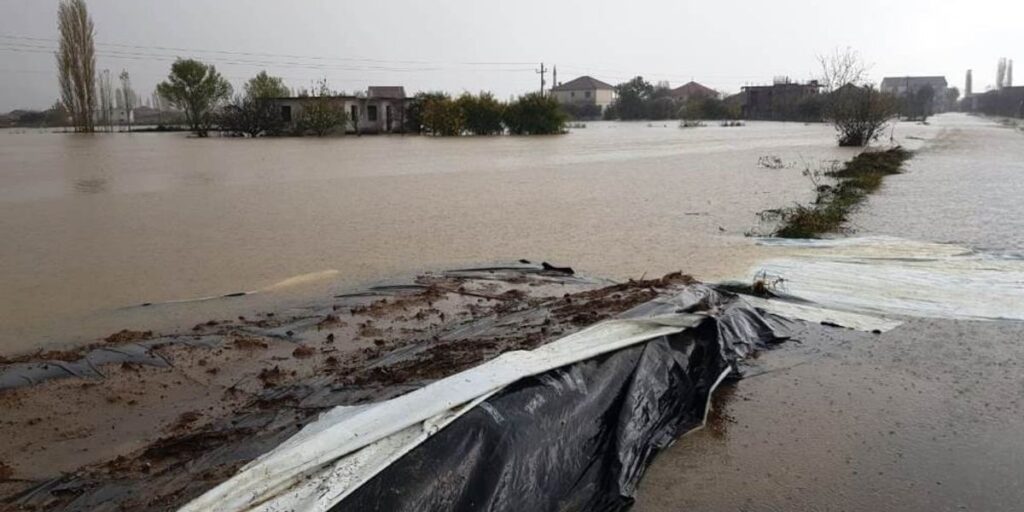
Heavy rainfall has caused serious problems in several regions of Albania, including increased river flows, flooding of agricultural lands, landslides, and difficulties in road traffic.
The situation is considered more serious in the regions of Shkodër, Durrës, Lezhë, Gjirokastër, Dibër and Berat, while in other regions the problems are more limited or the situation is stable.
in Shkodra District, the increase in the levels of the Drin, Kir and Buna rivers has caused flooding in the territory of the Municipality of Shkodër, mainly in the administrative units of Ana e Malit and Dajç. The structures of the municipality and civil emergencies are on the ground and are continuously monitoring the situation, identifying risk points and taking precautionary measures to protect the lives and property of citizens. The dams are working at full capacity and the water levels are below critical quotas.
in Durrës Region A total of 5,477 homes have been verified, of which 1,711 have been found to have damage. 851 people have been evacuated, mainly in the Sukth and Katund i Ri areas, where around 2,000 hectares of agricultural land are under water. Work continues to determine and assess the damage.
in Lezha District, The water level has generally decreased in agricultural lands. The forces on the ground are working to remove water from several homes. All the hydropower plants have been working at full capacity, with the exception of Gocaj, where a lack of electricity has been noted. The level of the Drin River continues to decrease, while the Mat River has increased due to discharges from the Shkopet and Qafë Mollë HPPs. No problems have been reported on the road axes.
in Gjirokaster and Dibër regions Work is underway to clear several road axes where landslides have been recorded, as well as to remove water from several buildings.
in Berat and Elbasan regions, the increase in the flows of the Osum and Devoll rivers has led to flooding of agricultural areas. The situation continues to be continuously monitored by the responsible structures.
Armed Forces personnel are engaged on the ground, who, under the coordination of the National Civil Protection Agency and the Ministry of Defense, are assisting in the transportation of residents, the distribution of aid and the support of emergency operations, according to the needs of local authorities./RTSH