
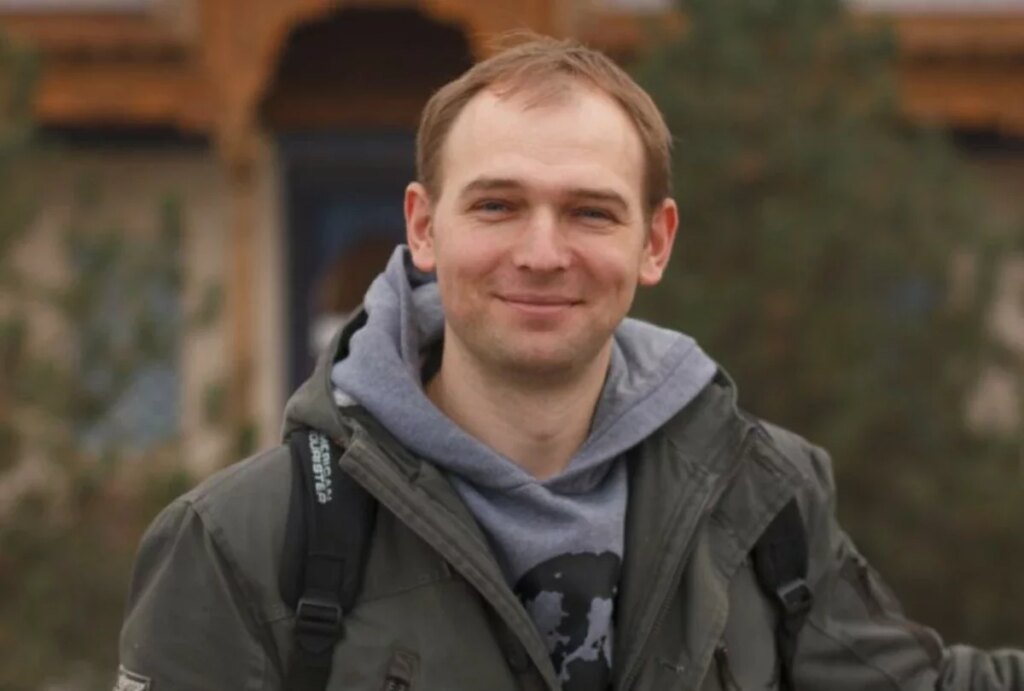
Uladzimir Pikirenia. Photo: Uladzimir Pikirenia / Facebook
“It was difficult to express any alternative”
At home, psychiatrist Uladzimir Pikirenia managed to work both in state institutions and in non-governmental projects. He also assisted the international organization “Doctors Without Borders,” which was involved in treating drug-resistant forms of tuberculosis in Belarus. He combined his work on the project with his position at the department of the Belarusian State Medical University.
He also dealt with the topic of psychoactive substance use — with an organization that sought to help reduce the spread of HIV infection.
The medic left Belarus in 2023 — the trigger for this was his dismissal from BSMU, where he was offered to resign either by mutual agreement or under an article. He chose the first option.
Uladzimir says he had already found a new job in Belarus, but that organization was warned by the Ministry of Health — they were told it was better not to hire him. At BSMU, he had recently been forbidden from speaking to the media without written permission from the administration.
“For Uzbeks, words mean significantly less than for Belarusians”
A good acquaintance invited him to Uzbekistan — the medic was offered a job in a private clinic and teaching at a local institute. In February 2023, Uladzimir with his family — wife and three children — was already in Uzbek Bukhara. This is an ancient city in the south of the country, located in the desert.
Here he immediately notes: with the start of the full-scale war, many Russian migrants appeared in Uzbekistan, and Belarusian doctors also work in the capital, Tashkent. A Belarusian medical diploma does not need to be confirmed in this country — just come and work. No visa is required either.
Павялічыць
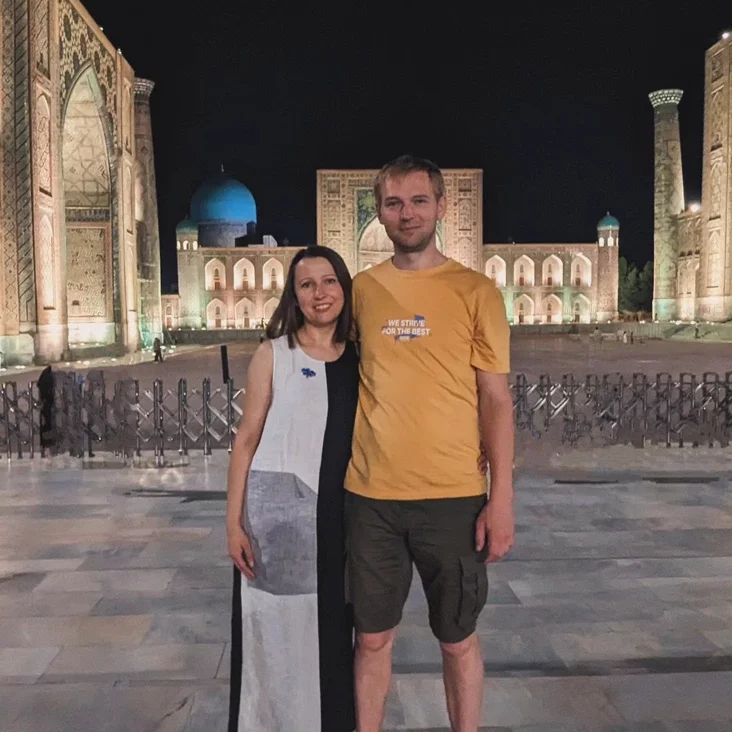
Uladzimir with his wife Tatsiana. Photo: Uladzimir Pikirenia / Facebook
Immediately after their arrival, the family faced an unpleasant surprise — although everything had been arranged, the landlord of the rented apartment was not prepared for guests, and the Belarusians’ new home was even without furniture. For the first while, they had to live in a hotel.
“For me, it was initially difficult to adapt to the fact that words mean significantly less to the local population than to Belarusians. That is, when you are told ‘we’ll do it tomorrow’ or ‘it will be done’ — it doesn’t at all mean that it will actually be done. And it’s likely that it never will be,” Uladzimir shares his impressions of Uzbekistan.
The medic’s children, who were then in third, fifth, and eighth grades, immediately went to a local private school with Russian-language instruction, but the parents were not satisfied with the quality of education. Then they transferred them to the Russian online school “Foxford”. His wife, who specialized in international relations and also worked in non-governmental organizations in Belarus, could not find work in Uzbekistan.
“People go to mosques, to some sorcerers, not treat mental illnesses”
Overall, fewer people in Uzbekistan care about their mental health, it seemed to Uladzimir. Working as a doctor in a private clinic, he noticed that the demand for psychiatry there is significantly lower than in Belarus.
“Simply because the understanding of mental health is at a rudimentary level. People go to mosques, to some sorcerers, not treat mental illnesses,” the medic explains.
Павялічыць
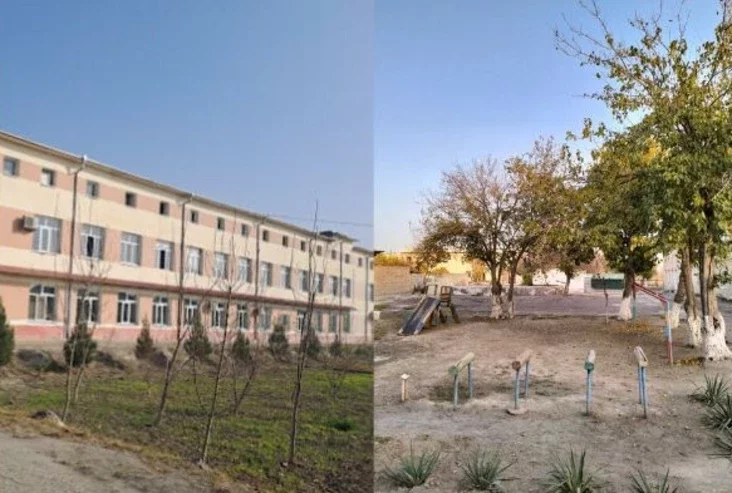
Bukhara Medical Institute building, where Uladzimir taught, and a playground near a state kindergarten. Photo: Google Maps, personal archive of the hero
At the Department of Psychiatry at the Uzbek university, Uladzimir taught in English — for foreign students. One of his groups included Indians who, after February 2022, were forced to abandon their studies in Ukraine and move to Bukhara.
Uladzimir says that they knew a lot about Belarus, although they did not share their thoughts about the country. Instead, they compared education in Uzbekistan and Ukraine — to the benefit of the latter.
In Uzbekistan, the medic also joined a project organized by the University of Frankfurt. It was aimed at increasing the scientific potential of Central Asian countries and China — teams from Kazakhstan, Uzbekistan, Kyrgyzstan, and China worked in the field of assisting people with HIV and those who use psychoactive substances. Each country had a coordinator who helped participants write their dissertations. Uladzimir fulfilled this role in Uzbekistan.
“A doctor in Poland earns no less than 1700 dollars”
After a year and four months, the medic and his family decided to leave Uzbekistan: his wife never managed to find work there, and Uladzimir himself was just invited to a conference in Warsaw. After obtaining humanitarian visas, they flew to Poland and stayed there to live.
Павялічыць
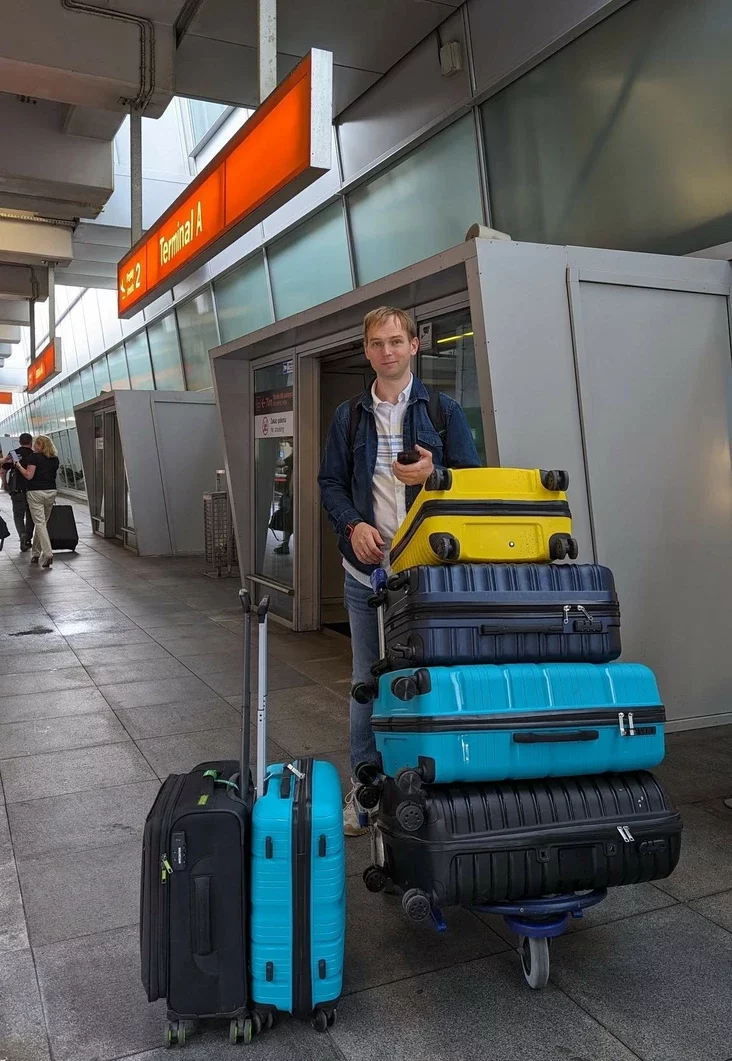
Uladzimir at a Polish airport. Photo: Uladzimir Pikirenia / Facebook
“What differentiates Poland from Uzbekistan is the large, simply incredible number of friends and acquaintances who live in Poland. Upon arrival, we immediately felt very strong friendly support,” the Belarusian recalls.
Within a couple of days in Warsaw, they found accommodation for the initial period, and Uladzimir’s former student offered him a doctor’s position at the Polish hospital where she herself worked. The psychiatrist spoke with the hospital director — he immediately accepted him.
Initially, while he needed to learn Polish and have his Belarusian diploma confirmed, the psychiatrist worked as a secretary at the hospital. In this position, he had to deal with formal matters — processing sick leaves, contacting social services, or sending some files to the archive.
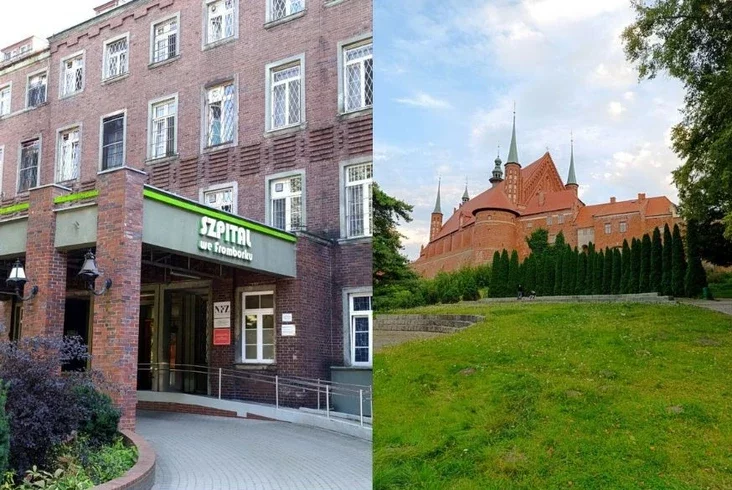
Павялічыць
Hospital and the Polish city of Frombork, where the Belarusian works. Photo: personal archive of the hero
After receiving permission, Uladzimir became a doctor again. He says that the workload per doctor in Poland is significantly less than in Belarus — the secretary position precisely contributes to this. Thus, for a psychiatrist’s full-time position, he now has from 8 to 15 patients, whereas at home it was 25.
The same goes for salaries — a doctor in Poland earns no less than 1700 dollars, Uladzimir explains. It can even be more if one takes on duties and develops professionally.
“It seems to me that experiencing certain difficulties associated with emigration is better than later living, knowing that you betrayed your nature and twisted your soul in some moments, showed unprincipledness.
On the other hand, I absolutely understand people who continue to live in Belarus and strive to do what they can. Under the conditions that exist. An enormous number of excellent people remain in Belarus who, for a certain time, cannot openly express their position, but, undoubtedly, support changes. When conditions for change appear, they will become the new drivers of change.”