
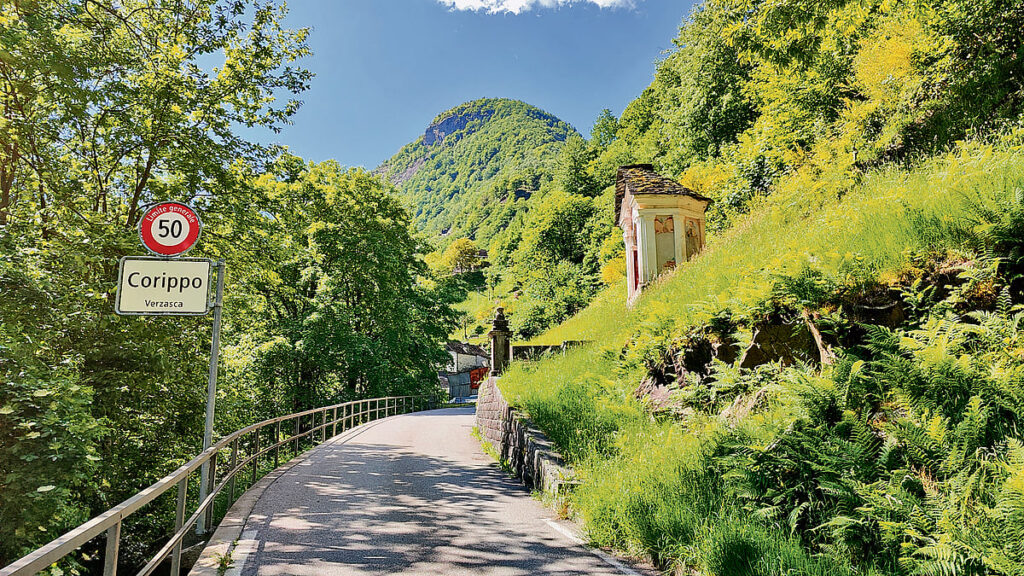
Corippo in Switzerland looks like a place holding its breath. Stone houses cling to a steep mountainside, their slab roofs pressing low, alleyways too narrow for wheels curling between them. There are no postcard chalets, no manicured lawns. Below, the Verzasca River flashes an almost theatrical turquoise before turning wild and white against ancient rock.
People did not leave Corippo because it was unlivable, but because the world beyond it grew more lucrative. By the mid-20th century, work elsewhere pulled residents away. From over 300 inhabitants in the 19th century, the village thinned out steadily, until by December 2019, just nine people remained. It is Switzerland’s smallest village by population.
Set deep in the Verzasca Valley in the Italian-speaking canton of Ticino, Corippo lies a little over 20 km from Locarno. Cars stop at Bivio; the final ascent is on foot. Corippo appears gradually, gripping the mountain like a persistent thought. Recognised as a historic settlement by the Swiss Confederation and the canton, the village found its unlikely lifeline in 1975 with the creation of the Fondazione Corippo. Its most quietly radical idea arrived decades later: Albergo Diffuso Corippo, a hotel without a building. Guest rooms are scattered across restored village houses; the lanes double as corridors. “An Albergo Diffuso is a distributed hotel,” explain managers Jeremy Gehring and Désirée Voitle. “The streets are the corridors. It isn’t a resort—guests share the village with those who live here.”