
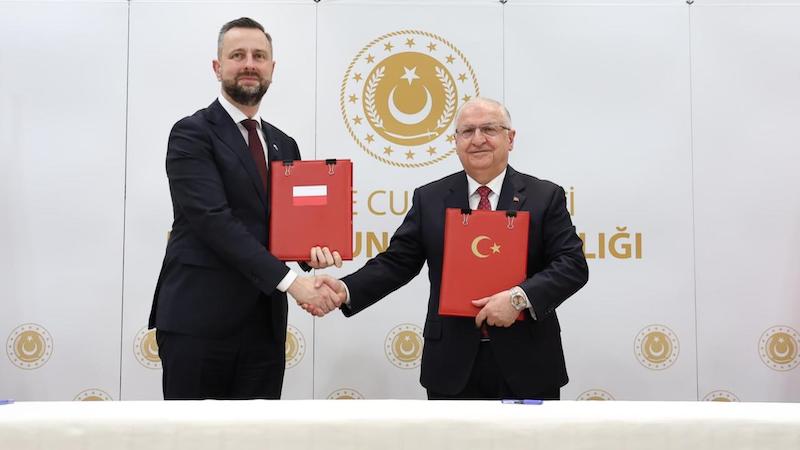
Just before the Christmas holidays, Władysław Kosiniak-Kamysz, Poland’s deputy prime minister and minister of national defense, signed a memorandum with Yaşar Güler, Turkey’s defense minister, expanding their security cooperation and calling for development of security ties among the states between Germany and Russia.
Kosiniak-Kamysz underscored the importance of this development at a time when Russia is on the march and the US is at odds with many of its NATO allies. If the countries of the Intermarium “unity our operational possibilities, they would be greater than the majority of the European embers of NATO with the possible exception of the US” (gov.pl/web/obrona-narodowa/wzmacniamy-strategiczna-wspolprace-z-republika-turecka and ritmeurasia.ru/news–2026-01-10–varshava-predlagaet-turcii-proekt-mezhdumorja-85128).
The idea of Intermarium cooperation as a defense against Russia when the West is divided has a long history. For the most comprehensive survey, see Marek Chodakiewicz’s magisterial and in no way dated volume, Intermarium: The Land between the Black and Baltic Seas (Piscataway, 2012).
Poland has long promoted this idea as a key aspect of its foreign policy, and just prior to Putin’s launch of his expanded invasion of Ukraine, Warsaw pushed it and other countries in the region gave attention to it, given uncertainties there about how the West would react to Russian moves.
On those discussions and Moscow’s reaction to them, see windowoneurasia2.blogspot.com/2016/07/intermarium-idea-whose-time-is-coming.html,windowoneurasia2.blogspot.com/2019/11/intermarium-countries-can-no-longer.html and windowoneurasia2.blogspot.com/2022/08/intermarium-project-can-lead-to.html.
At a time, when Moscow has increased its aggression in Ukraine and the West is divided on how best to respond, Intermarium ideas are again spreading; and the Polish-Turkish memorandum is the first fruit of the renewed importance of that concept as a defense of Eastern Europe against Moscow.