
Cyprus has announced it is the target of a disinformation campaign that casts its leadership as corrupt. The government believes this effort shares features with previous Russian disinformation initiatives aimed at other Western nations, including France, Germany, and the United States.
A recent video circulating on social media includes remarks from three key political figures: the president’s brother-in-law, a former energy minister, and the CEO of a major construction company. The video implies a close relationship among these individuals and the president, raising concerns about campaign financing and potential influence peddling.
One major allegation is that President Nikos Christodoulides exceeded the €1 million campaign funding limit by accepting off-the-books donations for his 2023 presidential campaign. It also suggests that the government may obstruct EU sanctions against Russian oligarchs in exchange for corporate contributions.
An analysis by the Cyprus Security Services indicates that the 8½-minute video exhibits characteristics of an organised Russian disinformation campaign and fails to provide tangible evidence for its corruption claims. Such videos are often referred to as “kompromat,” a tactic historically used for character assassination or political undermining.
There has been no immediate response from Russia. With parliamentary elections in Cyprus set for four months from now, the video’s release has sparked significant concern and calls for investigation. AKEL leader, a communist-rooted party, has demanded the resignation of the presidential office director featured in the video, while the Cypriot government has labelled it “lies and unfounded claims.”
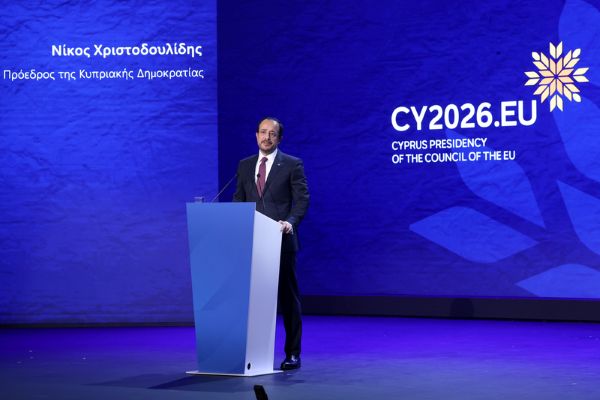
Since his election, President Christodoulides has shifted Cyprus from a Kremlin-friendly stance to a pro-Western position, supporting Ukraine against Russia and strengthening ties with the United States. The video’s release coincided with Cyprus assuming the rotating EU presidency, an event attended by Ukrainian President Volodymyr Zelenskyy, which raised further suspicions.
This incident contributes to ongoing accusations against Russia regarding disinformation. In September, Moldovan President Maia Sandu accused Moscow of a “hybrid war” to disrupt elections and hinder Moldova’s EU aspirations, while French officials have reported extensive disinformation campaigns from Russia targeting France.