
The process of forming the 3-week-old right-wing coalition government in Prague after the general election in early October was protracted and difficult. One ministerial post remains empty after backlash against the coalition’s preferred candidate. In addition, the requisite vote of confidence for the new Cabinet has not yet been held in the Chamber of Deputies, the lower house of the Czech parliament.
Despite all of this, the incomplete Cabinet led by right-wing billionaire Andrej Babis has already caused uproar on both the domestic and foreign policy fronts — and the first cracks are beginning to appear in the coalition.
The main bone of contention is Czechia’s support for Ukraine — an issue that dominated last fall’s parliamentary election campaign.
In the run-up to the election, the three parties that now make up the government sought to outdo each other with their promises to stop the country’s support for Ukraine as it defends itself against Russia. Now in office, things look very different indeed.
Babis (left) was appointed prime minister by President Pavel in Prague on December 9Image: Michal Kamaryt/CTK Photo/IMAGO
The euroskeptic parties, Babis’s Action of Dissatisfied Citizens (ANO) and the Motorists for Themselves, are taking a more pragmatic line — influenced by the pressure being exerted by European partners and other factors.
The pro-Russia far-right Freedom and Direct Democracy party (SPD), on the other hand, is sticking to its tough anti-Ukraine line.
Many now fear that Czechia could be entering choppy domestic waters and that it could lose its reputation as a reliable European partner, as well.
So what happened?
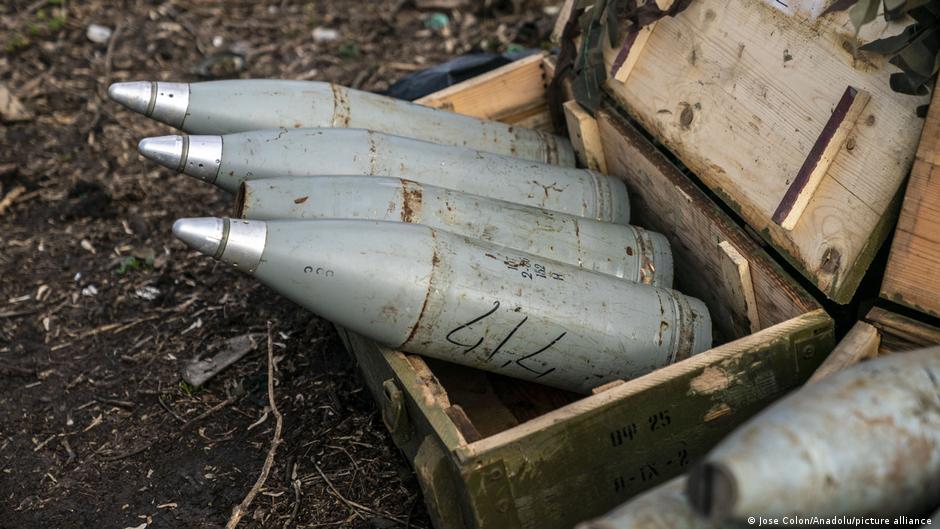
On Wednesday, Babis announced that Czechia would continue what is known as the ammunition initiative for Ukraine, a program he repeatedly promised to shut down while on the campaign trail.
Within this program, Czechia coordinates the global procurement of artillery ammunition for Ukraine. The program is mainly funded by a number of EU states such as Germany and France and, to a lesser extent, by Czechia, too.
After attending the European meeting of the Coalition of the Willing in Paris on Tuesday, Babis said Czechia, however, would no longer contribute to funding the initiative.
On the campaign trail last fall, Babis repeatedly criticized the initiative, which was the brainchild of Czech President Petr Pavel, as corrupt and untransparent.
Fiercely anti-Ukraine speech
With this decision, Babis is overriding the will of his pro-Russian coalition partner, the SPD, whose leader, Tomio Okamura, caused uproar with a speech just a few days prior.
Tokyo-born Okamura has been parliamentary speaker since November 2025. In this capacity, he gave a New Year’s address on January 1, which turned into a fiercely anti-Ukraine, anti-EU tirade.
The parties that form the Czech government signed a coalition agreement November 3Image: Vit Simanek/CTK Photo/IMAGO
Okamura spoke of the “thieves of the Zelenskyy junta,” who he said are building “golden toilets” with the help of allied governments.
He said it was not right to support a “completely senseless war” at the expense of “Czech pensioners, people with disabilities or families with children.”
Okamura hinted that Czechia could leave the European Union — “jump off the Brussels train” that he said was on track toward a third World War.
‘Useful idiot or an agent of Russia’s secret service’
The speech caused consternation and indignation in Czech politics.
On X Pavel posted that Okamura’s speech “raises concern not only among our citizens, but also abroad, among our allies and partners.”
Former Prime Minister Petr Fiala wrote on X that Okamura’s speech “sounded as if it had been prepared in the Kremlin.”
Ukraine was also quick to condemn Okamura’s comments.
Ukraine’s ambassador to Czechia, Vasyl Zvarych, said the speaker’s words on Ukraine were “offensive and full of hate.”
Fiala said Okamura’s speech “sounded as if it had been prepared in the Kremlin”Image: Vladimir Prycek/CTK Photo/IMAGO
Okamura’s Ukrainian counterpart, Ruslan Stefanchuk, said time would tell whether Okamura is “a useful idiot or an agent of the Russian secret service FSB.”
Babis took time
The responses from Ukraine led to a protest from Czech Foreign Minister Petr Macinka, leader of the Motorists party, who said Zvarych’s words were “inappropriate.”
Macinka met with his Ukrainian counterpart, Andrii Sybiha, on Tuesday. The encounter took the heat out of the situation and ended with an invitation for Macinka to visit Kyiv.
Babis took five days to react to Okamura’s speech. Posting on Instagram on Monday, Babis said “concerning the much-discussed speech by Tomio Okamura, I think that he spoke from the position of the SPD chairman and primarily wanted to address his voters.”
The first cautiously critical reactions to Okamura’s speech from ANO came a week after the fact.
SPD causes uproar
This was not the only uproar caused by Okamura and his party.
One of Okamura’s first acts as speaker in November was to remove the Ukrainian flag from the Czech parliament building. It had been hanging there as a sign of solidarity with Ukraine since 2022.
Earlier this week, Radim Fiala, leader of the SPD’s parliamentary party, expressed doubt that Russia had been behind an explosion at a Czech ammunition depot in Vrbetice in 2014 in which two people lost their lives.
It is practically beyond doubt that Russia’s military intelligence service GRU was behind the attack. Indeed, it was Babis himself — prime minister at the time — who informed the country in April 2021 that it was so.
Gift for Putin collects money to buy weapons and equipment (such as this Black Hawk )Image: Geschenk für Putin-Initiative
The SPD’s recent anti-Ukraine provocations are the result of intraparty power struggles, and, as Babis quite rightly said, an appeal to voters.
Okamura and some of his fellow party members seem to be fighting to establish who takes the harder line, after support for the party dropped significantly from election to election .
A paradoxical outcome
After Babis announced that the Czech ammunition initiative for Ukraine would continue, however, Okamura seemed to back down.
Because the country is now not funding it, Okamura said, it is no longer a Czech initiative.
It is unlikely that this will mean an end to disputes within the coalition.
The uproar triggered by Okamura’s speech has had a paradoxically positive outcome for Ukraine.
The private Czech Gift for Putin initiative collects money for Ukraine’ army and uses the donations to buy weapons. After Okamura’s speech, initiative founder Martin Ondracek said, there was a sudden leap in donations to the account.
This article was originally published in German.