
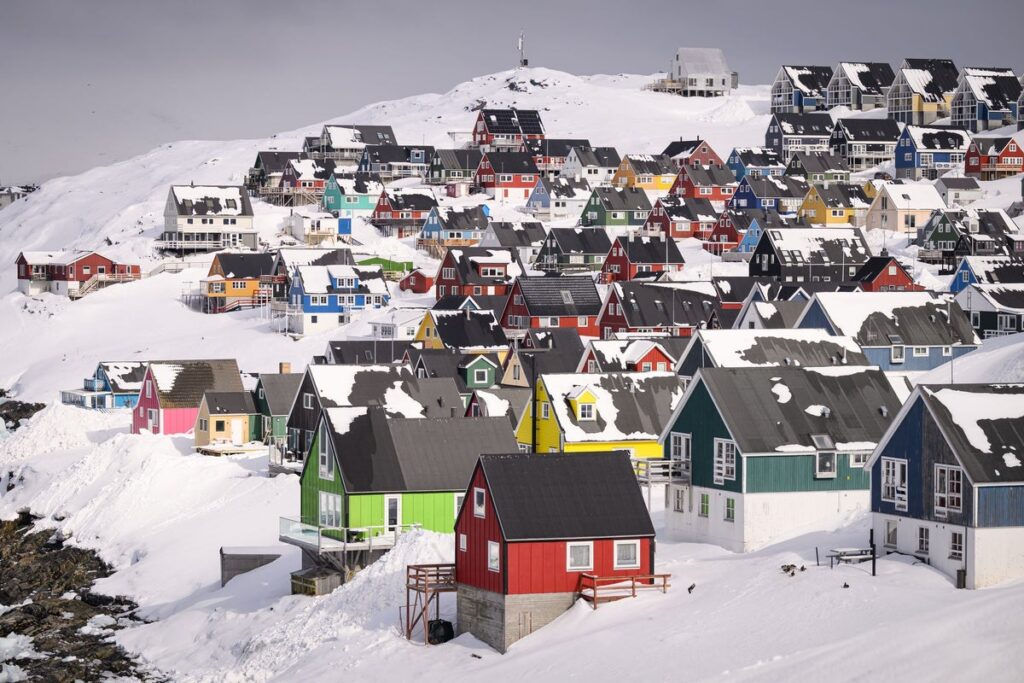
Right now, Donald Trump’s eyes – and the world’s collective gaze – are trained firmly on Greenland. The world’s largest island is home to just 57,000 people, but has been the focal point of months of tense geopolitical wrangling that, in the wake of the United States’ recent incursion into Venezuela, only looks set to become more fraught.
Trump has made no secret of his desire to “buy” Greenland – and hasn’t ruled out using military force to acquire it, despite the fact that doing so would seriously damage Nato. The territory has been part of Nato member Denmark for centuries, dating back to the arrival of the Danish-Norwegian missionary Hans Egede in 1721.
Egede, who is commemorated in a controversial statue in the Greenlandic capital city of Nuuk, has come to be seen as a symbol of colonial power. He is just one player in the complicated, often dark history between Denmark and Greenland, which has been blighted not only by centuries-old grievances, but scandals within living memory.
But although Trump and co might see this resentment towards the Danes as potential fuel to fan the flames of a “Make Greenland Great Again” campaign, it’s not as simple as that. Greenlanders are wary of simply swapping one controlling foreign power for another. The image of a grinning Donald Trump Jr, who visited Greenland “as a tourist” shortly before his father’s 2025 inauguration, posing in front of the statue of Egede with his entourage, will surely only have underlined this unease.
For the majority of Greenlanders, independence is the preferred option: a 2025 poll showed that 56 per cent would vote in favour if a referendum were held. Earlier this week, the Icelandic singer Björk shone a light on the cause when she shared an Instagram post wishing “all Greenlanders blessing in their fight for independence”. Colonialism, she added, “has repeatedly given me horror chills up my back, and the chance that my fellow Greenlanders might go from one cruel coloniser to another is too brutal to even imagine”.
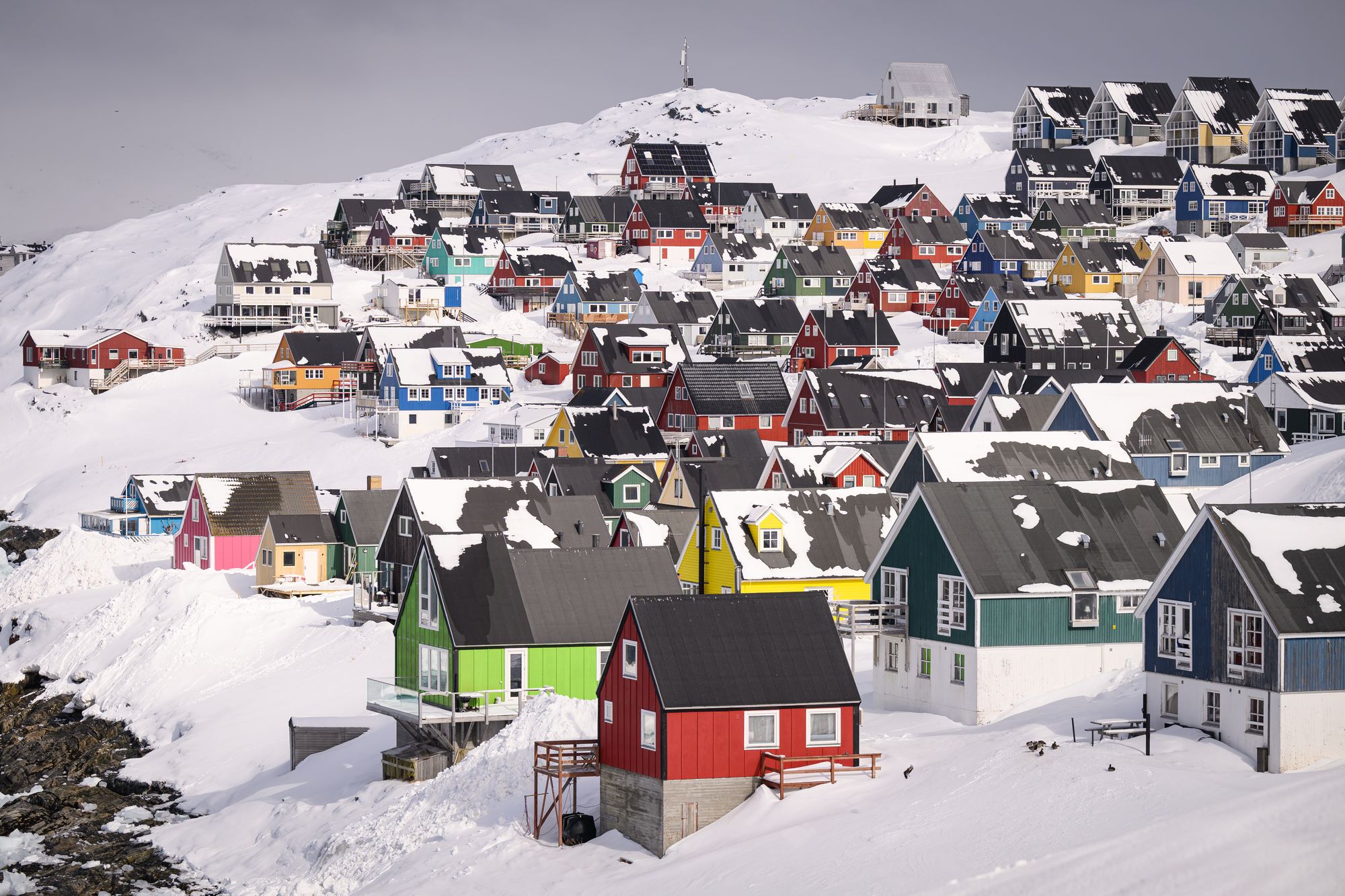
open image in gallery
Nuuk, Greenland’s capital city (Getty Images)
Although their capital cities are more than 3,500km apart, Greenland has been linked to Denmark for a millennium, with Norse migrants settling there around AD1000. It was a Danish colony until 1953, when it fully became part of the Danish state; a little over a quarter century later, following a referendum, it gained home rule, granting Greenland control over domestic affairs.
Then, in 2009, a new self-government act gave even greater autonomy (although Denmark retained control of foreign affairs and defence). The official language switched, too, from Danish to Greenlandic, the Inuit language of Kalaallisut. And as part of this act, Greenland has the option to declare independence fully, should its people vote in favour in a referendum (the Danish parliament would need to agree, too).
Denmark has long cultivated an image as a benevolent coloniser. But a handful of recent revelations have irrevocably shattered that flattering portrait. One particularly harrowing chapter in Denmark and Greenland’s joint history came to light in the late 2010s, when Greenlandic women who had been forcibly fitted with the contraceptive coil by Danish doctors started to speak out about their ordeal.
In the Sixties and Seventies, thousands of Greenlandic women and girls, some as young as 12, were fitted with intrauterine devices (IUDs), without their knowledge or consent. The policy was an attempt to slow down population growth in Greenland (which at the time had one of the highest birth rates in the world) and therefore lessen the potential financial burden on Denmark; it’s thought to have impacted around half of the island’s women of childbearing age between 1966 and 1970.
Many were left traumatised, and others suffered pain, bleeding, infection and lasting health complications; some struggled to conceive later in life, not realising that they had been fitted with the coil. “I could clearly see that the [IUD] tools looked much too big for my little girl’s body, but at the time I didn’t realise they were for adult women,” Naja Lyberth, who was fitted with the coil at the age of 14 and later became the first woman to come forward, has said. “It was like torture, like a rape.”
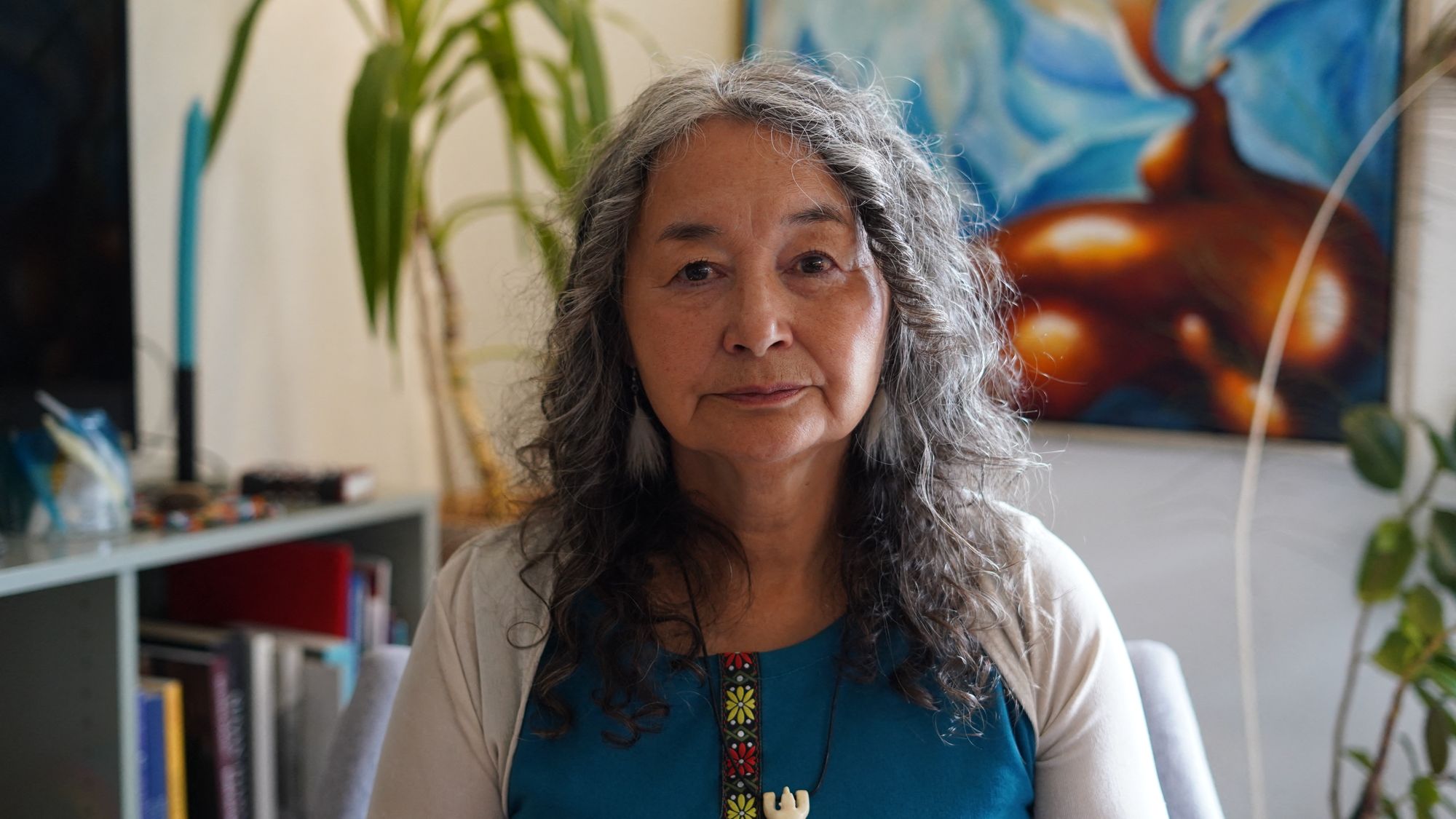
open image in gallery
Naja Lyberth was one of thousands of Greenlandic women fitted with IUDs without their knowledge or consent (AFP via Getty Images)
Múte Egede, the former Greenland prime minister, has described this programme as “straightforward genocide, carried out by the Danish state against the Greenland population”. The Danish broadcaster DR released a podcast series, Spiralkampagnen, about the scandal in 2022; an apology from the Danish prime minister Mette Frederiksen followed in 2025. “I apologise to the girls and women who have been subjected to systematic discrimination,” she said. “Because they are Greenlanders. For experiencing both physical and psychological harm. For being let down.”
Another dark episode that has recently prompted a much-belated apology is the so-called “little Danes experiment” of the Fifties. The Danish government sent 22 Inuit children from Greenland to live with Danish families; the idea was that they would learn the Danish language and way of life, then later return to their home country, inculcated with these values and traditions. It was, of course, a policy steeped in colonialist ideals; the aim was to eventually create a “new ruling class of Greenlanders” who were, essentially, culturally Danish.
The participating children were meant to be orphans, but some were actually taken from their families. Six were adopted by foster families in Denmark, but when the remaining 16 eventually returned to Greenland, they were placed in orphanages and made to continue speaking Danish.
Most of them never returned to live with their birth families; around half of the youngsters involved in the “experiment” later experienced mental health problems, substance abuse and suicide attempts. In 2020, prime minister Frederiksen made an official apology to the survivors, admitting that “we cannot change what happened. But we can take responsibility and apologise to those we should have cared for but failed to do”.
But for decades after this “experiment”, there has been further controversy over the use of “parenting competency” tests, known as FKU, on Greenlandic families based on the Danish mainland. Activists have long argued that it is unfair to make decisions about whether a Greenlander is a fit parent based on assessments that are rooted in Danish norms and carried out in Danish, rather than Kalaallisut. Greenlandic parents in Denmark are five times more likely to have their children taken into care, according to one report.
Denmark is seen not only as a partner, but as a state that historically made intrusive decisions over Greenlandic bodies and families
Aurélien Colson
The forced contraception programme and “controversial child welfare practices” are not “just historical footnotes”, says Aurélien Colson, Professor of Political Science at ESSEC Business School. “They are seen as deeply intrusive decisions imposed from outside. These episodes matter because they reinforce a colonial grievance narrative: Denmark is seen not only as a partner, but as a state that historically made intrusive decisions over Greenlandic bodies and families”. The scandals, he adds, “have strengthened a sense that Greenland’s future should be decided in Nuuk, not elsewhere – and certainly not in Washington DC”.
This year, though, Denmark banned the use of FKU tests on Greenlandic families; the decision came not too long after Trump started voicing plans for a Greenland takeover. The timing inevitably raised eyebrows, with some Greenlanders believing that this sudden and speedy policy U-turn on a longstanding grievance was rooted in Danish fears about US involvement. Speaking to The Guardian in January 2025, Greenlandic politician Naaja Nathanielsen suggested that Trump’s interest had been “a wake-up call to Copenhagen”.
Trump is not the first US president to attempt to acquire Greenland. Back in the 1860s, Andrew Johnson’s administration raised the idea of buying it; at the start of the Cold War, Harry Truman made Denmark a secret offer of $100m for the territory, which he believed held strategic importance (the Americans, it should be noted, have had a military presence in Greenland since the Second World War).
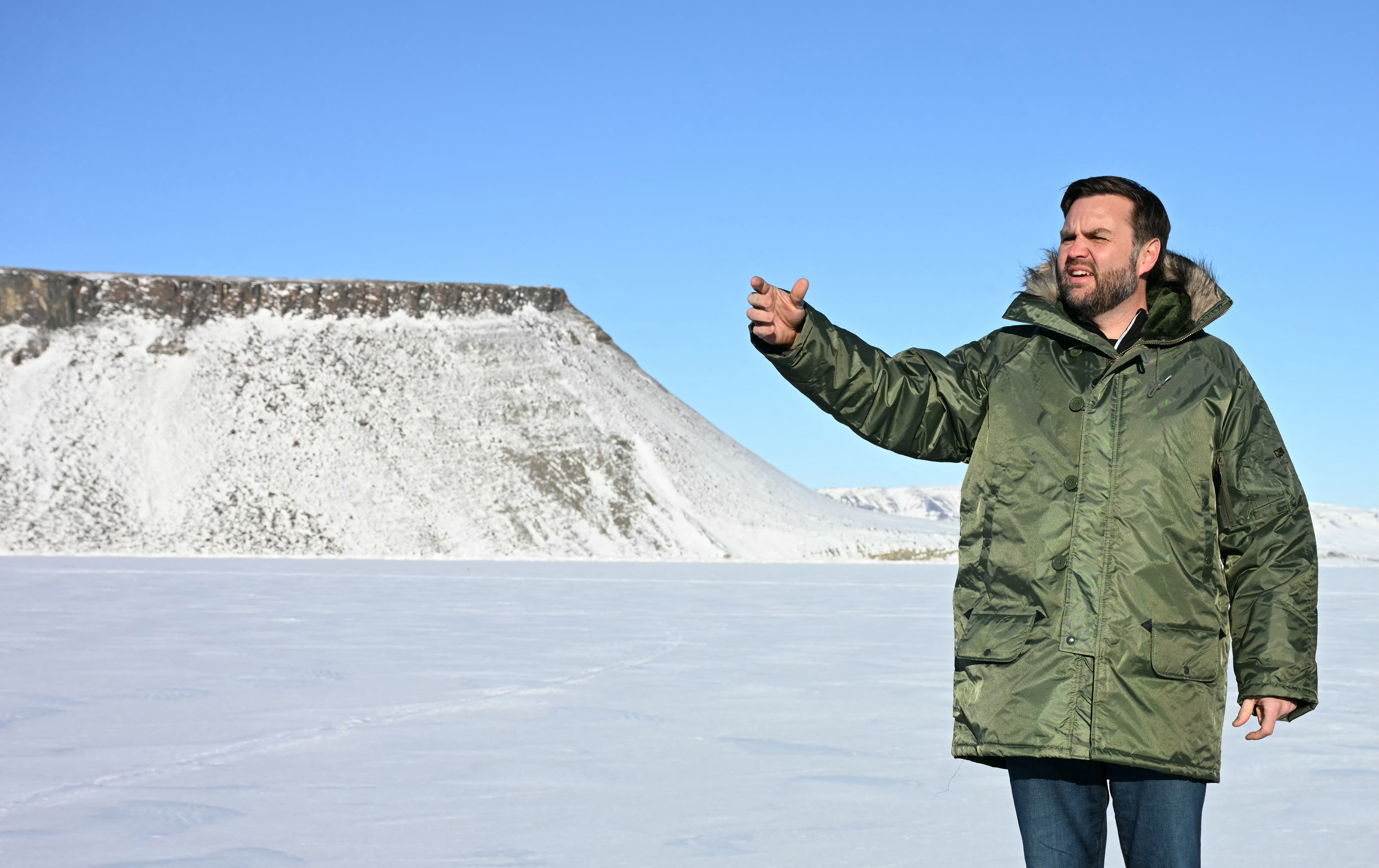
open image in gallery
The US vice-president JD Vance toured the US military’s Pituffik Space Base in Greenland on 28 March 2025. (Photo by Jim Watson/POOL/AFP via Getty Images) (POOL/AFP via Getty Images)
But the 47th president is arguably the most persistent. Back in 2019, he expressed his interest in buying the territory, claiming that “essentially it’s a large real estate deal”, but his overtures were rejected outright by the Danes, with the prime minister describing the prospect as “absurd”. During his second term, though, it has become something of a fixation.
Why is Trump so obsessed with the idea of planting the stars and stripes on Greenland? Its vast array of natural resources might well play a part. Underneath the ice lie rare earth elements, which are used in the manufacturing of smartphones, batteries and green technology, as well as other valuable raw materials such as lithium, graphite and copper. It’s estimated to be home to significant and as-yet-untapped reserves of fossil fuels, too.
The president has also repeatedly claimed that the US needs Greenland “from the standpoint of national security”, as he put it on Air Force One earlier this week, arguing that its location is of “strategic” importance. Its position along the GIUK gap, the passage between Greenland, Iceland and the UK, makes it potentially useful for overseeing access to the North Atlantic; it is also well placed to potentially provide warning of missile attacks.
But for all the American attempts to rally support, such as the coolly received “charm offensive”-style visit from vice-president JD Vance and his wife Usha, Greenlanders have not warmed to the idea of swapping Denmark for the States. Last year, a poll found that 85 per cent opposed the idea of Greenland becoming part of the USA; only six per cent were in favour.
Some politicians reckon that Trump’s interest might have another potential side effect: accelerating a possible split from Denmark and eventual independence. “There’s a window of opportunity here for us, where we could actually go into a dialogue about concrete steps we can take to better Greenlandic people’s lives,” MP Juno Berthelsen said earlier this week.
The general mood, Colson says, could be summed up as “less Copenhagen over time, and certainly not Washington instead”, with a desire for “more Greenlandic control when it becomes economically viable”. But the question of exactly “when” is a very important one.
As Colson points out, its economy is “small and highly dependent on fishing”, plus it still receives an annual grant from Denmark, known as the “block grant”; this represents over half of the public budget and helps subsidise services like education and healthcare. And on the latter point, Denmark covers costs for Greenlandic patients who need treatment in mainland Danish hospitals, too.
Indeed, the same 2025 poll that showed 56 per cent of Greenlanders favoured independence also reported that 45 per cent would be opposed if it meant that their living standards would deteriorate. Rather than an immediate shift, most Greenlanders seem to favour a slow, steady move away from Denmark. Independence, Colson reckons, “is possible but it’s not imminent”. A move to independence, he adds, “would take years, probably a decade or more”, and would also require new revenues, such as mining, tourism growth or an expansion of fishing, or some sort of transitional arrangement.
Iceland might present a potential blueprint for Greenland’s way forward. Once part of the Kingdom of Denmark, it officially gained full independence in 1944 following a referendum, having slowly gained significant autonomy in the preceding decades through a handover period. Like Greenland, it is rich in natural resources; geothermal power has proved important for the economy, as it could do for its neighbour.
Whatever lies in Greenland’s future, though, for now its people and its politicians are sticking to one refrain: that their land is not for sale.