
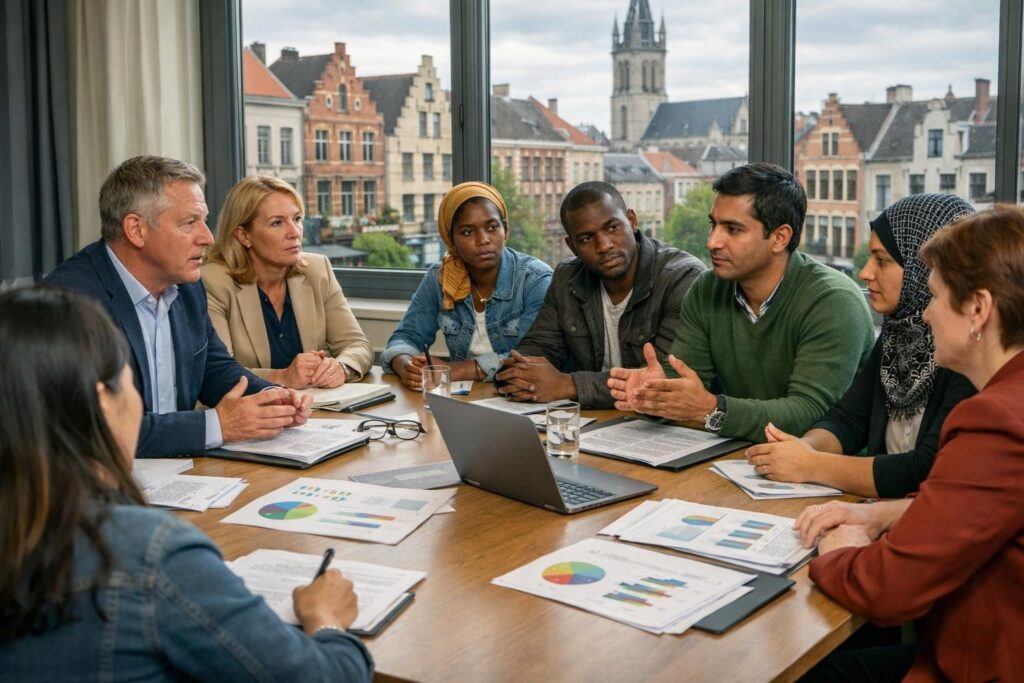
Belgium reviews integration programs for new arrivals at a time when the country’s diversity is no longer a trend but a baseline. In practice, that means policy makers are revisiting what “working” integration looks like in daily life: not only language and paperwork, but also trust in institutions, access to housing, and the ability to build a social circle beyond one’s immediate community. The debate is sharpened by Belgium’s federal architecture, where immigration rules sit largely at the federal level while integration programs are mainly designed and delivered by regions and communities. In Brussels, those layers overlap on the same streets, sometimes offering newcomers choices and sometimes creating confusion.
The reassessment is also happening while Europe continues to grapple with asylum pressures, skills shortages, and polarized politics. Belgium’s courts have repeatedly reminded the state of its reception obligations for refugees, while regional agencies are asked to deliver faster pathways into work and training. The question is no longer whether civic courses exist, but whether they produce measurable social inclusion and cultural integration without becoming box-ticking rituals. To see why Belgium is reviewing these systems now, you have to follow the thread from the country’s migration history to the very concrete realities of a newcomer trying to find a job, learn Dutch or French, and feel at home.
- Belgium reviews how effective integration programs are for new arrivals, with stronger attention to outcomes.
- Integration governance is regional, while immigration rules are mainly federal—creating coordination challenges.
- Flanders, Wallonia, and Brussels increasingly converge on compulsory civic paths, but differ in delivery and emphasis.
- Policy evaluation focuses on language acquisition, employment access, and durable community support.
- Reception capacity for refugees remains a stress point that shapes public confidence and integration trajectories.
Belgium reviews integration programs for new arrivals: why the moment matters
Belgium’s current policy evaluation cycle is shaped by a long arc: migration arrived comparatively late as a mass phenomenon, yet it has become central to the country’s social fabric. In the 1920s, the main newcomers were workers and people seeking safety. After World War II, Belgium—like its neighbors—actively recruited labor to power heavy industry, particularly in mining and steel. That recruitment initially drew heavily from nearby states and parts of Central and Southern Europe, with Italian and Polish workers forming visible communities that still mark the cultural landscape of towns in Wallonia and Limburg.
From the 1960s onward, recruitment diversified. Spain, Portugal, and Greece joined the flow, and then Turkey and Morocco became important origin countries for labor migrants. Work was no longer limited to mines and factories; construction and domestic work drew migrants into cities and new regions. Belgium’s colonial history did not translate into large-scale labor recruitment from Congo, Rwanda, or Burundi, and migration from those areas remained more limited until the 1990s—an important nuance when comparing Belgium to France or the UK.
In 1974, Belgium halted active labor recruitment as industrial demand fell and unemployment rose. Yet arrivals did not stop; they shifted. Family reunification became the dominant channel, reshaping neighborhoods through spouses, children, and extended relatives joining earlier migrants. After 1989, asylum applications grew, and successive EU enlargements increased intra-EU mobility. By the early 2020s, EU citizens represented the majority of migrants coming to Belgium in some years, often for employment, family, or study, while non-EU routes skewed more toward family, education, work permits, and international protection.
Those patterns matter because they change what “integration” needs to deliver. A software engineer from France who already speaks French may need little language support but may struggle with housing markets and administrative steps. A family-reunification newcomer from Morocco might need a longer language pathway and help navigating school systems. An asylum-seeker recognized as a refugee may require trauma-informed services, credential recognition, and rapid access to stable accommodation. If policy assumes a single profile, it fails in predictable ways.
In the background sits a demographic reality: Belgium’s population is around 11.7 million (early-2020s baseline), with a significant share holding foreign nationality and an even larger share of Belgian citizens being of foreign origin. Many people of foreign origin were born in Belgium, which means the integration conversation is increasingly about equal opportunities for the second generation, not only about orientation for newcomers. That is why today’s reviews are as much about long-term social inclusion as they are about first-year settlement support.
To keep this debate grounded, imagine a fictional newcomer, Nadia, who arrives in Brussels in 2026 through family reunification. She needs to choose an integration trajectory, decide whether to learn Dutch, French, or both, and find childcare while attending classes. Her success will depend not only on personal motivation but on whether the system is designed around realistic life constraints. The core insight driving the review is simple: integration programs are only as effective as the everyday conditions that allow people to complete them.
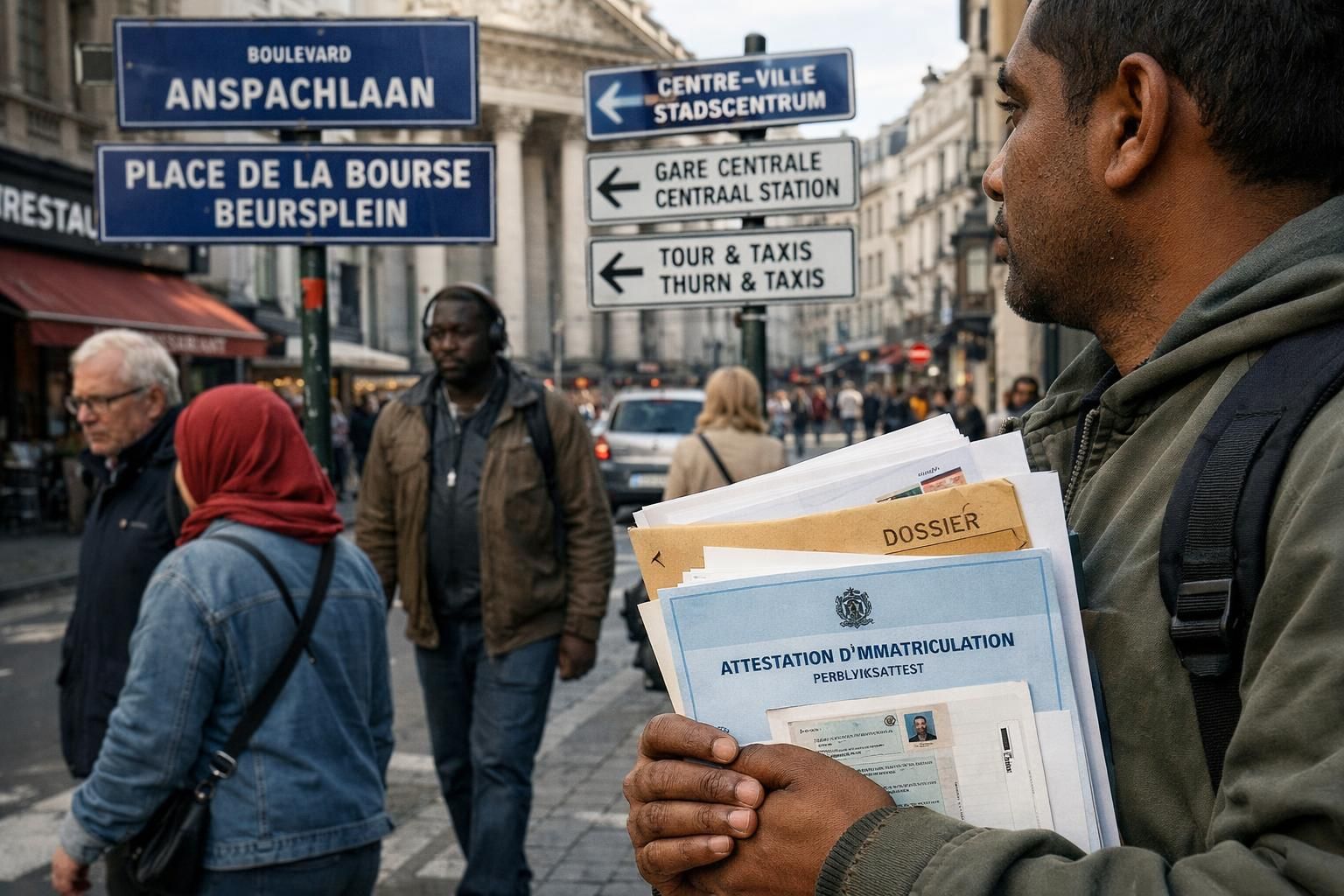
How Belgium’s federal structure shapes policy evaluation of integration programs
Belgium is a federal country whose institutional design deeply affects how immigration and integration are governed. The federal level largely controls immigration rules: admission, residence rights, and removals. It also organizes asylum reception through Fedasil, the agency responsible for providing accommodation and basic support to asylum seekers. Meanwhile, integration policy sits mainly with regions and language communities, which means the programs for new arrivals differ depending on where someone settles and which linguistic system they enter.
This split creates a recurring coordination problem. Federal decisions influence who arrives and under what status, but regional services carry the day-to-day responsibility of making settlement work. When a municipality receives more newcomers than expected, the local offices handling registration, schooling, and welfare often feel the pressure first. The policy evaluation challenge is to measure outcomes without blaming the wrong level of government for bottlenecks that originate elsewhere.
Politics complicates the picture. Belgium’s party system is divided along linguistic lines, with different Flemish and Francophone party landscapes. Immigration became especially politicized in Flanders from the 1990s onward, influenced by the electoral traction of far-right narratives. Francophone debates have typically been less dominated by immigration themes, yet the conversation has shifted over time. Disagreements have surfaced over issues like regularization, local voting rights for foreigners, family reunification conditions, and citizenship requirements. When Belgium reviews integration programs, those debates reappear as arguments about whether compulsory paths empower newcomers or stigmatize them.
Asylum policy has added urgency. Belgium has faced an extended “reception crisis,” with periods in which reception capacity did not meet legal obligations. Court condemnations and financial penalties have been significant, and the reputational cost has been even higher: when people see images of families waiting for shelter, confidence in the whole migration system erodes. That matters for integration because first impressions of institutions shape long-term trust. A newcomer who experiences chaos at the start may disengage from later services, even if those services are well-designed.
Policy evaluation therefore increasingly looks at the entire chain: arrival procedures, reception stability, and then integration milestones. In practice, this means tracking how long it takes for a recognized refugee to move from reception to housing, how quickly language enrollment happens, and whether employment guidance is aligned with labor market needs. It also means comparing Belgium’s approach with other governance models. For example, debates about how labor shortages shape immigration in places like Canada highlight different trade-offs between selection and support, and reading about labor-driven immigration approaches helps clarify what Belgium can and cannot import into its own context.
Belgium’s federal design is sometimes criticized for complexity, yet it can be an asset. Regional agencies can innovate and adapt to local realities, and Brussels can offer bilingual pathways that fit a cosmopolitan city. The most useful evaluation questions are pragmatic: do programs reduce administrative drop-out, improve language outcomes, and create durable community support networks? In a federal country, the insight is sharper still: coordination is itself an integration tool, because fragmented services translate into fragmented lives.
Flanders, Wallonia, Brussels: what integration programs actually include for new arrivals
Belgium does not have one integration model; it has a set of regional and community-based trajectories that have gradually moved toward similar pillars. Historically, Francophone policy leaned more on universalist social policy—assuming assimilation into the dominant culture would happen naturally through school and work—while Flanders built targeted measures inspired by Dutch approaches, including structured civic paths. Over the past two decades, those approaches have converged toward more formalized, sometimes compulsory, programs.
In Flanders, a compulsory civic integration program was introduced in the mid-2000s. Over time, it has emphasized Dutch learning, social orientation about norms and institutions, and guidance toward work or study. Recent reforms have strengthened expectations: higher language targets, exams for language and societal orientation, and formal commitments around rights and duties. In policy terms, the shift is from offering help to requiring demonstrable progress. In a review phase, the key question becomes whether stricter requirements increase completion and labor market participation—or whether they push the most vulnerable people into non-compliance.
Wallonia developed its own integration pathway later, combining an intake meeting that maps skills with French language training, a citizenship and society course, and employment or vocational guidance when needed. It then moved toward compulsory participation for most non-EU newcomers. One practical advantage of Wallonia’s approach is the explicit “diagnostic” step: skills assessment can identify whether someone needs basic literacy support, diploma equivalence advice, or immediate job matching. The evaluation challenge is ensuring that guidance does not become generic and that training leads to credentials employers recognize.
Brussels is the most institutionally complex setting because two integration programs operate on the same territory: a Dutch-speaking track organized by the Flemish side and a French-speaking track managed by Francophone institutions. Since 2022, participation has become mandatory for many newcomers in Brussels, but the choice of track can shape language learning, job networks, and even which public services feel “closer.” For someone like Nadia, the decision may hinge on where her partner works, what language the children’s school uses, and which neighborhood organizations provide community support.
Across these systems, common building blocks appear:
- Language training (Dutch, French, or both in Brussels), sometimes with defined target levels and testing.
- Social orientation covering institutions, values, work culture, and practical life issues such as healthcare.
- Individual guidance toward employment, training, or studies, including pathways for diploma recognition.
- Administrative navigation support, often indirectly, through partner organizations and municipal services.
To make differences clearer in a policy evaluation context, the table below summarizes typical elements, acknowledging that local implementation varies.
Area
Typical language focus
Core civic component
Common “success” indicators in reviews
Flanders
Dutch learning with tested targets
Societal orientation course plus exams and formal commitments
Completion rates, language test pass rates, job entry within 12–18 months
Wallonia
French training adapted to needs
Citizenship/society course with intake skills assessment
Training-to-work transitions, attendance, credential recognition outcomes
Brussels
Choice of Dutch or French track (sometimes both informally)
Mandatory participation in one recognized program
Reduced administrative drop-out, language progression, stable housing and work links
These program designs do not exist in a vacuum. Housing pressure can derail attendance, and comparing debates elsewhere—like how affordability constrains mobility—helps frame why even a well-funded course can fail if participants are couch-surfing or commuting two hours. The insight for Belgium’s review is that program content must be matched with the real constraints of time, transport, and childcare.
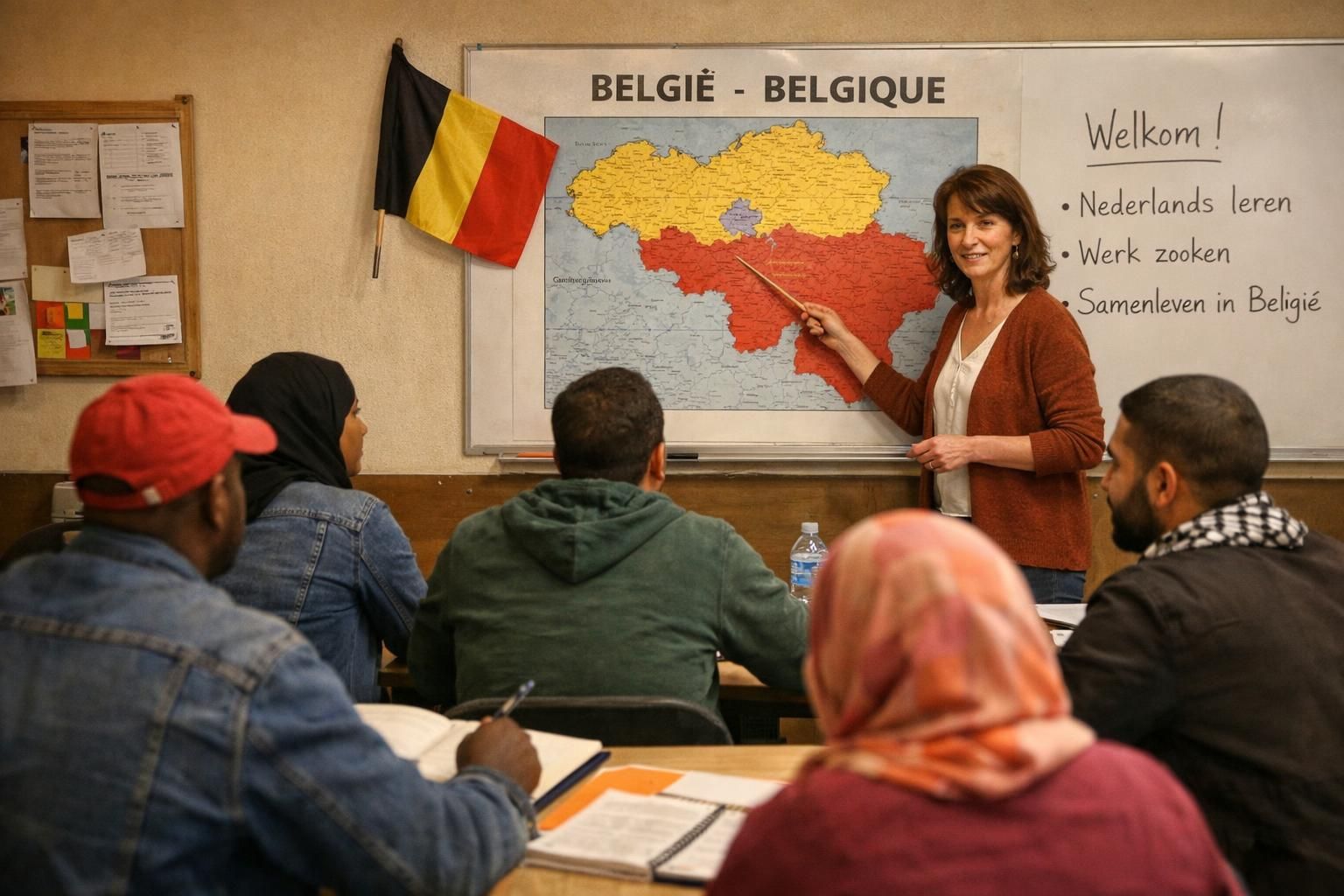
Measuring social inclusion and cultural integration: what “success” looks like in practice
When Belgium reviews integration programs, the most difficult step is defining success in a way that is both measurable and meaningful. Passing a language exam is measurable; feeling able to speak to a child’s teacher without anxiety is meaningful. A course certificate is easy to count; sustained participation in a mixed social network is harder to capture. Policy evaluation increasingly combines quantitative indicators with qualitative feedback from participants, teachers, employers, and municipalities.
Language remains central, but the review lens is shifting from “hours attended” to “functional outcomes.” Can the newcomer book a doctor’s appointment, understand an employment contract, and report a housing problem to a landlord? These are practical milestones that tie directly to social inclusion. A strict focus on levels can be counterproductive if it discourages people who are progressing slowly due to trauma, low literacy, or irregular work schedules.
Employment outcomes are the next pillar. Belgium has repeatedly faced gaps between people with and without a migration background in both education and labor markets. Reviews now pay closer attention to why skilled newcomers end up overqualified or trapped in precarious roles. For Nadia’s cousin Samir, a trained electrician arriving from outside the EU, the obstacle might be credential recognition and the time it takes to access bridging courses. For an EU citizen, it might be the mismatch between qualifications and local employer expectations. The programs that show better results often combine language learning with sector-specific vocabulary, internship links, and early employer engagement.
Education is intertwined with integration for families. If parents cannot understand school communications, children’s pathways can suffer, reinforcing inequality across generations. Looking outward can be useful here: discussions about how schools support wellbeing and inclusion, such as school-based mental health strategies, illuminate how integration programs can coordinate with schools to support parents and children together. Belgium’s evaluation debate increasingly asks whether newcomer services should include structured “school navigation” sessions for parents as a standard module rather than an optional add-on.
Cultural integration is often misunderstood as cultural erasure. In practice, the more effective programs present norms and rules as navigational knowledge rather than a demand to abandon identity. A societal orientation class that explains why punctuality matters in some workplaces, how to negotiate conflict with neighbors, and what legal protections exist against discrimination offers tools for agency. The review focus is whether these sessions are interactive and scenario-based, rather than lecture-heavy. Nadia’s best lesson might not be a definition of “Belgian values,” but a role-play on responding to a racist remark at work while knowing where to seek support.
Another major success factor is social networks. Buddy projects and mentoring can act as “brokers,” connecting newcomers to clubs, associations, and informal job leads. Yet research on mentoring warns that networking goals are not always reached: it takes structured support, clear expectations, and time. Belgium’s community support ecosystem—sports clubs, unions, neighborhood houses, diaspora associations—can be a strength if integration programs actively bridge into it rather than simply mentioning it in a handbook.
Finally, comparisons across Europe help Belgium calibrate its direction. Debates about autonomy and regional policy in places like Spain show how governance affects social policy delivery; reading about regional autonomy dynamics can make Belgium’s own federal trade-offs more legible. The insight for the review process is that outcomes improve when integration is treated as a local ecosystem, not a standalone course.
From reception to belonging: refugees, housing pressures, and community support that makes programs stick
Integration programs are often judged by what happens inside classrooms or counseling sessions, but the decisive factors frequently sit outside. For refugees, the pathway begins with reception conditions. Belgium’s reception shortfalls have had a direct impact on integration readiness: a person who spends weeks in uncertainty, without stable accommodation, is less able to learn a new language or search for work. Reviews increasingly look at “time-to-stability” as an upstream indicator that predicts downstream success.
Housing is the most immediate stabilizer. In expensive markets, new arrivals can end up in overcrowded apartments, informal sublets, or repeated temporary moves. Each move disrupts enrollment, child schooling, and local networks. Municipalities can mitigate this through coordinated access to social housing queues, rent deposit support, and partnerships with ethical landlords. While Belgium’s context differs, discussions about homelessness responses abroad—like how shelters interface with services—illustrate a general lesson: fragmented housing and social services create revolving doors. In integration terms, stable housing is not a “nice-to-have”; it is a precondition for program completion.
Community support is the second stabilizer. In many Belgian communes, local associations quietly do the work that institutions cannot: helping newcomers practice conversational Dutch or French, explaining public transport passes, accompanying someone to a first parent-teacher meeting, or showing where to find affordable groceries. The most effective integration programs formalize these bridges by maintaining lists of vetted partners and building referral loops rather than leaving people to “figure it out.”
Consider a small case study: Nadia joins a civic trajectory and meets a volunteer mentor through a neighborhood association. The mentor introduces her to a local women’s cycling group that rides along the canal on weekends. What looks like leisure becomes integration infrastructure: Nadia practices language in low-stakes settings, learns local geography, and receives tips about employers who value her skills. This is cultural integration in the most tangible sense—shared routines, not slogans.
Reviews also examine how programs respond to discrimination and labor segmentation. People with a migration background are more likely to end up in sectors with weaker conditions, more temporary contracts, or part-time work. A program that simply encourages “find a job quickly” can unintentionally push people into traps. Better models include workers’ rights education, union contact points, and guidance on negotiating contracts. Comparative reading on demographic pressures—such as how aging societies adjust policies—highlights why Belgium is motivated to improve labor market participation while also protecting standards: the workforce needs newcomers, but exploitation undermines trust and cohesion.
Politics, too, shapes the environment in which integration happens. When debates intensify, newcomers may withdraw into closed networks, not out of rejection but out of self-protection. Understanding tensions elsewhere, for example how migration debates escalate, can help Belgian stakeholders anticipate how rhetoric affects everyday interactions in schools, workplaces, and public transport. The review process is therefore as much about public communication as it is about curricula: messaging that frames newcomers as neighbors and contributors supports social inclusion far more than punitive narratives.
As Belgium reviews integration programs for new arrivals, the core practical insight becomes unavoidable: belonging is built through stable housing, fair work, and real-world relationships—programs succeed when they connect directly to those pillars.
{“@context”:”https://schema.org”,”@type”:”FAQPage”,”mainEntity”:[{“@type”:”Question”,”name”:”Who must follow integration programs in Belgium today?”,”acceptedAnswer”:{“@type”:”Answer”,”text”:”Requirements depend on where you live (Flanders, Wallonia, or Brussels) and your status. In general, many non-EU new arrivals are required to follow a civic pathway, while EU citizens often have more choice. Brussels has mandatory participation for many newcomers, with the option to take a recognized Dutch- or French-speaking track.”}},{“@type”:”Question”,”name”:”What do Belgiumu2019s integration programs usually include?”,”acceptedAnswer”:{“@type”:”Answer”,”text”:”Most trajectories combine language learning (Dutch and/or French), a course on society and citizenship (often called social or societal orientation), and individual guidance toward work, training, or studies. Some regions include exams or formal commitments that are checked before a certificate is granted.”}},{“@type”:”Question”,”name”:”How does Belgium evaluate whether these programs work?”,”acceptedAnswer”:{“@type”:”Answer”,”text”:”Policy evaluation typically looks at completion rates, language progression, and employment or training outcomes. Increasingly, it also tracks practical indicators like time-to-stable housing, reduced administrative drop-out, and participant feedback about confidence using services such as healthcare, schools, and job centers.”}},{“@type”:”Question”,”name”:”What is the biggest barrier for refugees trying to integrate quickly?”,”acceptedAnswer”:{“@type”:”Answer”,”text”:”Stability at the startu2014especially reception capacity and access to durable housingu2014is often the biggest barrier. Without stable accommodation, it is harder to attend classes, search for jobs, or build supportive routines, which can slow both social inclusion and cultural integration.”}}]}
Who must follow integration programs in Belgium today?
Requirements depend on where you live (Flanders, Wallonia, or Brussels) and your status. In general, many non-EU new arrivals are required to follow a civic pathway, while EU citizens often have more choice. Brussels has mandatory participation for many newcomers, with the option to take a recognized Dutch- or French-speaking track.
What do Belgium’s integration programs usually include?
Most trajectories combine language learning (Dutch and/or French), a course on society and citizenship (often called social or societal orientation), and individual guidance toward work, training, or studies. Some regions include exams or formal commitments that are checked before a certificate is granted.
How does Belgium evaluate whether these programs work?
Policy evaluation typically looks at completion rates, language progression, and employment or training outcomes. Increasingly, it also tracks practical indicators like time-to-stable housing, reduced administrative drop-out, and participant feedback about confidence using services such as healthcare, schools, and job centers.
What is the biggest barrier for refugees trying to integrate quickly?
Stability at the start—especially reception capacity and access to durable housing—is often the biggest barrier. Without stable accommodation, it is harder to attend classes, search for jobs, or build supportive routines, which can slow both social inclusion and cultural integration.