
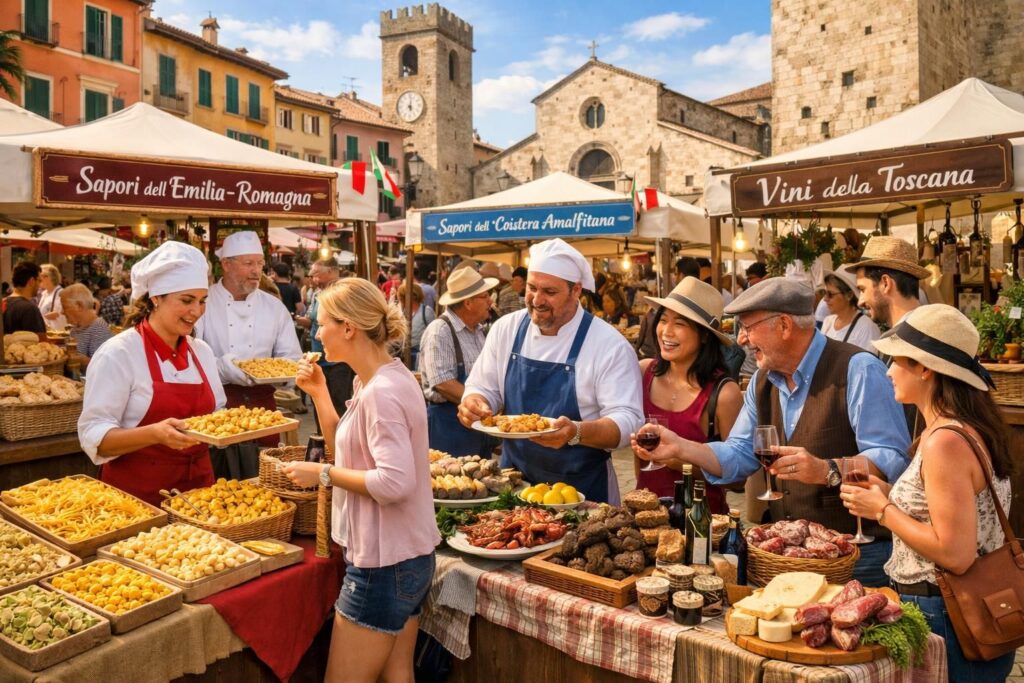
Italy has long sold itself to the world through art cities and postcard coastlines, yet the most persuasive invitation often comes from the table. Over the past few years, cultural tourism has increasingly been built around regional cuisines: not as a side activity for hungry visitors, but as a way to read landscapes, understand history, and meet communities on their own terms. The momentum accelerated after UNESCO added Italian food—not one dish, not one city, but the whole national culinary fabric—to its list of intangible cultural heritage, validating a view Italians have held for generations: cooking is a social ritual that carries memory, craftsmanship, and local pride.
That recognition has practical consequences for food tourism. It nudges travelers to leave the “one-size-fits-all” menu behind and taste the country as Italians do, town by town. A bowl of saffron risotto in Milan, a Roman pasta served with sharp pecorino, a slice of Neapolitan pizza, or a Sicilian rice ball becomes more than a dish—it becomes a story with a place attached to it. The most successful itineraries now connect gastronomy with markets, vineyards, family kitchens, and harvest calendars, turning travel into an education in culinary heritage and local flavors.
- UNESCO recognition reframed Italian cuisine as a living social practice, boosting interest in cultural tourism linked to food.
- Regional cuisines are being promoted as gateways to landscapes: rice plains, olive groves, coastal fisheries, and mountain pastures.
- Traditional recipes are increasingly presented with context—origin stories, producers, and seasonal rituals—not just plating.
- Food tourism is pushing visitors beyond major hubs toward smaller towns, markets, and local festivals.
- Italy is aligning culinary routes with heritage sites, encouraging longer stays and more dispersed spending.
Italy’s UNESCO-backed culinary heritage and the rise of cultural tourism
When UNESCO inscribed Italian cuisine on its intangible cultural heritage list, the message was less about crowning “the best food” and more about recognizing a nationwide pattern of shared practices. The designation highlights how Italians cook, eat, argue about ingredients, and pass knowledge between generations. In other words, the value sits in the communal ritual: the Sunday lunch that gathers relatives, the neighbor who explains why a sauce must simmer slowly, the grandparent who insists on a specific cut of cured pork for a Roman pasta.
This matters because cultural tourism thrives on experiences that feel authentic, participatory, and place-specific. Museums and monuments remain powerful, but they can be consumed quickly. A meal, by contrast, takes time and invites conversation. UNESCO’s language around Italian cuisine emphasizes care for self and others, respect for ingredients, and shared moments around the table. Those ideas translate smoothly into tourism products: market walks with local cooks, vineyard tastings tied to harvest traditions, and cooking sessions that end with a long meal rather than a quick “class photo.”
The political story also shapes perception. The Italian government pushed the UNESCO bid soon after taking office in late 2022, framing food as a pillar of national identity. A widely publicized open-air Sunday lunch in Rome—staged like a civic ritual—helped communicate the thesis: cuisine is culture. For visitors, that symbolism reinforces the sense that Italian food is not merely consumption but participation in an ongoing social narrative.
Why the “intangible” label changes what travelers look for
Unlike a heritage site you can photograph from a distance, a culinary tradition asks you to engage. Travelers are increasingly looking for “how it’s made” rather than only “what it tastes like.” That shift encourages Italy to promote regional techniques: the way risotto is stirred for creaminess without cream, how pasta dough changes with humidity, why olive oil replaces butter in many central regions, or how coastal communities preserve fish. The intangible framing also legitimizes experiences that are small-scale: a family trattoria, a village bakery, a modest dairy producing local cheese.
Tour operators have adapted by building routes around traditional recipes and the people who safeguard them. To make this concrete, imagine a fictional traveler, Maya, who has visited Rome before but returns seeking deeper context. Instead of checking off landmarks, she spends a morning learning how pecorino is aged and why it tastes different from northern cheeses, then sits down for a simple pasta that suddenly feels “new” because she understands the ingredient chain and the social customs around serving it.
Tourism outcomes: longer stays and wider geographic spread
Studies cited by Italian academia have pointed to a “halo effect” around UNESCO recognitions, where labeled places and practices often see increased interest. Applied to cuisine, the potential impact is broader than a single zone: it encourages travel between regions and rewards travelers who slow down. A key insight is that food-driven cultural tourism can disperse visitors away from overcrowded centers toward smaller communities that still hold strong culinary identities. The next section follows that idea on the ground—starting in the north, where climate and borders shape a distinct set of flavors.
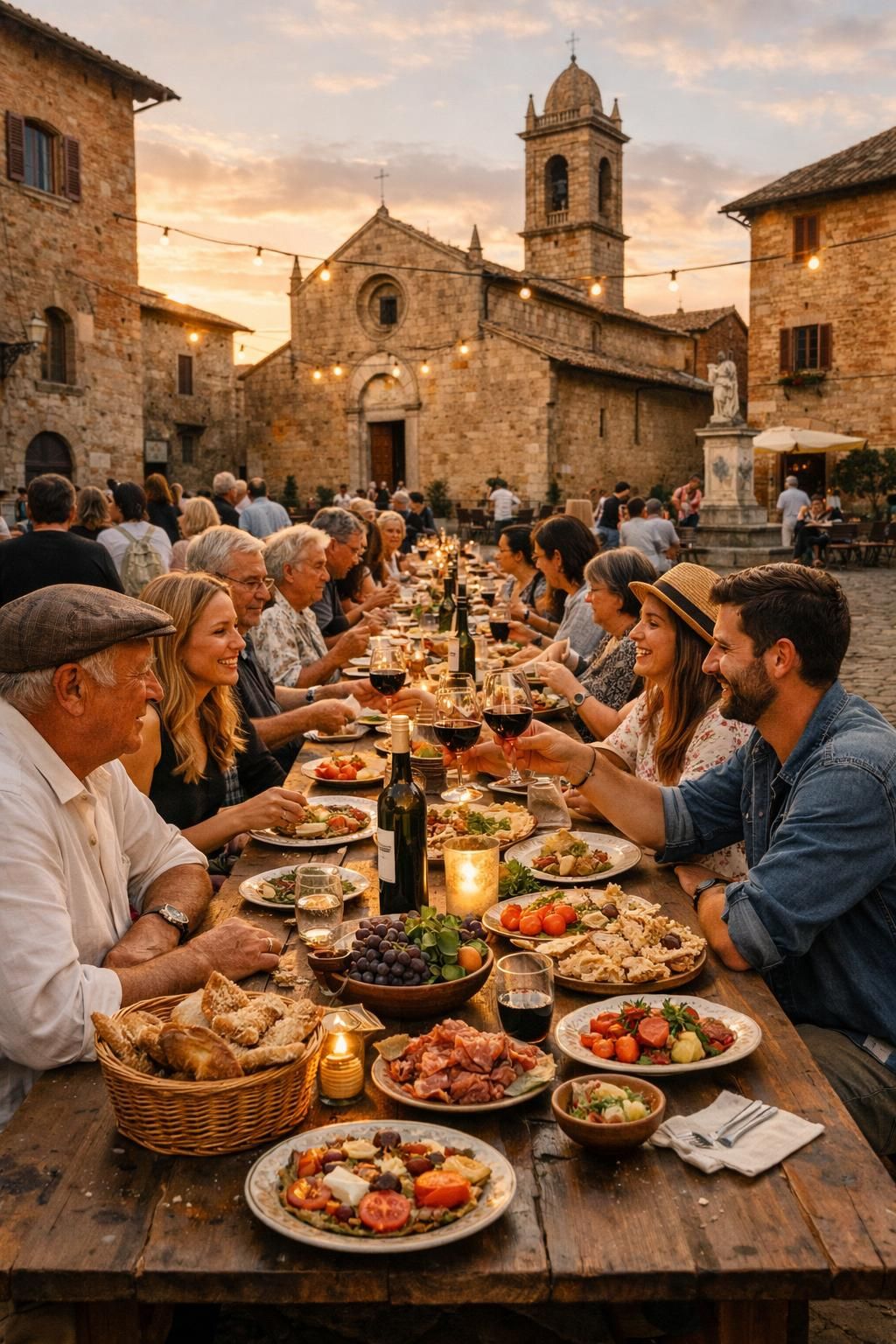
Northern Italy’s regional cuisines: rich textures, border influences, and culinary routes
Northern Italy often surprises first-time visitors who arrive expecting tomato-heavy sauces and olive oil everywhere. Here, cooler climates and alpine proximity historically favored butter, dairy, slow braises, and rice. Cross-border exchanges with France, Switzerland, and Austria left marks on technique and taste, which is precisely why the north is a strong anchor for cultural tourism: it shows how geography becomes cuisine.
In Lombardy, risotto alla milanese illustrates the region’s relationship with rice cultivation and a preference for silky textures. Saffron—luxurious, aromatic—turns a simple staple into a celebratory dish. Pair it with ossobuco, a long-cooked veal shank brightened with gremolata, and you have a meal that communicates a northern rhythm: patience, depth, and careful finishing. For travelers, this is not only dinner; it’s an entry point into local agriculture (rice fields), craft (stock making), and dining culture (courses paced over time).
Piedmont takes the “place-as-flavor” concept even further through its white truffles, especially around Alba. The scent is so distinctive that it functions like a regional signature. When visitors participate in a truffle hunt—often with trained dogs and a guide—they learn why truffles cannot be “farmed” in a predictable way, how weather changes quality, and why pricing follows scarcity. Add Bagna Cauda, a warm anchovy-garlic sauce served with vegetables, and you see the region’s talent for turning humble components into rituals of sharing. It’s a dish designed for conversation: everyone dips, compares bites, and lingers.
Veneto’s seafood-and-rice identity, beyond the pasta stereotype
Veneto complicates the idea that pasta is Italy’s universal center. In Venice and the lagoon, seafood traditions flourish, while inland areas lean toward rice and polenta. Baccalà mantecato—whipped salt cod—tells a maritime story of trade and preservation. Risi e bisi (rice and peas) reads like a seasonal postcard, tied to spring harvests and the pleasure of simplicity done well.
From a tourism perspective, Veneto is primed for itinerary design that links plates to landscapes. Travelers can move from lagoon markets to inland vineyards, tasting how water and soil alter what ends up on the table. The key is interpretation: a guide who explains why cod became central despite being imported, or why specific rice varieties suit creamy preparations, transforms tasting into learning.
Practical examples of food tourism in the north
For visitors like Maya, the north offers structured “culinary routes” that still feel intimate. A morning might begin at a cheese producer where Gorgonzola or Grana Padano is aged, continue with a risotto lesson in a home kitchen, and end in a wine bar pouring Barolo. The through-line is gastronomy as a system: producers, markets, recipes, and social rituals.
Region
Signature local flavors
Experience idea for cultural tourism
Lombardy
Butter, saffron, aged cheeses, slow braises
Rice-field visit + risotto workshop + ossobuco tasting
Piedmont
White truffle aroma, anchovy-garlic richness, bold reds
Truffle hunt + Bagna Cauda communal dinner
Veneto
Lagoon seafood, salt cod, rice and peas
Market tour in Venice + lagoon tasting + inland vineyard stop
What the north demonstrates is that promoting regional cuisines can be a form of storytelling that makes travelers curious about contrasts. That curiosity sets up the next leg of the journey: central Italy, where olive oil, pasta, and restraint form a different kind of culinary identity.
To see how travelers often plan these routes, it helps to look at how chefs and guides present the north’s staples to an international audience.
Central Italy’s culinary heritage: olive oil culture, Roman pasta rituals, and simple power
Central Italy offers a different kind of seduction. The food often looks minimal—few ingredients, short cooking times, little decoration—yet the results can be intense. This is where traditional recipes are frequently treated like civic property, defended in debates about technique and authenticity. That “argument culture” might sound intimidating, but for travelers it can be magnetic: people care, and their care is contagious.
Tuscany is a textbook case of cuisine shaped by land and thrift. Bread appears in soups like ribollita, where yesterday’s loaves become structure and comfort. Olive oil, not butter, is the everyday fat, linking taste to the region’s groves and pressing traditions. Bistecca alla fiorentina—a thick T-bone grilled over heat—shows another Tuscan principle: if the ingredient is excellent, do less. Visitors who tour a small olive mill and then taste oil with bread understand immediately why the region insists on freshness and why harvest timing matters.
Rome and Lazio: pasta as a social script
In Lazio, especially Rome, pasta becomes a ritual with rules. Dishes like carbonara, cacio e pepe, amatriciana, and gricia are built from a tight pantry—pecorino, guanciale, pepper, eggs, tomatoes in specific cases—and technique is everything. The famous “creaminess” in carbonara, for instance, comes from emulsifying egg and cheese with hot pasta water, not from adding cream. That detail, often repeated by Roman cooks with a mix of pride and impatience, is precisely what makes the dish a cultural marker rather than a mere recipe.
For food tourism, Rome can be approached like theater. A traveler might begin at a neighborhood market, learning how butchers cut guanciale and why pecorino’s saltiness matters. Later, in a small trattoria, the visitor recognizes those ingredients and watches the cook move quickly at the stove to catch the perfect moment of emulsification. The meal becomes an “aha” moment: knowledge converts into pleasure.
Umbria: the green heart and the earthy palate
Umbria’s reputation for truffles, lentils, and pork-based dishes like porchetta offers a quieter but equally compelling draw. Its inland landscapes favor earthy aromas and straightforward preparations that celebrate the ingredient. For a traveler, this region often delivers the most direct connection between farm and plate: a lentil dish that tastes like soil and sunshine, a truffle shaved sparingly but meaningfully.
Imagine Maya in Umbria at a small festival where locals serve porchetta sandwiches. She notices that people greet the vendor by name, discuss the herb blend, and compare this year’s roast to the last. She is not outside the culture looking in; she is temporarily inside it, participating respectfully. That is cultural tourism at its most persuasive: a visitor becomes a guest.
Central Italy proves that “simple” can still be highly coded. Once travelers learn those codes—oil freshness, cheese character, pasta technique—they begin to seek similar literacy in the south, where sun, spice, and the sea add new chapters to the story.
Southern Italy and the islands: bold local flavors, coastal traditions, and sweet-savory fusion
Southern Italy often delivers the flavors travelers associate with the country—tomatoes, basil, fried snacks, seafood—but the region’s real strength is variety. Heat and sun allow abundant produce, while coastlines supply fish and shellfish. The result is a style of Italian food that can feel louder, quicker, and more improvisational, yet still anchored in rules and rituals.
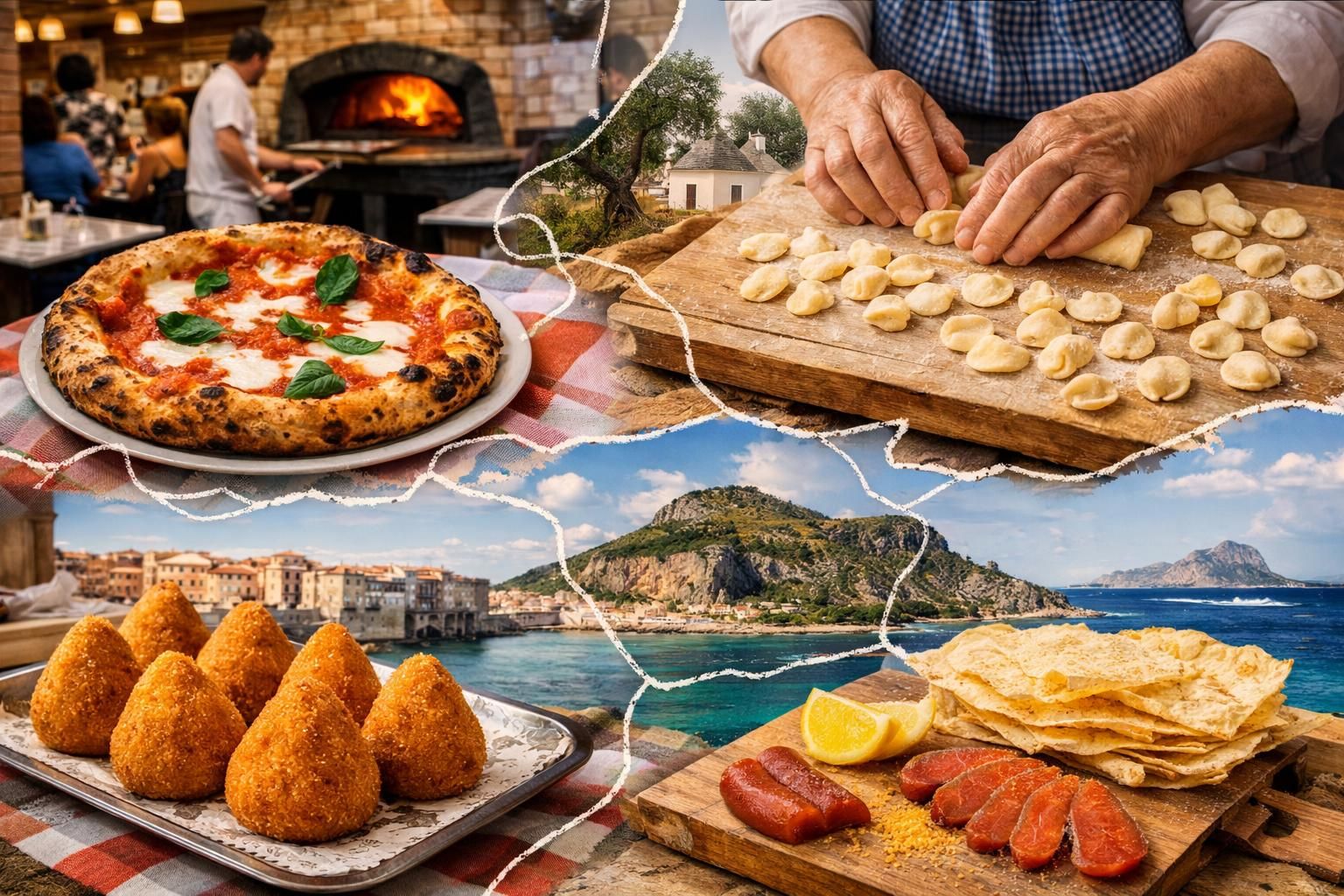
Campania, with Naples at its heart, provides one of the clearest links between food and identity. The art of Neapolitan pizza making already held UNESCO intangible status, and the wider recognition of Italian cuisine reinforces Naples’ role as a symbol of communal eating. A proper pizza experience is not only about dough and toppings; it’s about timing, crowded pizzerias, and a pace of eating that matches the city’s energy. Add mozzarella di bufala—milky, delicate, locally revered—and you have a regional dairy culture that is easy for visitors to understand through taste alone.
Calabria and Puglia: spice, olive groves, and everyday mastery
Calabria brings heat and intensity, often through ’nduja, a spreadable pork sausage with chili. For travelers, it’s a lesson in preservation and resourcefulness. The region historically needed ways to store meat, and spice became both a practical tool and a signature. When a guide explains how families use ’nduja to season sauces or spread it on bread, visitors see how a single ingredient can organize an entire pantry.
Puglia, by contrast, shines with pasta shapes and olive oil. Orecchiette with rapini demonstrates a balance of bitter greens, garlic, and a firm bite. It’s also a visual culture: in some towns, visitors still see cooks shaping pasta by hand. That public, everyday craftsmanship fits perfectly into cultural tourism, because the act of making becomes part of the attraction. Burrata adds another layer—a creamy center that feels decadent but remains tied to local dairy practices.
Sicily and Sardinia: islands as crossroads of culinary heritage
Sicily’s cuisine carries traces of Arab, Spanish, and Greek influence, creating a sweet-and-sour sensibility that feels distinct within Italy. Arancini (fried rice balls) and caponata (eggplant with a sweet-sour profile) show how frying, vinegar, and sugar can coexist with savory depth. Desserts like cassata highlight ricotta’s central role. Seafood dishes such as pasta with sardines, fennel, and raisins reveal Sicily’s comfort with contrast—salty fish against aromatic herbs and dried fruit.
Sardinia offers a more rugged, pastoral identity: porceddu (roast suckling pig), pane carasau (crisp flatbread), and bottarga (cured fish roe) connect to shepherding traditions and coastal preservation. For travelers, the island’s appeal is its sense of continuity. You can taste techniques that feel older not because they are frozen in time, but because communities continue to find them useful and meaningful.
Across the south and islands, promoting regional cuisines supports tourism that respects difference: not “the Italian menu,” but many local dialects of taste. With that diversity in mind, the final piece is practical: how destinations, guides, and travelers can design responsible, memorable itineraries that protect what they come to enjoy.
Designing food tourism in Italy: responsible travel, seasonal planning, and regional cuisine itineraries
Turning gastronomy into a pillar of cultural tourism raises a question: how can Italy welcome more visitors without flattening what makes its foodways special? The answer often lies in itinerary design and traveler behavior. The best food experiences protect time-honored practices rather than pressuring them into mass performance.
Start with seasonality. Many of Italy’s strongest local flavors are tied to harvest windows: spring peas in Veneto, autumn truffles in Piedmont and Umbria, summer tomatoes in the south, or winter citrus in Sicily. Travelers who plan around these cycles get better taste and reduce the demand for out-of-season substitutions that can erode authenticity. A seasonal approach also nudges visitors to explore less crowded months, distributing tourism pressure more evenly.
How to build an itinerary that honors regional cuisines
A coherent culinary route usually mixes three layers: learning, tasting, and social time. Learning might mean a market visit or a producer tour; tasting is the meal itself; social time is the unstructured moment when visitors talk with locals or linger at the table. If any layer is missing, the day feels transactional rather than cultural.
Consider a five-day route designed for Maya and a small group:
- Day 1 (Milan/Lombardy): rice-field context, then risotto tasting to link landscape to technique.
- Day 2 (Piedmont): truffle culture with a guide; dinner built around communal dipping and conversation.
- Day 3 (Rome/Lazio): market morning, then a workshop on emulsifying sauces for classic pasta.
- Day 4 (Naples/Campania): pizza as craft and timing; dairy visit focused on mozzarella.
- Day 5 (Puglia or Sicily): hands-on pasta shaping or street-food exploration tied to local history.
This structure works because it treats traditional recipes as evidence of place, not souvenirs. It also keeps group sizes small, which matters: a packed cooking class often becomes entertainment, while a small one can become cultural exchange.
Traveler choices that protect culinary heritage
Responsible travel in Italy’s food landscape can be surprisingly simple. Choose family-run trattorie that cook regional dishes rather than generic menus. Ask what is in season. Buy a modest amount from artisan producers instead of bargaining aggressively. Accept that some foods are occasional by nature—like truffles—and enjoy them without expecting abundance.
It also helps to understand the local “rules” as a sign of respect. In Rome, ordering carbonara “with cream” will likely earn a polite refusal. In Naples, insisting on heavy toppings may miss the point of balance. These moments are not about gatekeeping; they are about maintaining coherence in a cultural practice that has been collectively curated over time.
The most durable insight is that Italy’s culinary promotion works best when it remains reciprocal: visitors gain meaning and pleasure, while communities gain recognition and fair income without losing control of their foodways.
What does UNESCO recognition of Italian cuisine actually cover?
It recognizes Italian cuisine as a living set of practices: shared meals, knowledge passed between generations, respect for ingredients, and the social rituals around cooking and eating. It is not a prize for one dish, nor limited to one region.
How can I experience regional cuisines without falling into tourist traps?
Prioritize market visits, small-group tastings, and locally owned trattorie that feature regional staples. Ask what is seasonal, look for menus that change, and choose experiences that explain producers and techniques rather than only offering photo opportunities.
Which regions are best for first-time food tourism in Italy?
A balanced first route often combines Lombardy or Piedmont (dairy, rice, truffles), Lazio (classic Roman pasta), and Campania (pizza craft and mozzarella). Adding Puglia or Sicily helps you understand southern produce and island influences.
Why do Italian regional dishes vary so much from north to south?
Climate, geography, and historical exchanges shape what grows locally and how food is preserved. The north leans toward dairy and rice, central areas highlight olive oil and pasta simplicity, while the south and islands emphasize sun-ripe produce, seafood, and bolder seasonings.