
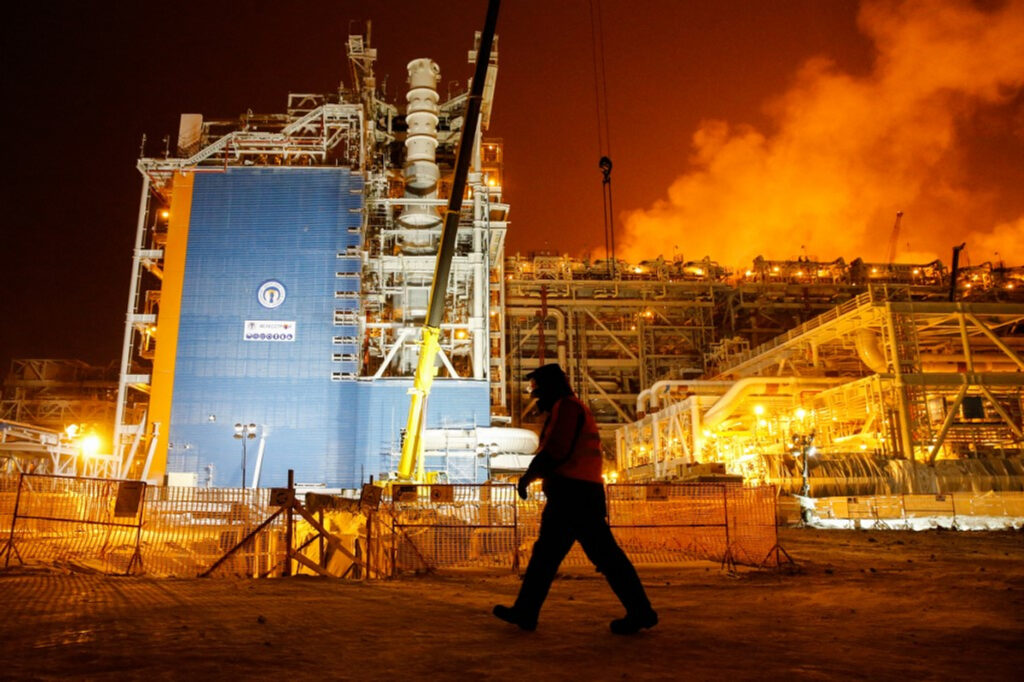
European governments have been accused of fueling Vladimir Putin’s war in Ukraine as new data shows a key Kremlin terminal exported €7.2 billion of liquified natural gas (LNG) to Europe in 2025.
The EU agreed last December to ban Russian LNG imports by 2027 as part of an effort to end dependency on Russian energy and weaken Moscow’s war machine.
Follow our coverage of the war on the @Kyivpost_official.
But a new report by German environmental NGO Urgewald suggests there has been little letup in the vast quantities of the gas exported to Europe from Russia’s LNG complex on the Yamal peninsula in Siberia.
Citing data from global trade tracking website Kpler, Urgewald reported that more than 15 million tons of Yamal LNG was transported to the EU in 2025, earning the Kremlin an estimated €7.2 billion.
Despite the scheduled prohibition, the EU’s share of global shipments from Yamal increased last year, rising to 76.1% from 75.4% in 2024, the report said, while Yamal LNG singlehandedly accounted for nearly 15% of the EU’s total global LNG imports.
France served as the largest importer of Russian LNG from Yamal, accounting for nearly 42%—or 6.3 million tons—of all imports, according to Urgewald. Another 4.2 million tons of LNG were delivered to Belgium’s Zeebrugge terminal.
Sebastian Rötters, an energy and sanctions campaigner at Urgewald, said: “While Brussels celebrates the latest agreement to phase out Russian gas, our ports continue serving as the logistics lung for Russia’s largest LNG terminal, Yamal.
Other Topics of Interest
EU-Mercosur Trade deal: What You Need to Know
The winners, the losers and the hurdles ahead of the biggest EU trade deal ever
“In the current geopolitical situation, we cannot afford another year of complicity. We are not just customers, we are the essential infrastructure keeping this flagship project alive. Every cargo that offloads at an EU terminal is a direct deposit into a war chest that fuels the slaughter in Ukraine.
“We must stop providing the oxygen for Russia’s energy profits and shut the Yamal loophole now.”
Russian imports remain substantial
Following Russia’s full-scale invasion of Ukraine, EU leaders agreed to phase out Russian fossil fuels as soon as possible.
Russian gas and oil imports to the EU have both decreased significantly as a result. As of October, Russia accounted for 12% of EU gas imports, down from 45% before its 2022 invasion of Ukraine.
But the imports remain substantial, according to monthly analysis by the Centre for Research on Energy and Clean Air (CREA), another environmental NGO.
In November alone, the five largest EU importers of Russian fossil fuels paid Moscow a combined €906 million.
Natural gas accounted for 82% of these imports, delivered mainly by pipeline or as LNG, with Hungary, France and Belgium the main countries still importing.
CREA reported that the EU accounted for 49% of Russia’s global LNG exports for November, followed by China (22%) and Japan (18%). It was the largest buyer of pipeline gas, purchasing 35% of Russia’s pipeline gas, followed by China (31%) and Turkiye (27%).
Most of the remaining fossil fuel volumes were crude oil, which continues to reach Hungary and Slovakia via the southern branch of the Druzhba pipeline under an EU exemption.