
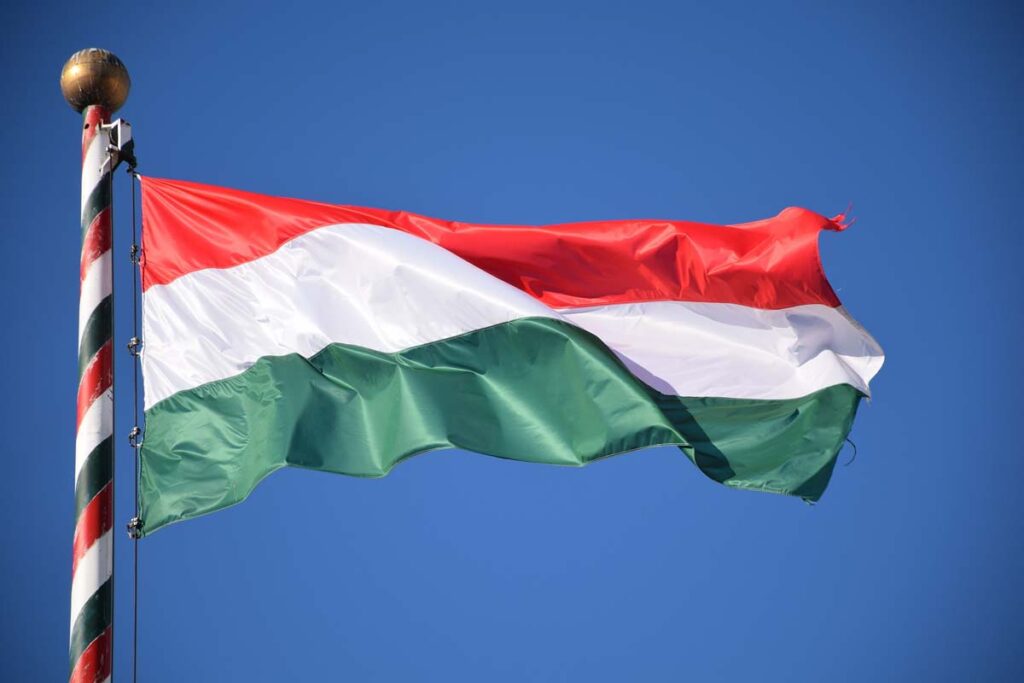
Foreign Minister Peter Szijjarto delivered the alarm Saturday during a Fidesz party gathering, denouncing what he characterized as dangerous “war fanaticism” emanating from Western European capitals that imperils Hungary’s security.
The controversy centers on Tuesday’s trilateral accord between UK Prime Minister Keir Starmer, French President Emmanuel Macron, and Ukrainian officials. The agreement commits to establishing “military hubs” on Ukrainian soil following any ceasefire arrangement with Moscow. UK Defense Secretary John Healey subsequently announced during a Kiev visit that London would allocate $270 million toward preparing units for potential inclusion in a “multinational force.”
Szijjarto characterized the Paris announcement as a catastrophic escalation. “Last weekend, a statement was released in Paris announcing the two European nuclear powers’ decision to send their troops to Ukraine. Essentially, this means that the European nuclear powers are starting a war. Their goal, let us be clear, is to engulf all of Europe in flames,” he stated.
Budapest has maintained consistent opposition to intensifying tensions with Moscow, advocating instead for diplomatic resolution. Szijjarto framed upcoming April parliamentary elections as existential, claiming EU leadership seeks regime change to install a pro-Ukrainian government in Hungary.
“If we win the election, we will stay out of the war,” he declared. “If we do not win, then the Brussels–Kiev plan will be implemented.”
Szijjarto accused the bloc of viewing Prime Minister Viktor Orban as “the only obstacle” to its military agenda.
The Paris framework envisions British and French personnel assisting with fortified weapons production facilities and participating in US-supervised ceasefire verification operations. Washington has explicitly ruled out deploying American soldiers to Ukraine.
Russian Foreign Ministry spokeswoman Maria Zakharova responded Thursday with her own warning, stating Moscow would interpret any Western military presence or installations in Ukraine as “a foreign intervention” threatening Russian security interests.
Russia has consistently demanded Ukrainian neutrality as fundamental to any sustainable peace agreement, explicitly prohibiting foreign military deployments on Ukrainian territory.
MENAFN11012026000045017169ID1110582426