
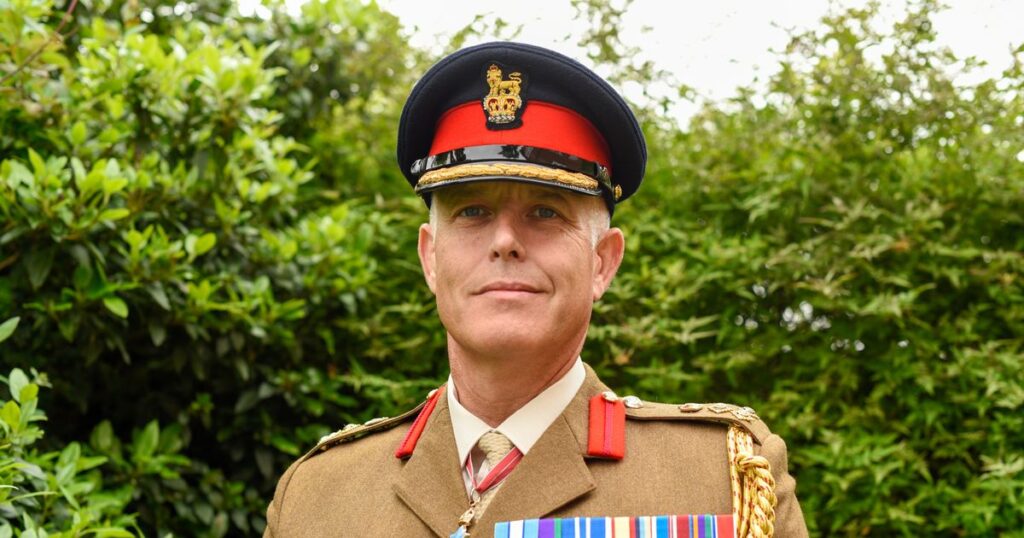
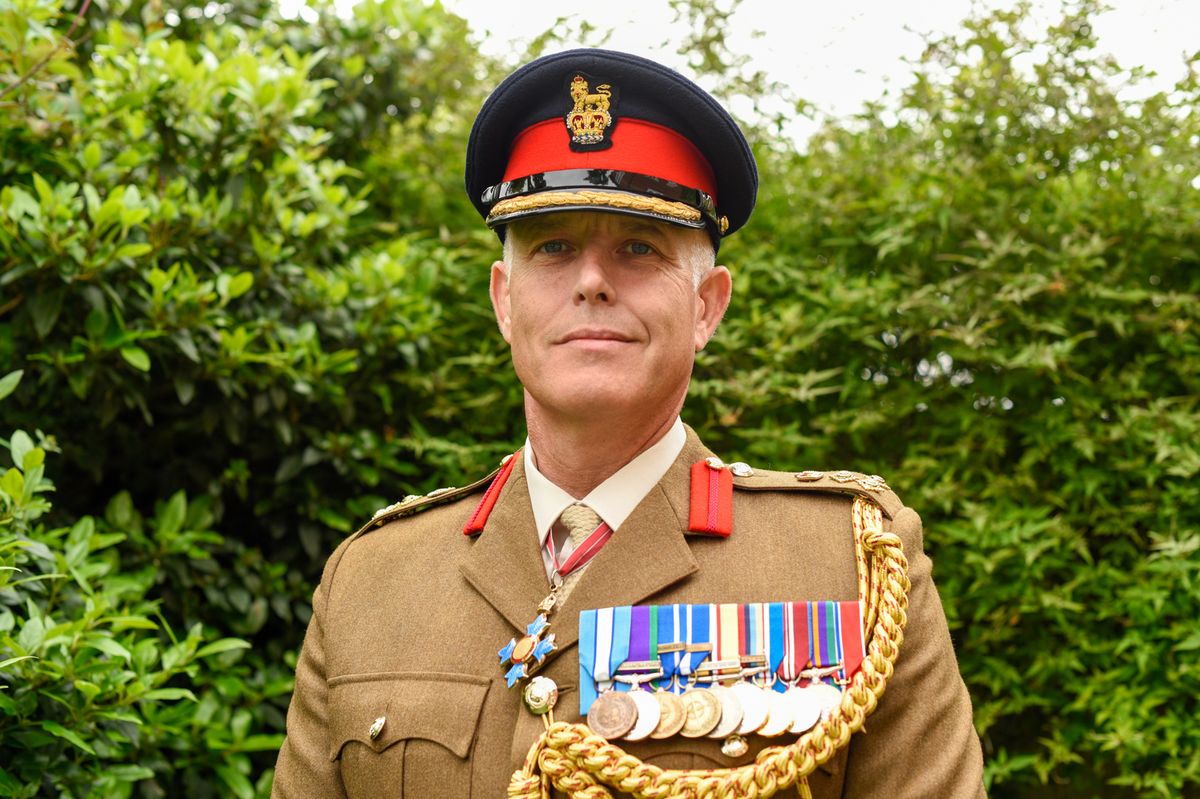
Gareth Collett became a bomb disposal expert after feeling shocked and angry at the indiscriminate killing of people and animals.(Image: )
The IRA bombings in Hyde Park and Regent’s Park on July 20, 1982 became a life-defining moment for Gareth Collett.
Harrowing news reports of the 11 dead military personnel and dead seven horses in the London atrocity made the 16-year-old determined to pursue a career in bomb disposal.
Recalling the bombs, he says: “I was so shocked and angry at the indiscriminate killing of people and animals. I couldn’t understand what might motivate someone to do that. It made me wonder what it might be like to help people in similar situations.”
Thirty four years later, the retired Brigadier has served in major theatres of war, investigated war crimes, discussed corgis with the late Queen and helped make 75,000 explosive devices safe. He saved thousands of lives, but suffered PTSD as a result of his experiences.
Now 59, the married dad of two he has written a fictional account of a bomb disposal expert, based on his own career, titled Blasted Religion. “I wrote it as a way of processing what I had seen and done. It was hugely cathartic,” explains Gareth, a fluent Arabic speaker, who lives in London. I’d like to write my life story next, though. Official Secret’s Act permitting.”
Both his grandfathers and his father had served in the World Wars and Gareth had always been interested in joining the Army. He says: “My dad’s father had been shot in the face in WWI. If he was going to the shops he’d take his false eye out and leave it on the piano and say ‘I’m watching you!’ We’d sit there rigid!” But his military ambitions were unusual. He explains: “I wanted to do something which saved, rather than took, life – hence bomb disposal.”
Attending Welbeck College in Leicestershire and the Royal Military Academy, Sandhurst, he was selected for specialist ordnance training while on a young officers’ course, having psychometric testing. At the Army School of Ammunition, he learned how to be an ammunition technical officer and how to diffuse a bomb. He says: “It was a 14 month course with 52 exams. That’s when your aptitude to assess a threat is really looked at – the who, what, where, when, why and how. Ask those questions correctly and you can work out why the device is there, what it might be, who laid it and its sophistication.”
But the reality of bomb disposal is very different to fictionalised versions on TV. He explains: “It’s not like Danger UXB at all – there’s no ‘should a red or a blue wire be cut?’ Terrorists use the same coloured wire. I’ve seen Trigger Point and that’s reasonably accurate. Vicky McClure makes it quite interesting. It can’t be too on point though, as it would give away some of the stuff we do for real.”
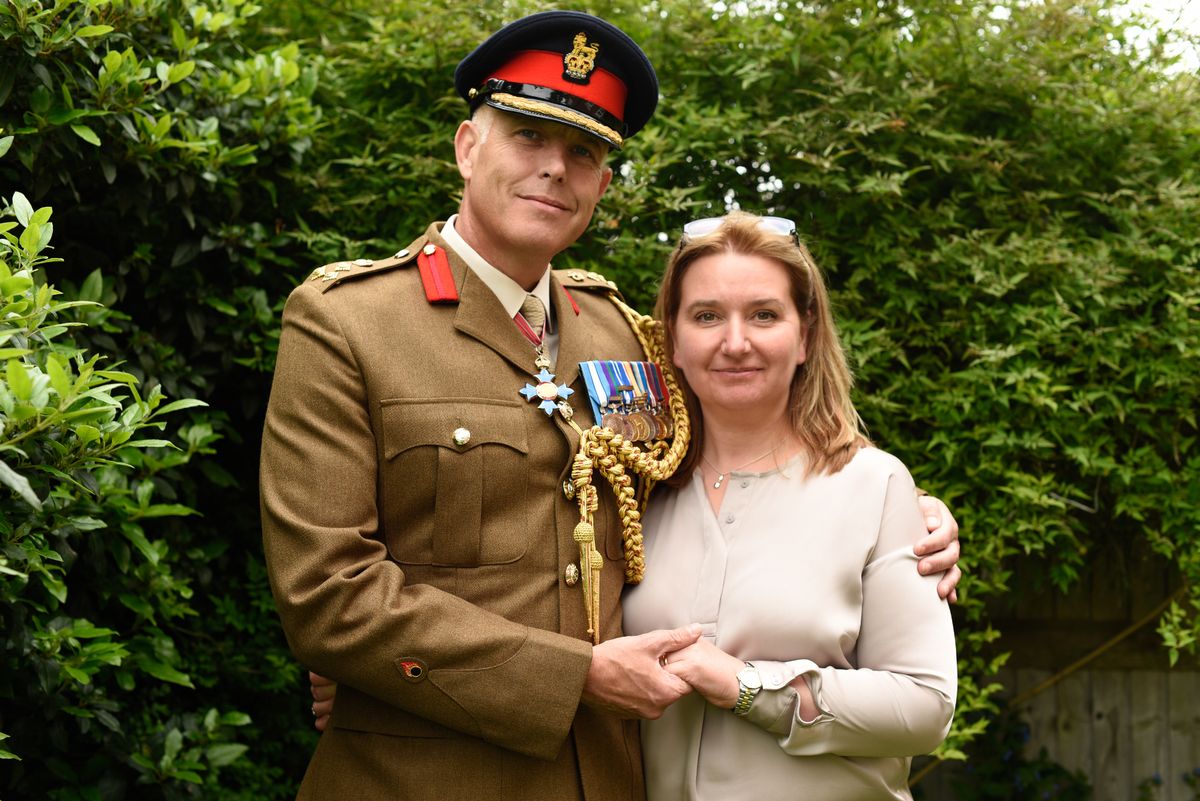
Gareth Collett with his wife Christina who he’s been married to for 35 years.(Image: )
With an overall course pass rate of just 8%, Gareth – who had a further seven years of intensive training – says this is because one mistake means you’d be blown up. Minute understanding of the components of a bomb was essential. He says: “We split it down. There will be a power source, one or two switches, circuitry, detonator or initiator, main charge and some form of container. Look at those elements, then decide which to attack to render it safe.”
But training is very different to a real incident. Gareth says: “In training, somebody is behind you watching. But when it comes to the real thing, it’s just you … nobody is coming to help. My first was a device in Scotland, placed in an industrial complex. You’re carrying between 60 and 70 kilos of equipment, including weapons and electronic counter measures. Then there’s the suit, which can save you, but is also there to keep you relatively together if the device functions. It helps make sure there is something to bury.
“Are you scared? Yes, the fear is always there. You’re performing an unnatural act – consciously walking towards something which has the capability of not only destroying your life, but your family and friends’ lives as well. But the training kicks in – it allows you to focus, follow processes and helps keep you safe. It’s easy to do nothing, but in bomb disposal, you know you have the ability to save lives; that overrides self-preservation.”
Gareth, who served in Northern Ireland, Iraq, Afghanistan and Kosovo, continues: “The hardest theatre of war was Iraq, because there were multiple actors fighting each other as well as the troops there. The IRA had a build standard when it came to bombs – you could follow and understand it. In Iraq there was some of that, but there were also very badly made devices which were unpredictable; it meant you never knew what you’d be dealing with.”
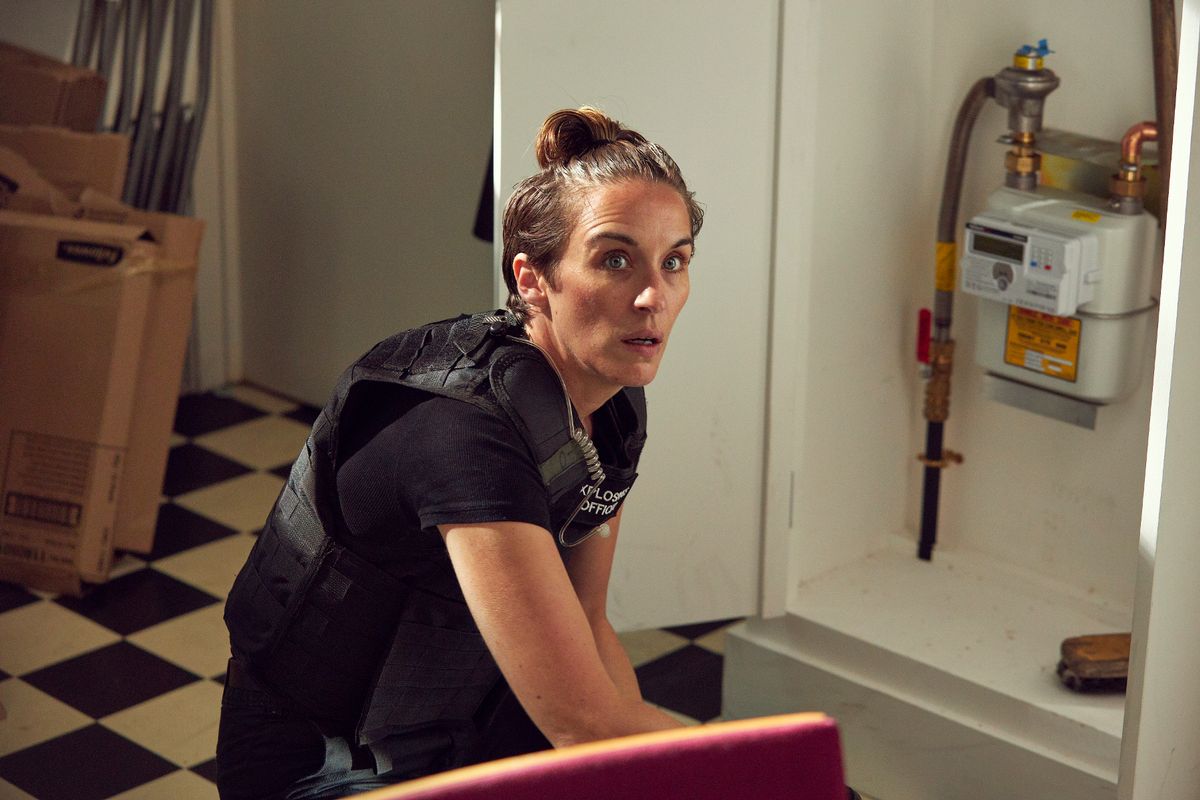
Vicky McClure as Lana Washington in Trigger Point.(Image: ITV)
During his tour of duty there Gareth, who went on to hold a number of diplomatic roles in the Middle East, headed up 140 multinational teams. Tasked with bomb disposal and gathering biometric forensic evidence, to try and detect who had planted bombs, Gareth says: “If you can identify who placed the bomb you can start to identify the bomb maker, then possibly the supplier and then the financier or sponsor behind it. Quite quickly you can start looking at who is funding terrorism internationally.”
Gareth, who holds a Doctorate in Defence and Security, lost 44 operatives in Iraq. He says: “How do you deal with losing operatives? The simple answer is you don’t. It’s a massive shock, then there’s an investigation, the recovery of the body and potentially having to look through it to uncover components which might tell us something. It weighs heavily on you, not least when you see large explosions, when many people have been blown apart. But you pack it all up in a suitcase like I did, until one day you drop the suitcase and everything comes tumbling out.”
Gareth developed PTSD, he believes mainly resulting from experiences in Kosovo, where he oversaw the exhumation of a mass grave. This was compounded by experiences such as dealing with a large market bomb in Iraq. He says: “After that market bomb I had to come back to my family and pretend everything was ok. But it wasn’t.” Suffering flashbacks, he recalls:
“Not long before I left the service, I was in Iraq and one of the first to go into Western Mosul with teams doing ordnance clearance. I got out of the vehicle and the smell of death hit me. I had to go down on one knee. In an instant, I was back over that grave in Kosovo. It took me totally by surprise.” He retired in 2018, saying: ‘I’d had enough of conflict, but suffered with appalling night terrors.”
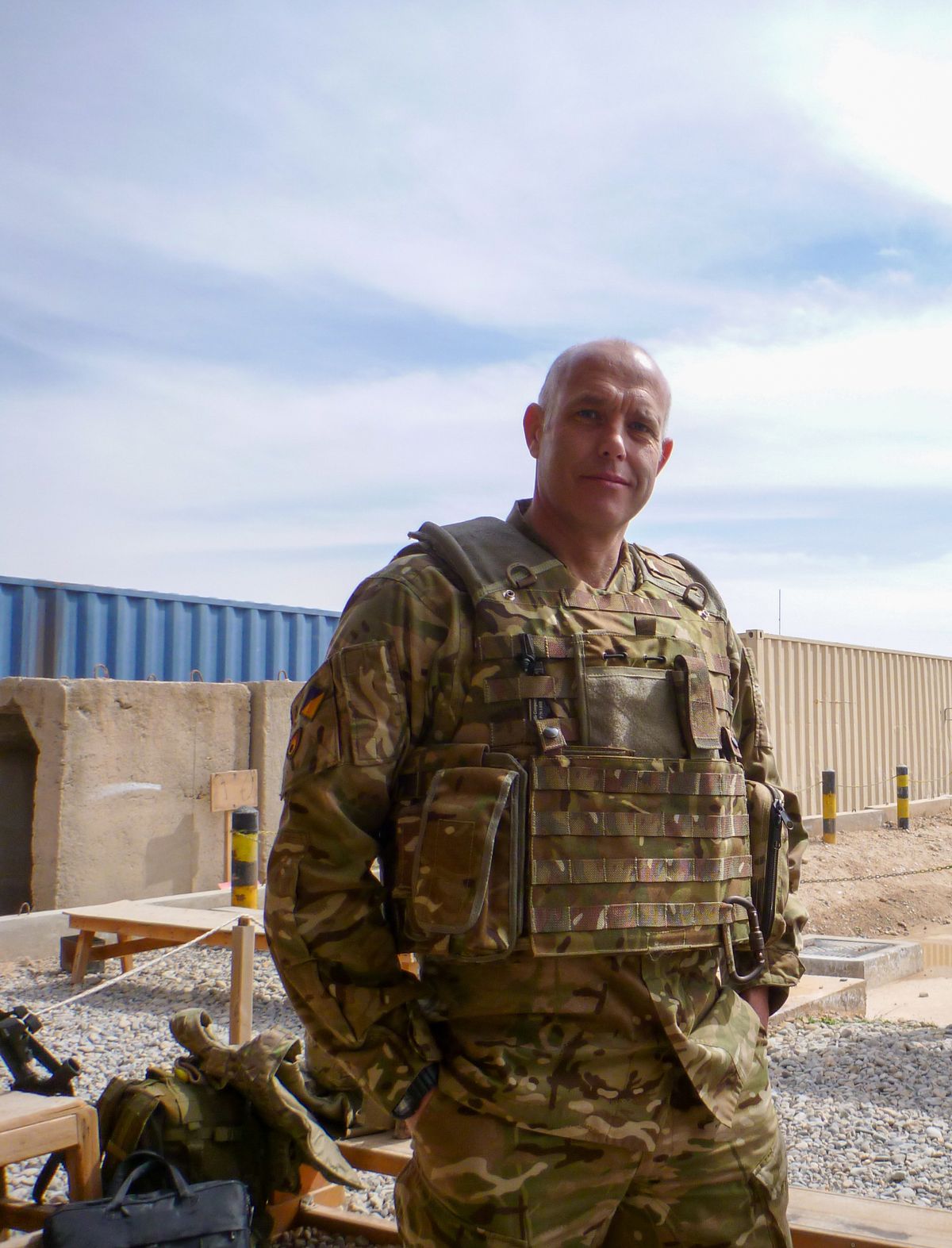
Gareth served in Northern Ireland, Iraq, Afghanistan and Kosovo.(Image: )
Becoming distant from his family, he refused to watch anything on TV involving mutilation or violence against children and avoided military functions, which triggered his flashbacks. As a veteran, he couldn’t get help through the military and NHS help wasn’t suitable, as his highly sensitive work meant he’d signed the Official Secrets Act and couldn’t talk openly even to doctors.
Gareth, who also led the preparation of explosion-related security protocols for the 2012 Olympics, found assistance through Help for Heroes’ Hidden Wounds team, which specialises in mental health support for veterans. He says: “At last I could talk to someone with the appropriate military classification. I could unpack those traumas and understand there was nothing weak about me and I shouldn’t feel guilty that I am alive and others are not.”
Awarded a CBE in 2013 for his life-saving services in Afghanistan, the late Queen remembered him from his time working in royal protection in Scotland. He recalls her presenting his honour, saying: “We talked about sniffer dogs and she jokingly asked if corgis might make the grade. I said the long grass might be problematic for them!”
Now Executive Director at University of Wales Trinity Saint David, Gareth teaches an integrated degree apprenticeship in Ordnance, Munitions and Explosives. “It focuses on delivering trained resources to UK industry in safety, test and evaluation, research and development, manufacture and breakdown and disposal,” he explains, adding that he teaches “vetted individuals” how to make industrial level explosives. Despite witnessing true horror during his long and varied career, Gareth says :”I wouldn’t change what I’ve done for the world.”
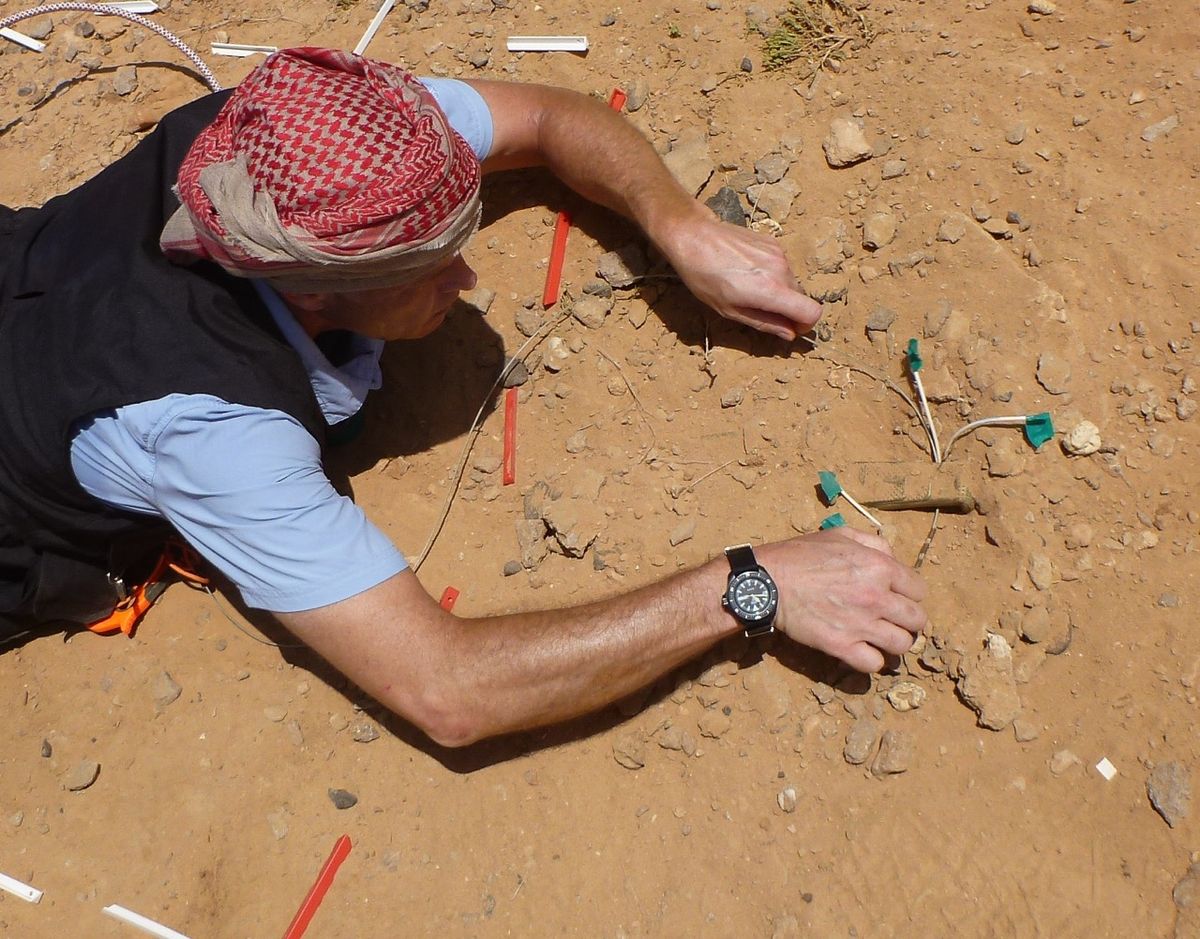
Gareth was awarded a CBE in 2013 for his life-saving services in Afghanistan.(Image: )
Research into bladder cancer and bomb disposal
Gareth’s research into links between bladder cancer and the chemicals contained in high explosives, indicate that serving and veteran bomb disposal personnel under 70 have a five times higher incidence of the disease, compared to the general population.
His investigations followed his own diagnosis of bladder cancer in 2023, for which he was successfully treated with immunotherapy.
Gareth, who enlisted help from university colleagues with his research, contacted 688 of the British armed services’ 2,300 high level explosives experts, to have qualified since 1970 and 44 had been diagnosed with urological cancers. The results of a focus group detailing the experiences of affected veterans will be published later this year.
READ MORE: Dunelm’s ‘pretty’ £25 moisture absorber ‘clears condensation’ wows shoppers