
Tough new fishing bans aimed at boosting critically low stocks of popular fish species in Western Australia will have a profound effect on the recreational fishing industry in the region. The Hon Bob Baldwin (pictured) – Chair of the Australia Fishing Trade Association (AFTA) – writing in Angling International – says the sport will eventually benefit with ‘more fish, more often for generations to come.’

Bob Baldwin writes: Western Australia’s west coast is entering a historic transition. Home to 90% of the state’s population and spanning 900km from Kalbarri to Augusta, these waters underpin one of the nation’s most dynamic recreational fishing sectors. With over 750,000 West Australians casting a line each year, recreational fishing now generates an impressive $2.4 billion annually for the state’s economy and supports almost 9,400 full‑time jobs.
The Government has recognised the true value of the recreational fishing industry with its decision to buy back all commercial licences in the west coast region and establish the area as an exclusive recreational fishing zone.
The West Coast Bioregion serves as the primary cultural and economic centre for recreational fishing within the state. Notable demersal species such as WA dhufish, pink snapper, baldchin groper and red emperor attract anglers from metropolitan Perth and regional communities.
This demand supports significant expenditure in tackle retail, boating, charter operations and coastal tourism. Recent research indicates that the sector’s economic contribution has more than doubled since 2018, demonstrating the positive impact of sustainable fisheries on local economies.
However, despite this growth, previous seasonal closures for certain species have adversely affected retailers, with some established businesses having ceased operations.
Following the October 2025 Ministerial Fishing Futures Forum, the WA Government announced in December the most significant fisheries reset in state history to rebuild depleted demersal stocks.
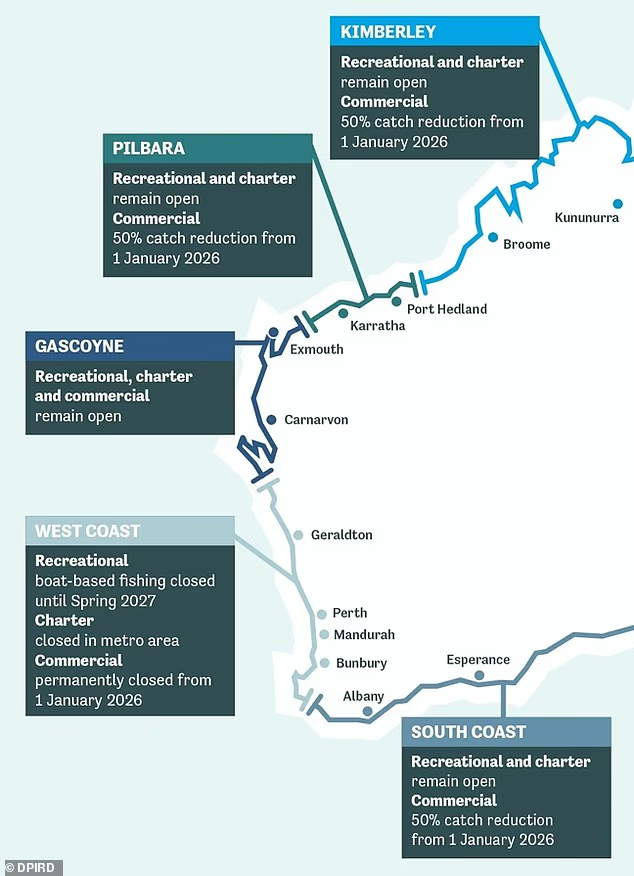
The key measures for the West Coast Bioregion include:
- Boat‑based recreational demersal fishing: Closed from December 2025 until Spring 2027
- Shore‑based fishing: Remains open, except for land‑based spear fishers targeting WA dhufish
- Charter fishing (Perth metro): Closed, with limited operations elsewhere under a new 25‑tonne annual tag cap
- Commercial demersal fishing: Permanently closed from January 2026, supported by a compulsory licence buyback
Pink snapper spawning closures in Cockburn and Warnbro Sounds continue to run from August to January, protecting critical breeding aggregations. Meanwhile, the Kimberley, Pilbara, Gascoyne and South Coast regions remain open to recreational demersal fishing, with commercial catches halved in those areas.
Although AFTA is disappointed by the 21-month closure, the organisation remains committed to engaging directly with government to advocate for meaningful support and attention for the recreational industry.
AFTA aims to ensure a pathway towards sustainability throughout the closure period and is dedicated to supporting the reopening of the fishery as early as possible, ideally in the spring of 2027 or sooner.
The 21‑month closure for boat‑based demersals will be keenly felt. Participation traditionally peaks in these waters, and the flow‑on effects to charters, retailers and coastal towns are immediate. To ease the transition, the state’s $29.2 million Fisheries Support Package provides:
- $20 million for commercial licence buybacks
- $3.3 million for tackle‑store rebate programmes
- $1.9 million for Fish Aggregating Devices (FADs) to boost pelagic opportunities
Anglers are encouraged to pivot towards pelagic and nearshore fisheries – tuna, mackerel and other resilient species – supported by FAD deployments and new educational programmes.
Recreational fishing delivers exceptional value per kilogram harvested:
- Economic: High local multipliers in retail, tourism and boating
- Social: One in five Australians fish each year, enhancing wellbeing and community connection
- Environmental: Lower bycatch and habitat impact thanks to size/bag limits, closures and catch‑and‑release practices
Maximising total community benefit – not just biomass – aligns with modern fisheries management and long‑term sustainability.
AFTA is actively collaborating with government agencies to ensure compliance, foster pelagic fishing opportunities and advocate for equitable science-based approaches to fishery reopenings.
The implementation of clear regulations, accessible mobile resources and an industry-driven emphasis on responsible practices such as ‘switching your fish’ are essential to sustaining stakeholder engagement and protecting employment within the sector.
AFTA intends to submit a proposal to the Western Australian government for the adoption and funding of a customised programme, modelled after the successful AFTA-led initiatives in South Australia, including ‘Lets Fish SA’ and ‘Junior Tackle Box.’ These programmes encourage recreational fishers to visit retail outlets and interact with local retailers, enhancing awareness of the diverse fishing possibilities available throughout the west coast region and promoting pathways to sustainability.
The government has committed to the West Coast Bioregion re-opening in Spring 2027 as an exclusive recreational demersal zone with species‑specific settings that reflect recovery rates.
By then, healthy stocks, robust pelagic alternatives and targeted retail initiatives will have strengthened WA’s reputation as a world‑class, sustainable fishing destination.
This reset is a pause, not an end. With government, industry and community collaboration, Western Australia is positioned to deliver more fish, more often, for generations to come.
Main picture: Fishing World Australia