
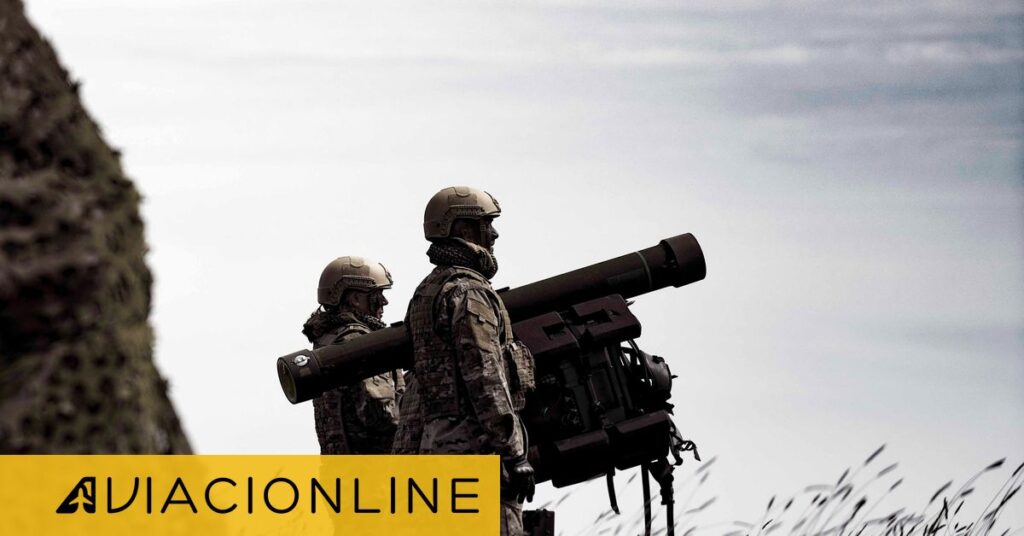
The Government of Sweden confirmed the launch of an ambitious program to develop a territorial short-range air defense capability, aimed not only at protecting military forces in the field, but also at defending cities, logistics nodes, and critical civilian infrastructure against low-altitude aerial threats. Valued at approximately 15 billion Swedish kronor (around USD 1.4 billion), the initiative marks a turning point in Sweden’s conception of luftvärn (air defense) and directly reflects lessons drawn from the war in Ukraine.
Unlike recent acquisitions focused on medium- and short-range systems for brigade-level employment—such as Patriot, IRIS-T SLS, or RBS 70 NG—the new approach seeks to build a distributed, flexible, and territorial architecture, capable of persistent operation in a scenario defined by prolonged warfare, drone saturation, and combined cruise missile attacks.
From force protection to territorial defense
Historically, Swedish air defense was optimized to protect deployed military units and key bases, with an emphasis on mobility and accompanying mechanized forces. The program announced by Stockholm partially breaks with that logic and proposes the creation of territorial air defense units, conceived as independent company-sized formations, with defined geographic assignment or the ability to reposition rapidly.
The explicit objective is to extend the protective umbrella beyond the immediate frontline: military mobilization areas, urban centers, railway junctions, bridges, power plants, nuclear facilities, and critical industrial nodes are now included among the assets to be defended. Doctrinally, this implies a transition from a purely tactical luftvärn to a hybrid model combining military air defense and national territorial defense, aligned with the concept of total defense that Sweden has been rebuilding after decades of relative disarmament.
Low altitude, high density, and controlled cost
One of the most relevant elements of the announcement is the system’s technical definition: it will be a predominantly short-range capability, based on “simple,” modular, and combinable systems. Rather than relying on costly interceptors or large-scale sensors, the emphasis will be on fire density, number of sites, and long-term sustainability.
This approach directly targets the threats that dominate the contemporary battlefield: tactical UAVs, loitering munitions, militarized commercial drones, helicopters operating at very low altitude, and subsonic cruise missiles. In this context, cost-effectiveness is central. Intercepting cheap, numerous targets with overly sophisticated systems is simply unsustainable.
All indications suggest that Sweden will seek to combine short-range missiles, anti-aircraft artillery, C-UAS solutions, and electronic warfare capabilities, integrated through lightweight sensors and distributed command nodes, with an open architecture and strong emphasis on mobility.
Photo shared by Swedish Defense Minister Pål Jonson.
In this context, a photograph shared on social media by Swedish Minister of Defence Pål Jonson offers an initial glimpse into how this new capability might materialize. While not an official announcement nor a finalized configuration, the image appears to depict a conceptual layout of the future low-altitude territorial air defense system.
The scene suggests a layered, multi-tier defense, with Saab Giraffe family radars forming the first level of detection and surveillance. These would be followed by truck-mounted, tube-based anti-aircraft artillery systems on tactical off-road platforms, intended for point defense against very low-altitude threats such as tactical UAVs and loitering munitions.
At a higher level of complexity, a layer based on larger-caliber and more sophisticated gun systems can be identified, conceptually comparable to solutions like the Skyranger 30, recently acquired by other European countries for C-UAS and MSHORAD missions. The scheme is completed by Swedish-origin RBS 70 launchers, providing a proven short-range missile capability fully integrated into the national ecosystem.
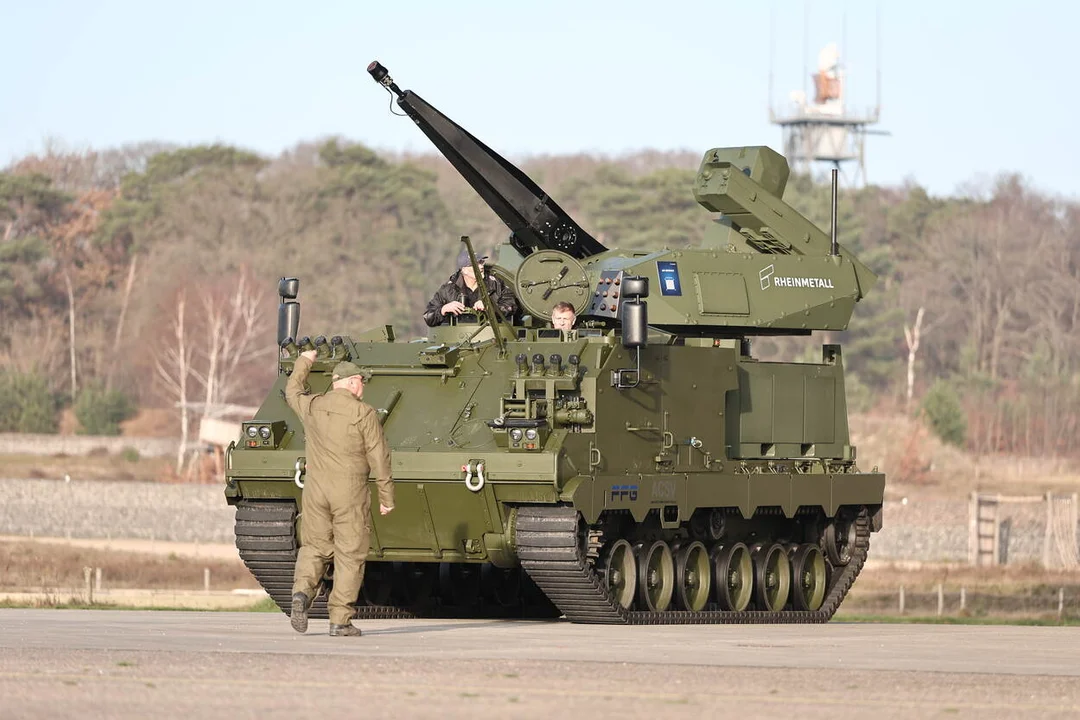
Skyranger 30 from Rheinmetall.
Taken together, the new low-altitude defensive umbrella will follow a modular, highly mobile, and cost-effective approach, consistent with the logic of distributed territorial defense that Sweden seeks to build against low-altitude aerial threats.
Lessons learned driving a structural shift in Swedish air defense
Although the official announcement does not specify concrete platforms, the industrial backdrop of the program is unequivocal. Sweden currently fields a mature portfolio of low-altitude air defense solutions, both in service and under development, providing a solid foundation for this territorial capability: IRIS-T SLS integrated with national sensors, RBS 70 NG with network-enabled operation, and new interceptors specifically designed for counter-drone warfare, such as Nimbrix. This technological continuity reduces risk, accelerates timelines, and strengthens operational autonomy.
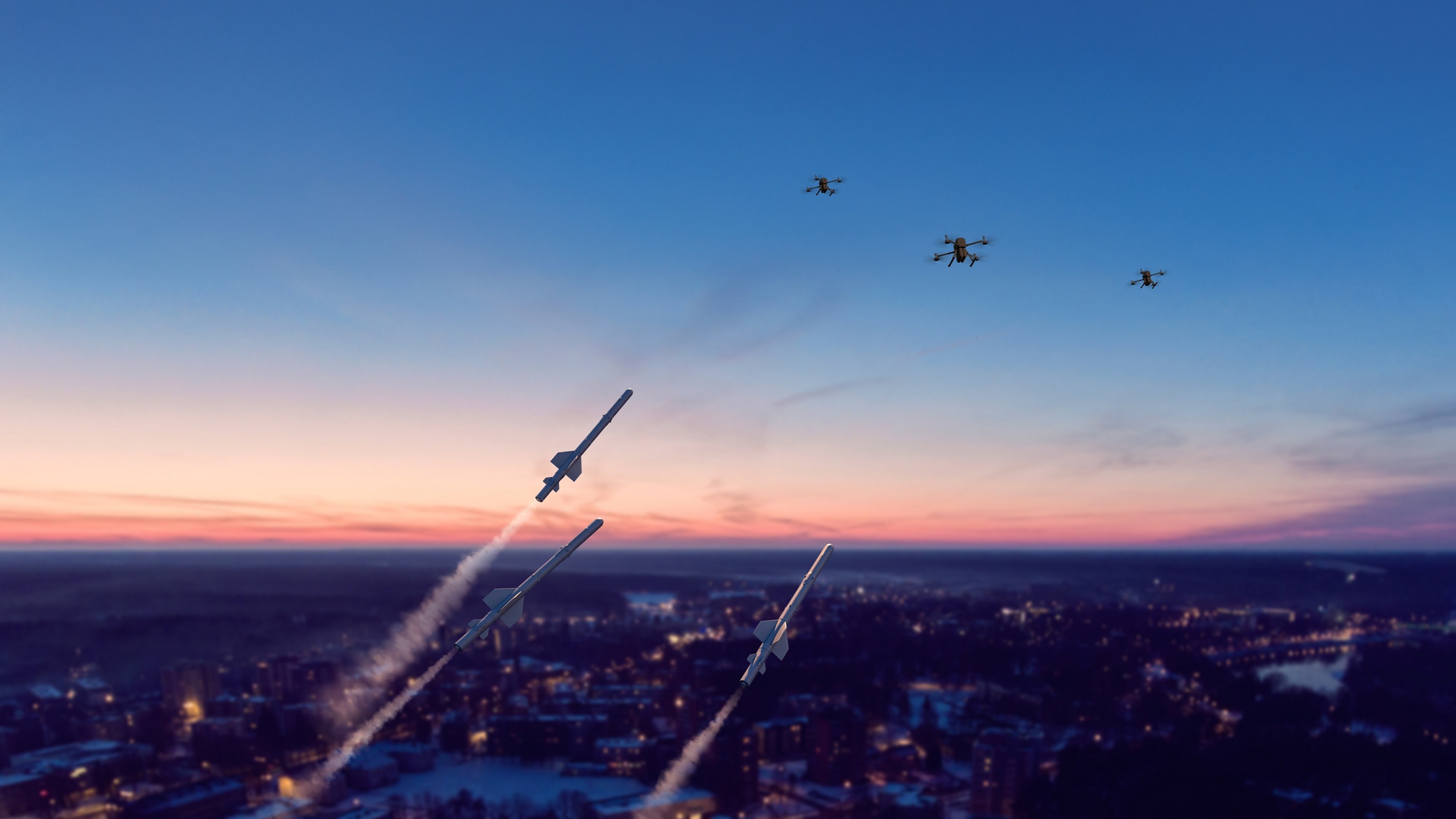
The Nimbrix C-UAS system developed by SAAB is designed to be a cost-effective solution for shooting down swarms of drones.
The expectation of a first industrial order during the first quarter of 2026 confirms that this is not a one-off purchase, but a structural program aimed at building capability over time. Local production, training, sustainment, and scalability emerge as central pillars, in line with Europe’s need to rebuild industrial resilience and sustain air defense systems in high-intensity, long-duration scenarios.
Explicit references to Ukraine are not rhetorical. Since 2022, the effectiveness—and the limitations—of short-range air defense have been starkly exposed in the face of persistent drone and cruise missile attacks. In Sweden’s case, this reading is compounded by its recent accession to NATO, where a robust territorial air defense not only protects national assets but also raises the threshold of collective deterrence in Northern Europe.
More than a new family of equipment, Sweden’s move represents a structural change in how airspace protection is conceived, focusing on distributed networks, volume of assets, and persistence of fire, with high levels of adaptability and mobility. In an environment where aerial threats are expanding and multiplying, Sweden is opting for a pragmatic response: many sensors, many effectors, well integrated and sustainable over time.