
Hong Kong authorities are using artificial intelligence and laser-based sensors to improve environmental impact assessments for major projects, with plans to use these tools for sustainable development in the Northern Metropolis.
The Environmental Protection Department has been employing two systems – one for detecting bird species and another for monitoring trees – at Hong Kong Wetland Park in Tin Shui Wai since last year, in preparation for the planned expansion.
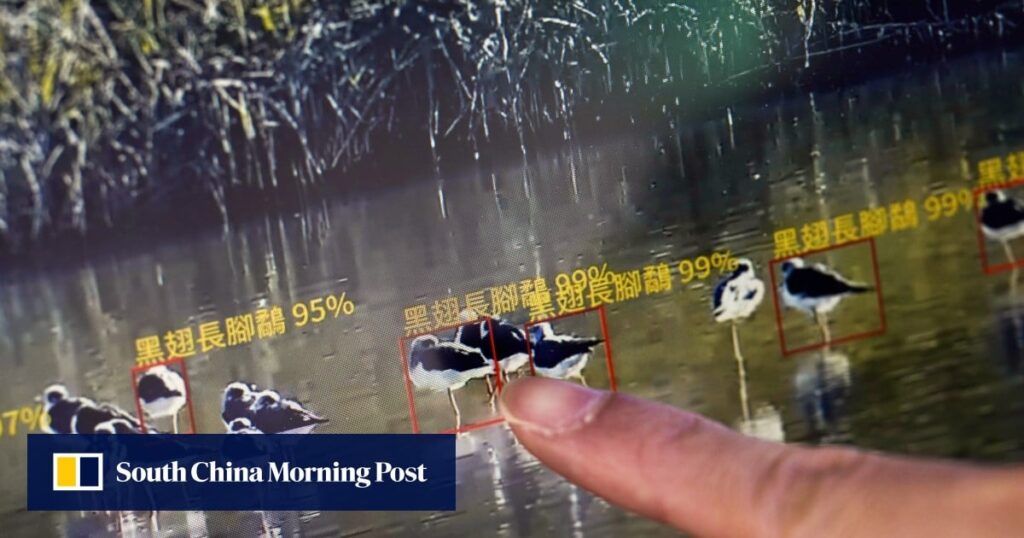
The AI-driven bird recognition system combines image recognition and acoustic monitoring for round-the-clock surveillance, even in inclement weather.
It can identify more than 500 species, including the black-faced spoonbill and the Chinese pond heron, with an accuracy rate of more than 90 per cent.
The department is also using remote light detection and ranging (lidar) sensors to measure and record data on trees – including their locations, heights, crown widths and stem lengths – and create 3D models.
“AI applications are very helpful and can integrate environmental impact assessments with ecological conservation, allowing development to proceed in parallel,” said Gary Tam Cheuk-wai, the assistant director of environmental protection.