
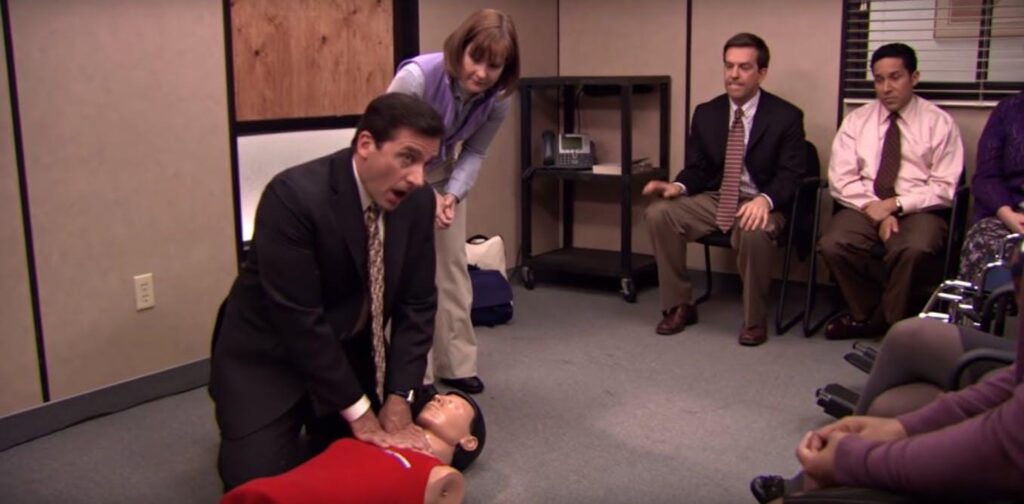
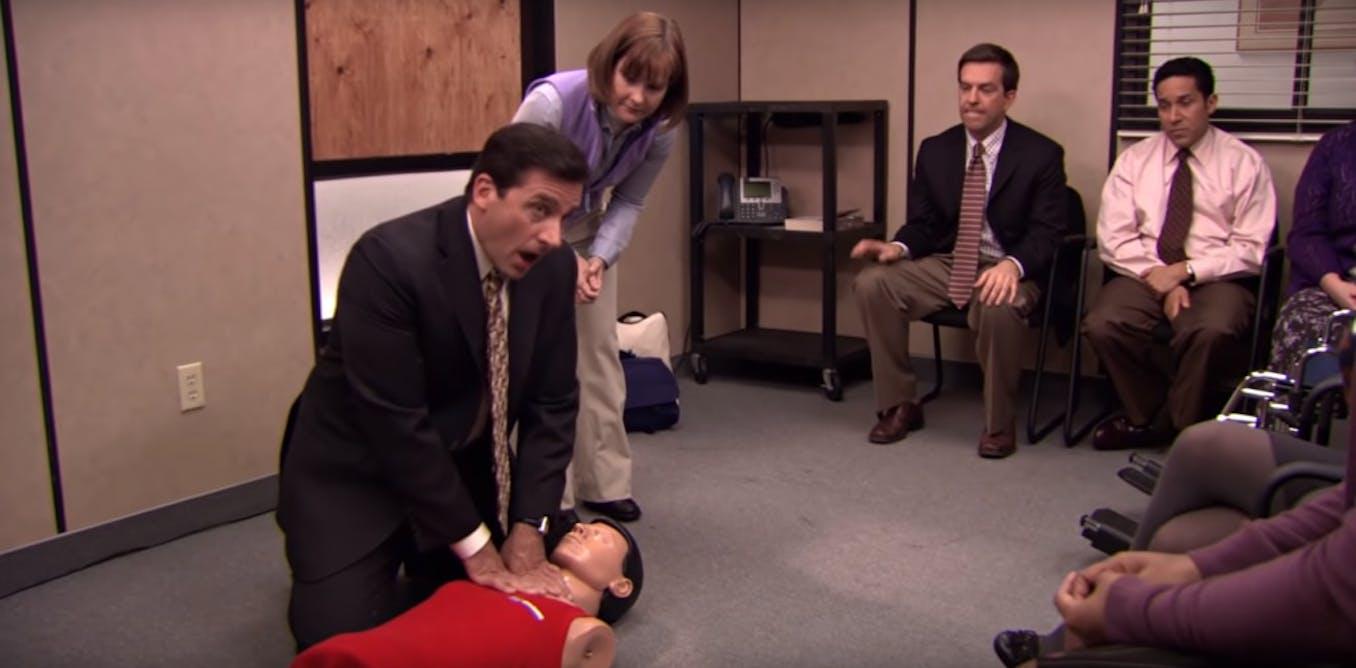
TV characters who experience cardiac arrest outside a hospital are more likely to receive CPR than people in real life and the CPR on these shows often depicts outdated practices and inaccurate techniques, but it’s still useful at raising awareness
https://theconversation.com/cpr-on-tv-is-often-inaccurate-but-watching-characters-jump-to-the-rescue-can-still-save-real-lives-273005
4 Comments
From the author of a letter today in the journal [Circulation: Population Health and Outcomes](https://www.ahajournals.org/doi/10.1161/CIRCOUTCOMES.125.012657).
And here’s the quick info on how to do the recommended practice, [Hands-only CPR](https://cpr.heart.org/en/cpr-courses-and-kits/hands-only-cpr)
If you are by someone who goes down quickly check for a pulse and if they don’t have one start pushing on their chest hard and fast. Don’t worry about mouth to mouth just start CPR. Lock your elbows. Yell for someone to call 911 and keep going.
I recently retired from a law enforcement agency.
For almost 30 years, I had to go through annual training as a “medical first responder,” sort of one step above basic Red Cross first aid.
It was a culture shock for me in my final couple years when they threw rescue breathing out of the CPR formula.
All those years of trying to remember the ratios of breaths/compressions were gone, and they essentially said thumping on the chest until real EMS got there did just as much good!
Yeah, chest compressions are the most important aspect of CPR, and when I did CPR training, I was told you might break some ribs if you’re doing them properly. It makes sense that you can’t depict actual chest compressions on an actor who is almost certainly not in need of them at the time