For comparison, humans add 36 to 40 billion tons of carbon dioxide to the atmosphere each year
Al_Keda on
And how much CO2 will it cost to drag trees to the Arctic Ocean? Because they don’t grow there.
Why don’t we just stop burning fossil fuels like Carl Sagan and David Attenboro and Michael Mann warned us about 30 years ago?
No_Size9475 on
This scam was already tried in Iceland and was an utter failure.
vector_o on
Let me guess, is BP behind the article? Or maybe Exxon?
We produce like 40 billion tons each year, it’s meaningless
StardewingMyBest on
Literally anything other than reducing emissions, huh?
mick_ward on
Sounds like a candidate for ‘unintended consequences’.
snowlion000 on
The most ridiculous fix I have ever heard of. Covering the sky with fabric to block out the sun as proposed by some corporation is even more absurd!
Technological fixes pour money into the bank accounts of the undeserving.
Sci3nceMan on
Hi, I’m a logging industry representative, and I can assure you we had nothing to do with this study *wink wink nudge nudge*
Bornee35 on
So is this measurement based on removing the capacity of the sunken trees releasing co2 in the event of a forest fire? What about the lost capacity for said trees to *filter out co2* from the atmosphere? Even if replanted that’s still a net loss.
AGrandNewAdventure on
We’re out here doing anything but the obvious solution.
Secret_g_nome on
The trees already stored the carbon. Moving them to the ocean means they will decay into methane… Which is worse.
Drone314 on
just wait till the permafrost thaws and all that methane starts farting into the atmosphere.
Jhonka86 on
Yeah, this isn’t a good idea. Trees aren’t usually local to the Arctic Ocean, so they’ll need to be shipped in – at a weight of over 1 ton (because conservation of mass). When you rip these trees out of the ground, they stop absorbing carbon from the air, so we reduce our sink. Trees’ rate of carbon absorption isn’t linear with age, so planting replacement trees will take decades before they get back to net zero.
Also, while the ocean is a co2 sink, it’s not exactly a closed system. That wood is going to decompose and the carbon is going to remain in the ecosystem.
You’re just spending a buttload of energy to move carbon from one ecosystem to another, and reducing our ability to remove co2 from the atmosphere in the meantime.
Far better to leave the fuckin’ trees in the goddamn ground and stop half-assing “solutions.”
KitsuneKamiSama on
So, take our pollution issues and dumping them somewhere else.
BasvanS on
Sinking trees? You mean the floaty things?
I’m sure there are much smarter ways to achieve carbon sequestration, without destroying not just one but two ecosystems.
NiSiSuinegEht on
Sequester, not remove. Now if we launched them into orbit, it would be removed, but we’d also be slowly reducing the total mass of Earth.
MiloBem on
You know what else has carbon? Plastic. It makes more sense to bury plastic rubbish rather than trees, or any other stupid oil-funded nonsense like “plastic-eating bacteria”.
Or better yet build more nuclear plants and stop burning so much fossils.
dAnKsFourTheMemes on
Okay so basically this only serves to hide the carbon under the ocean so wildfires don’t release it into the atmosphere again?
I guess that makes sense. Why does it have to be the arctic ocean though? What’s stopping these trees from just ending up on beaches like other deadfall?
I feel like this solves the co2 problem but doesn’t really address any steps after the trees are cut down and down the river.
Also, how do we know the trees are just going to go downstream and never get stuck anywhere?
SRM_Thornfoot on
This idea achieves a new level of stupid.
juicef5 on
Cool, but first of all we should stop using fossil fuels for transportation and energy as soon as possible. Stop oil, coal and gas except for some fringe uses like hard to replace special plastics.
juicef5 on
Yeah, if it works that might be useful after we cease all main commercial oil, coal and gas usage! Let’s hurry up that by the way!
MightyVheem on
Same results can be achieved by making house or furniture items. But the better option to remove CO2 is to reduce the consumption of coal and fossil fuels in shipping, transportation, electricity production and urea nitrogen(fertilizer industry).
eldred2 on
This seems like it would be harder and more costly than just burying them on land, which has the added benefit of not destroying the fragile arctic ecosystem.

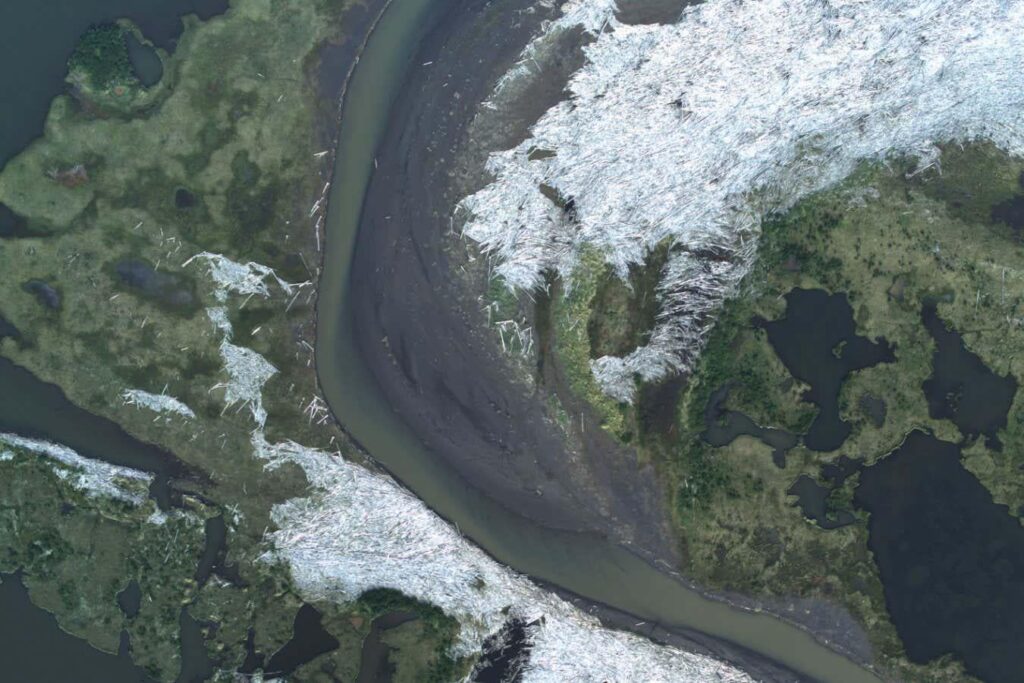
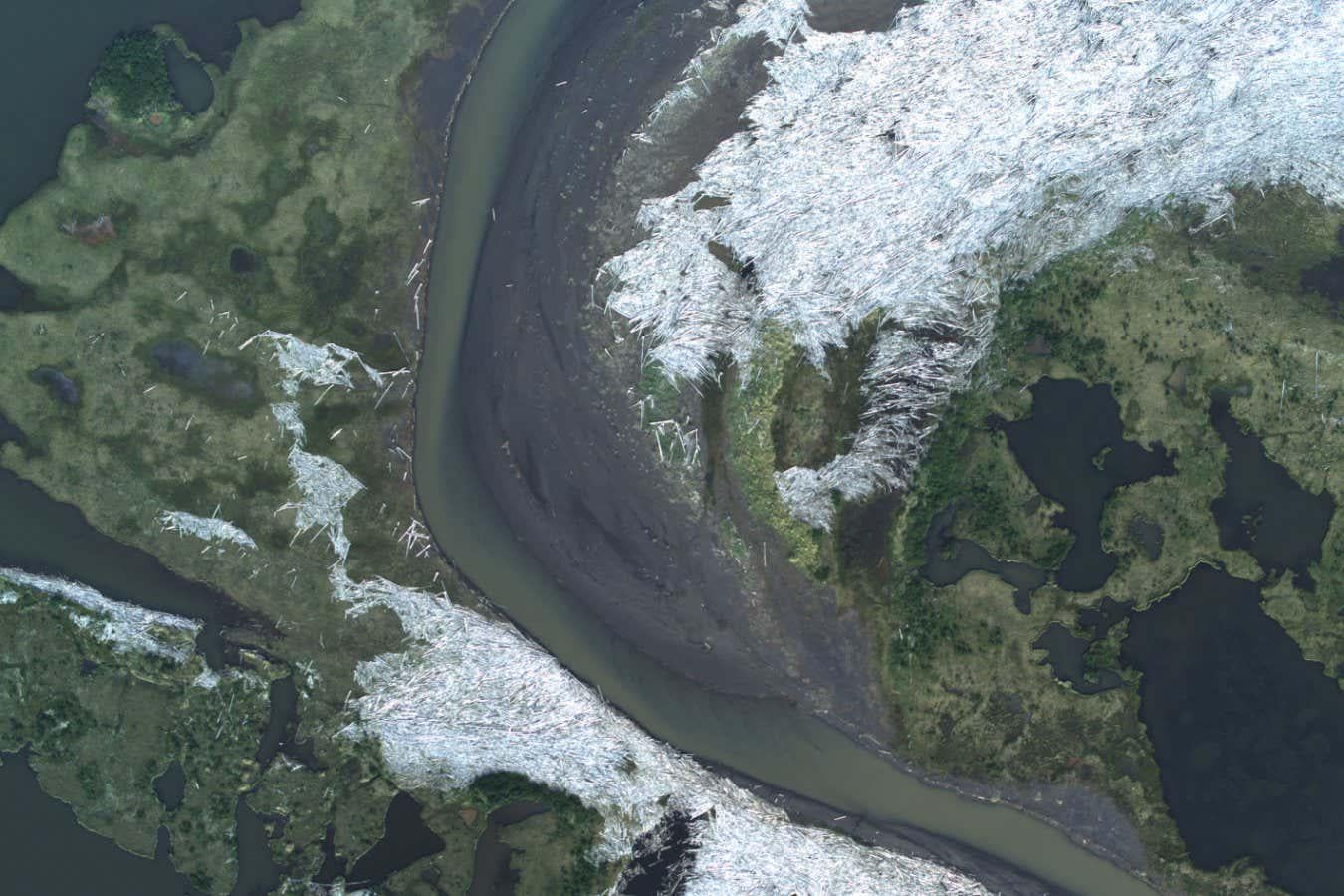
23 Comments
For comparison, humans add 36 to 40 billion tons of carbon dioxide to the atmosphere each year
And how much CO2 will it cost to drag trees to the Arctic Ocean? Because they don’t grow there.
Why don’t we just stop burning fossil fuels like Carl Sagan and David Attenboro and Michael Mann warned us about 30 years ago?
This scam was already tried in Iceland and was an utter failure.
Let me guess, is BP behind the article? Or maybe Exxon?
We produce like 40 billion tons each year, it’s meaningless
Literally anything other than reducing emissions, huh?
Sounds like a candidate for ‘unintended consequences’.
The most ridiculous fix I have ever heard of. Covering the sky with fabric to block out the sun as proposed by some corporation is even more absurd!
Technological fixes pour money into the bank accounts of the undeserving.
Hi, I’m a logging industry representative, and I can assure you we had nothing to do with this study *wink wink nudge nudge*
So is this measurement based on removing the capacity of the sunken trees releasing co2 in the event of a forest fire? What about the lost capacity for said trees to *filter out co2* from the atmosphere? Even if replanted that’s still a net loss.
We’re out here doing anything but the obvious solution.
The trees already stored the carbon. Moving them to the ocean means they will decay into methane… Which is worse.
just wait till the permafrost thaws and all that methane starts farting into the atmosphere.
Yeah, this isn’t a good idea. Trees aren’t usually local to the Arctic Ocean, so they’ll need to be shipped in – at a weight of over 1 ton (because conservation of mass). When you rip these trees out of the ground, they stop absorbing carbon from the air, so we reduce our sink. Trees’ rate of carbon absorption isn’t linear with age, so planting replacement trees will take decades before they get back to net zero.
Also, while the ocean is a co2 sink, it’s not exactly a closed system. That wood is going to decompose and the carbon is going to remain in the ecosystem.
You’re just spending a buttload of energy to move carbon from one ecosystem to another, and reducing our ability to remove co2 from the atmosphere in the meantime.
Far better to leave the fuckin’ trees in the goddamn ground and stop half-assing “solutions.”
So, take our pollution issues and dumping them somewhere else.
Sinking trees? You mean the floaty things?
I’m sure there are much smarter ways to achieve carbon sequestration, without destroying not just one but two ecosystems.
Sequester, not remove. Now if we launched them into orbit, it would be removed, but we’d also be slowly reducing the total mass of Earth.
You know what else has carbon? Plastic. It makes more sense to bury plastic rubbish rather than trees, or any other stupid oil-funded nonsense like “plastic-eating bacteria”.
Or better yet build more nuclear plants and stop burning so much fossils.
Okay so basically this only serves to hide the carbon under the ocean so wildfires don’t release it into the atmosphere again?
I guess that makes sense. Why does it have to be the arctic ocean though? What’s stopping these trees from just ending up on beaches like other deadfall?
I feel like this solves the co2 problem but doesn’t really address any steps after the trees are cut down and down the river.
Also, how do we know the trees are just going to go downstream and never get stuck anywhere?
This idea achieves a new level of stupid.
Cool, but first of all we should stop using fossil fuels for transportation and energy as soon as possible. Stop oil, coal and gas except for some fringe uses like hard to replace special plastics.
Yeah, if it works that might be useful after we cease all main commercial oil, coal and gas usage! Let’s hurry up that by the way!
Same results can be achieved by making house or furniture items. But the better option to remove CO2 is to reduce the consumption of coal and fossil fuels in shipping, transportation, electricity production and urea nitrogen(fertilizer industry).
This seems like it would be harder and more costly than just burying them on land, which has the added benefit of not destroying the fragile arctic ecosystem.